

A Manhattan townhouse once inhabited by one of Hollywood’s most celebrated actors has returned to the luxury real estate market, offering prospective buyers an unusual opportunity to own a residence connected to both American political history and the Golden Age of cinema. Montgomery Clift’s former townhouse, located at 217 East 61st Street on Manhattan’s Upper East Side, is currently listed for $7.995 million.
Beyond its five bedrooms, historic architectural character and carefully renovated interiors, the four-story residence carries a remarkable ownership history. President Theodore Roosevelt, Russian aristocracy and Hollywood royalty have all been associated with the property, giving this Lenox Hill address a pedigree that extends well beyond its present-day listing price.
Clift, remembered for his performances in A Place in the Sun, From Here to Eternity, Red River and The Misfits, lived at the townhouse from 1960 until his death in 1966. During those years, the residence became a private gathering place for some of the most recognizable figures in entertainment, including Elizabeth Taylor and Marilyn Monroe.
For California Luxury Houses, the appeal of Montgomery Clift’s former townhouse lies in the unusual combination of celebrity provenance, preserved entertaining spaces and the enduring appeal of historic Manhattan architecture.
A Townhouse With Presidential and Aristocratic Connections
The property’s history reportedly predates its association with Hollywood by several decades. In 1906, President Theodore Roosevelt is said to have given the townhouse to his daughter, Alice Roosevelt Longworth, as a wedding present.
Long before Clift became its most famous resident, the property was also associated with Count Serge Obolensky, a Russian nobleman who settled in the United States after leaving his homeland. Obolensky became a prominent figure in New York society, maintaining connections with influential members of the city’s social and business circles.
Clift subsequently purchased the residence from Obolensky in 1960. The actor, whose career included several acclaimed performances alongside major Hollywood stars, established the townhouse as his Manhattan home.
His association with the property is particularly significant because it was not simply a temporary celebrity residence. Clift lived there for the final six years of his life, and the house became part of the personal history of an actor whose performances continue to be celebrated by film enthusiasts.
According to the property’s historical listing description, Marilyn Monroe and Elizabeth Taylor were frequent guests. The townhouse’s intimate entertaining spaces, particularly a small built-in bar on the parlor level, became associated with those gatherings.
Historic Architecture Meets Contemporary Manhattan Living
Built in 1905, Montgomery Clift’s former townhouse offers approximately four stories of living space, with five bedrooms, four full bathrooms and one powder room. Its renovated interiors preserve several architectural details while incorporating modern conveniences expected in a high-end Manhattan residence.
The garden level establishes the home’s more informal entertaining environment. A green formal entrance opens into the foyer, while a separate entrance provides direct access to the kitchen.
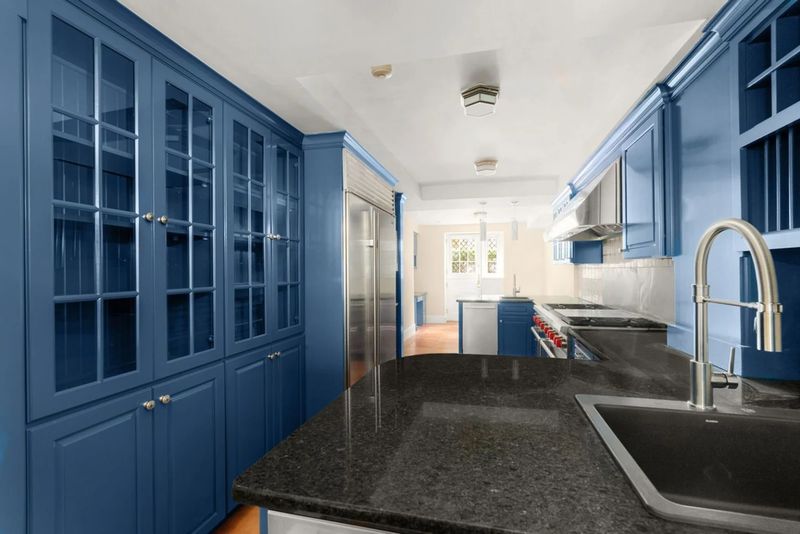
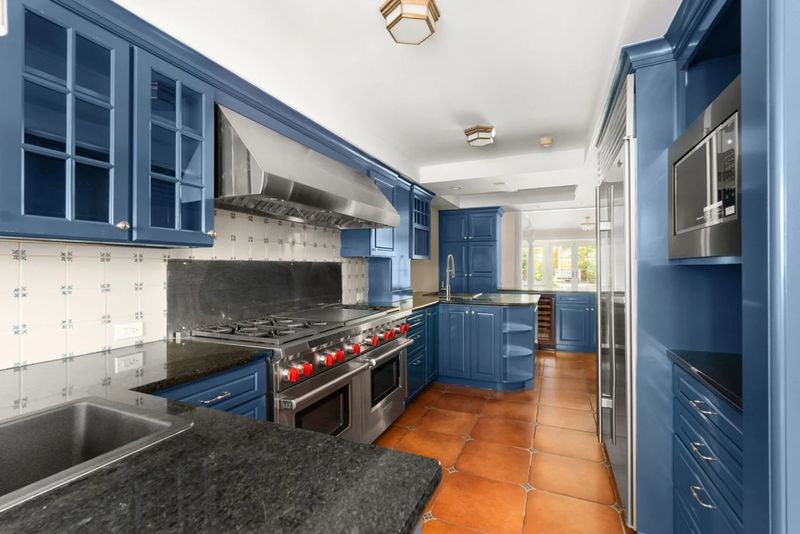
The eat-in kitchen features blue cabinetry, dark countertops and substantial built-in storage. A large cooking range sits beneath a stainless-steel ventilation hood, while terracotta flooring introduces a warmer material contrast.
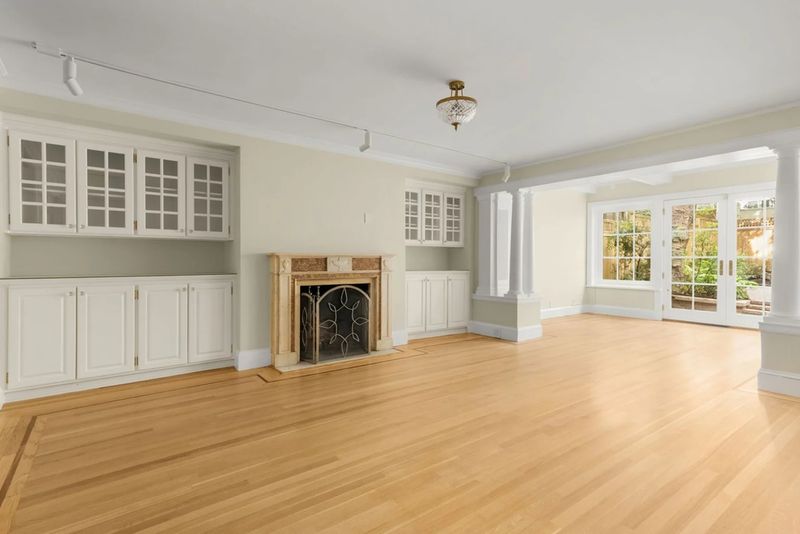
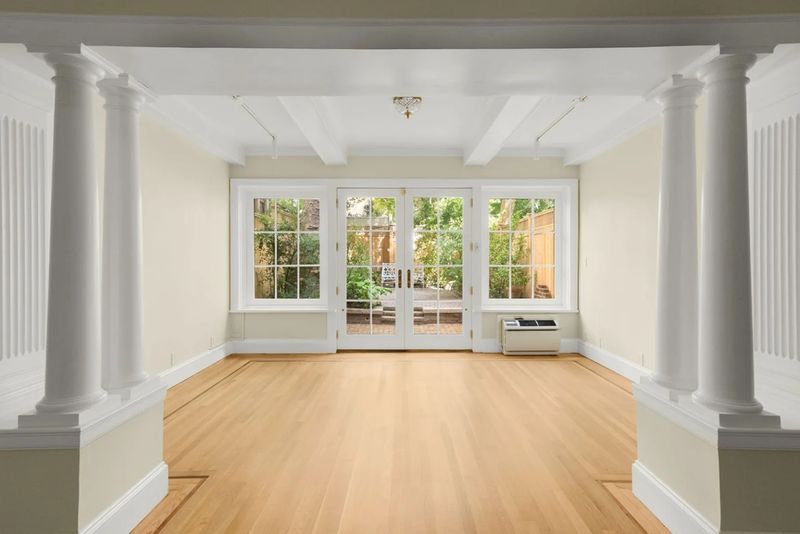
From the kitchen, the layout flows toward the formal dining room and adjoining den. A fireplace framed by built-in white cabinetry provides a traditional focal point in the dining area, while a columned divider maintains a visual connection between the two spaces.
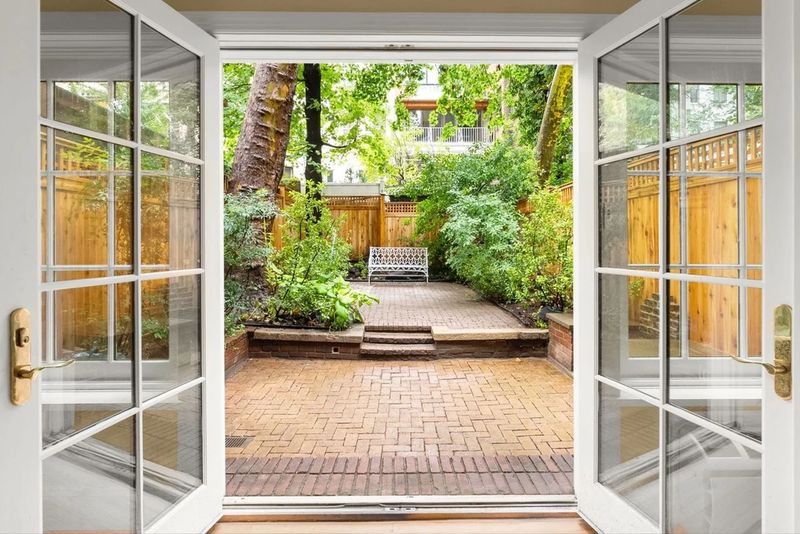
At the rear, the den opens through glass doors and matching windows onto the private garden. Hardwood floors and natural light give this part of the residence a relaxed atmosphere, creating a natural transition between indoor entertaining and outdoor living.
A Private Garden and Multiple Outdoor Retreats
One of the property’s most appealing features is its collection of private outdoor spaces, an especially valuable characteristic in a historic Manhattan townhouse.
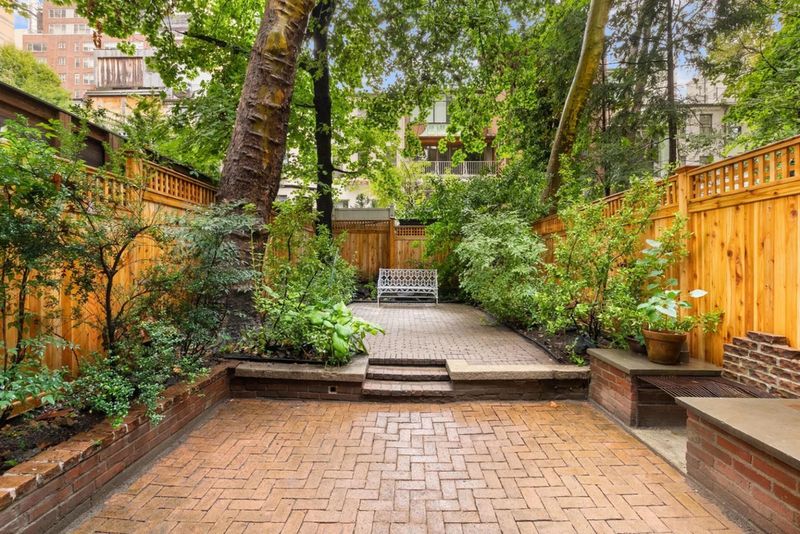
The garden is enclosed by mature greenery and fencing, providing a degree of privacy from the surrounding neighborhood. Two levels of brick paving create separate areas for outdoor dining, entertaining or simply enjoying a quieter moment away from the city streets.
Above the garden level, the rear parlor connects to a substantial outdoor terrace through French doors. This arrangement allows the main entertaining floor to extend naturally into the open air.
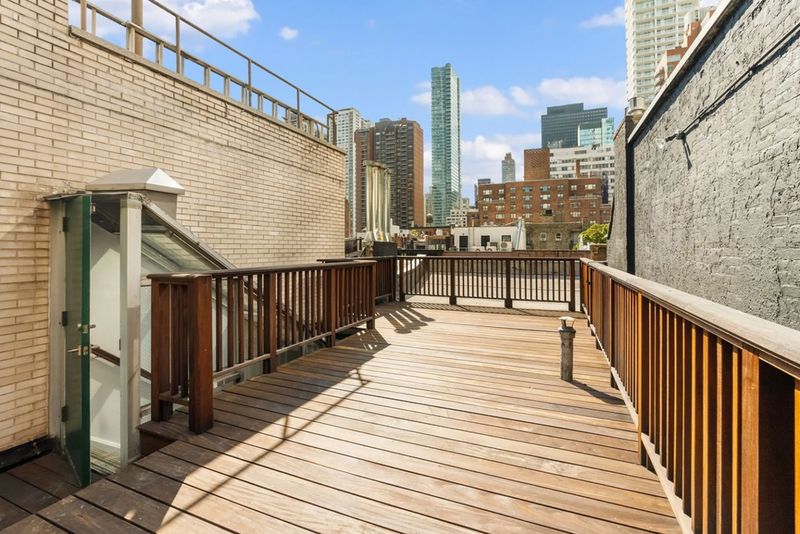
A private rooftop deck provides another outdoor retreat. With timber decking and space for lounge furniture or an outdoor dining arrangement, it offers a different perspective on the surrounding Manhattan streetscape.
Together, these outdoor areas give the townhouse a versatility that is not always easy to find in older New York City properties.
The Parlor Bar That Connects the Home to Montgomery Clift
Perhaps the most distinctive element of Montgomery Clift’s former townhouse is the small built-in bar on the parlor level.
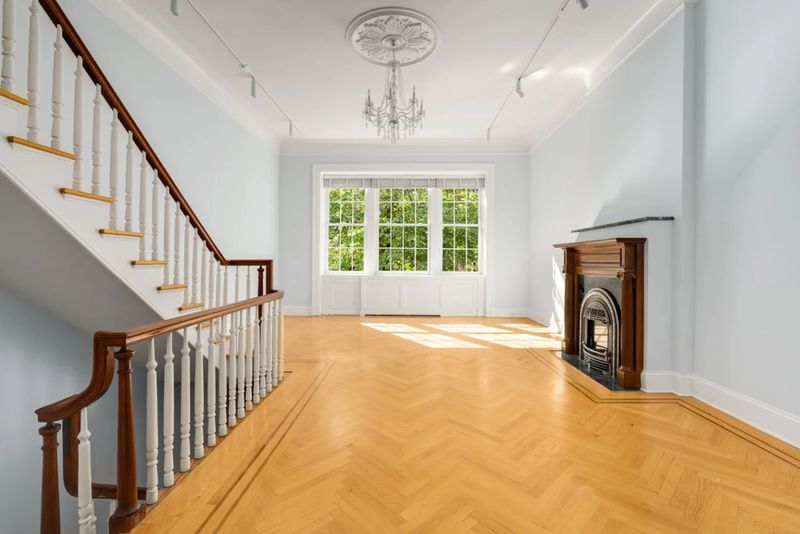
The second floor opens beneath approximately 12-foot ceilings, creating an impressive sense of volume. Its front parlor features herringbone wood flooring, a crystal chandelier and a decorative fireplace. Large windows overlook the tree-lined street, allowing daylight to illuminate the traditional interior.
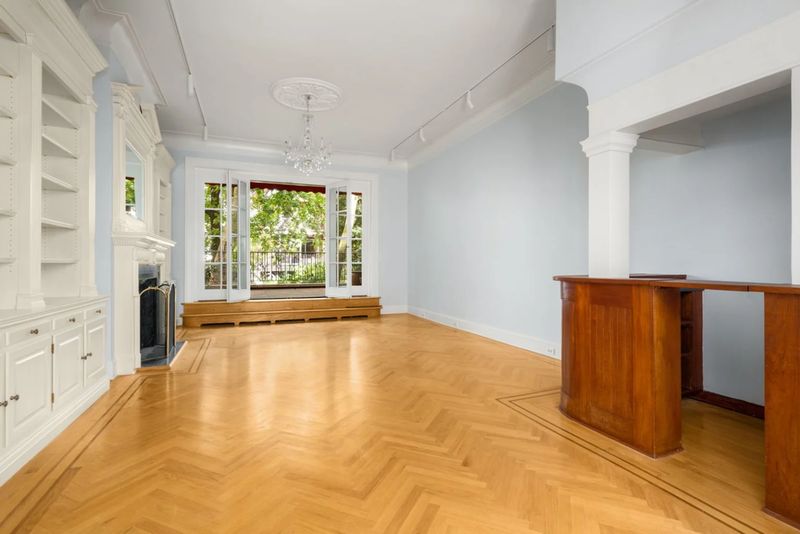
Toward the rear, the original entertaining bar marks the entrance to another sitting room. According to the listing description, the bar was deliberately preserved during the property’s extensive renovation.
This detail is particularly meaningful because the bar is associated with Clift’s years at the residence and the gatherings he reportedly hosted for fellow actors and celebrated friends.
The adjoining sitting area features another fireplace, surrounded by built-in shelving and cabinetry. French doors connect this space to the rear terrace, reinforcing the relationship between the interior entertaining rooms and the garden below.
Rather than treating the townhouse’s history as a decorative marketing feature, retaining this small architectural element preserves a tangible connection to one of its most famous residents.
Five Bedrooms Across the Upper Floors
The third and fourth levels are dedicated primarily to private accommodation. Each floor contains two bedrooms, with fireplaces and individual bathrooms contributing to the traditional townhouse character.
The bedrooms combine historic architectural details with updated finishes, providing a quieter residential atmosphere above the principal entertaining spaces.
The four-story arrangement also offers a degree of separation between family living, guest accommodation and entertaining. A laundry facility on the upper level and additional utility space contribute to the property’s everyday practicality.
Separate heating and air-conditioning zones provide further convenience, allowing different parts of the residence to maintain individual comfort settings.
Life in Lenox Hill: An Established Upper East Side Address
The townhouse occupies a tree-lined residential block in Lenox Hill, one of the established neighborhoods within Manhattan’s Upper East Side.
The area’s appeal comes from its combination of historic residential architecture, cultural institutions, established restaurants and convenient access to some of Manhattan’s most recognizable destinations.
Madison Avenue offers designer boutiques, galleries and upscale retail establishments, while Lexington Avenue and the surrounding commercial streets provide everyday shopping, cafés and neighborhood dining options.
The area is also known for its established restaurants and long-standing neighborhood institutions, including J.G. Melon. Residents can explore the wider Upper East Side dining scene without sacrificing the quieter character of its residential blocks.
For cultural attractions, Central Park is accessible to the west, while Museum Mile further north along Fifth Avenue includes major institutions such as The Metropolitan Museum of Art, the Solomon R. Guggenheim Museum and The Frick Collection.
Transportation is another practical advantage. The nearby Lexington Avenue/59th Street subway station provides access to the 4, 5 and 6 trains, as well as the N, R and W services. The Lexington Avenue/63rd Street station also expands connections across the city.
The neighborhood’s established medical institutions, including Lenox Hill Hospital and Memorial Sloan Kettering Cancer Center, further contribute to its appeal among residents seeking access to major healthcare facilities.
Architecturally, the surrounding area has a distinctive historic identity. The Treadwell Farm Historic District, designated in December 1967, protects an important collection of historic Manhattan residences and helps preserve the character of its streets.
A Rare Opportunity to Own a Piece of Hollywood History
Montgomery Clift’s former townhouse brings together several layers of New York history. Its reported association with the Roosevelt family, its connection to Count Serge Obolensky and its years as the home of a celebrated Hollywood actor make it considerably more than an ordinary luxury property.
The residence also illustrates how historic Manhattan townhouses can evolve without losing every connection to their original character. Renovated kitchens, updated climate systems and carefully arranged living spaces support contemporary lifestyles, while the preserved parlor bar and traditional architectural details maintain a link to the past.
California Luxury Houses has reviewed the publicly available listing information and historical reporting surrounding the property. Although additional firsthand insight from the homeowner would provide further context about its renovation and ownership history, no such personal account has been independently confirmed for this article.
Currently offered at $7.995 million, the five-bedroom townhouse at 217 East 61st Street presents its next owner with an opportunity to acquire a distinctive Manhattan residence where architectural heritage and Hollywood history meet.
For buyers drawn to properties with a story behind their walls, few addresses offer quite the same combination of historical associations and intimate residential character.