

Weezer bassist Scott Shriner and his estranged wife, author Jillian Lauren, are offering their longtime Los Angeles home for $2.959 million, bringing a distinctive piece of Eagle Rock real estate to the market after more than eight years of ownership.
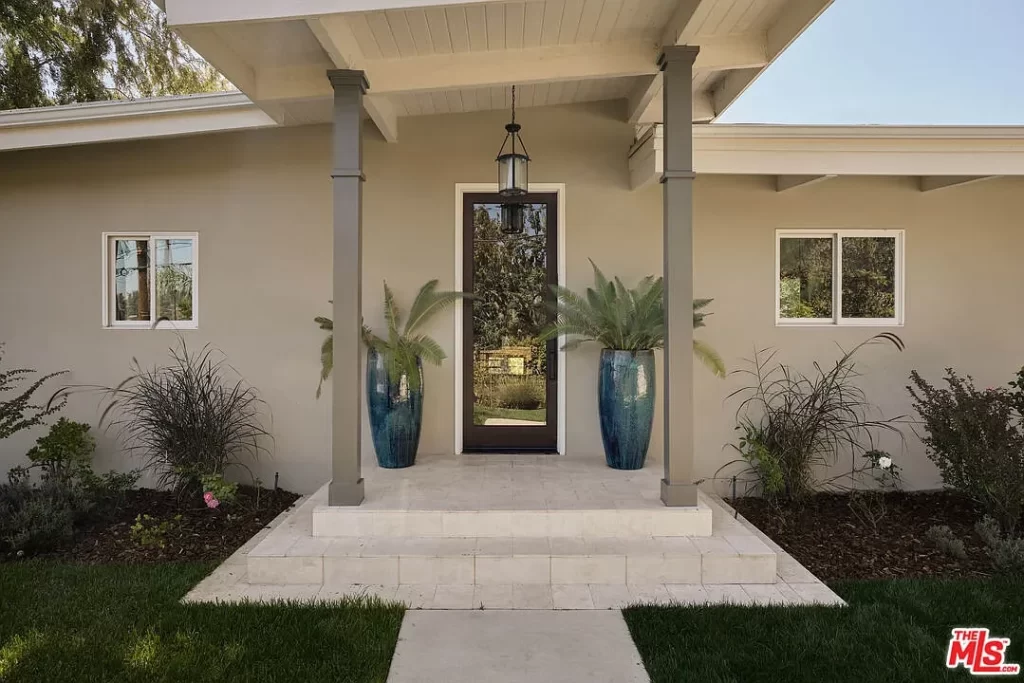
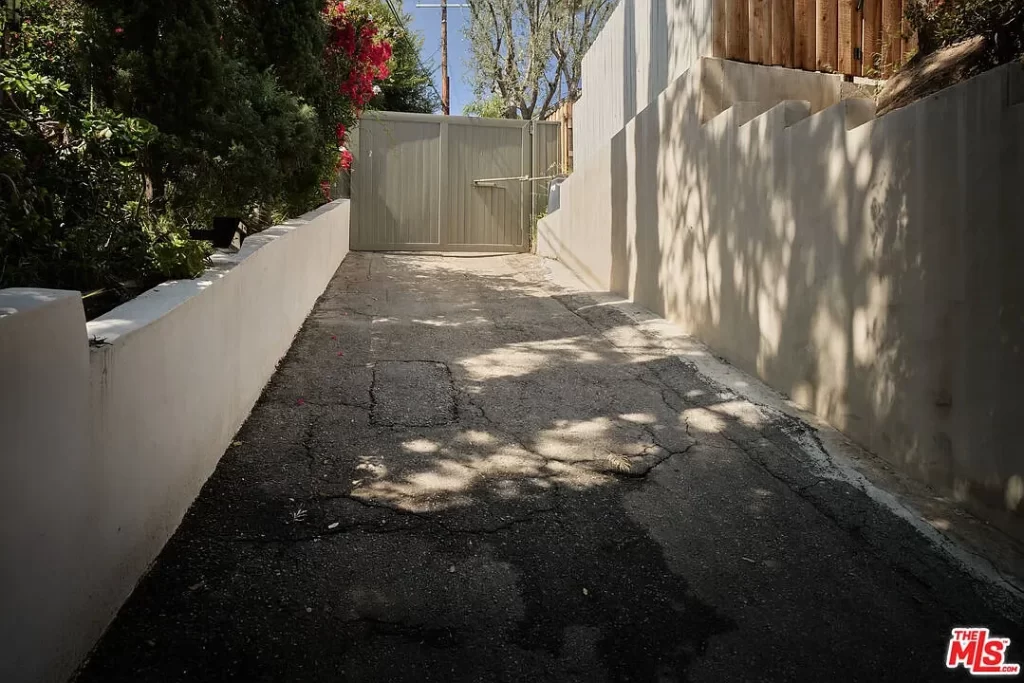
The 3,035-square-foot residence, built in 1954, sits on a roughly 0.47-acre hillside parcel above Eagle Vista Drive. Behind a gated entrance and mature landscaping, the mid-century home combines vaulted wood-beamed ceilings and warm interiors with a swimming pool, hot tub, landscaped grounds and a dedicated music studio. Current listing records identify Linda Chamberlain of Nourmand & Associates-HW as the listing agent.
The property first came into the public spotlight in connection with Shriner and Lauren’s ownership of the Eagle Rock residence, but its appeal extends well beyond its celebrity association. Its elevated setting, substantial lot and indoor-outdoor layout give the home the qualities that have made mid-century properties particularly sought after across Los Angeles.
CaliforniaLuxuryHouses examined the property’s current listing information, historical sale records and reporting surrounding Shriner and Lauren’s years in Los Angeles to put the residence into a broader real estate context.
A 1954 Mid-Century Home With a Private Hillside Setting
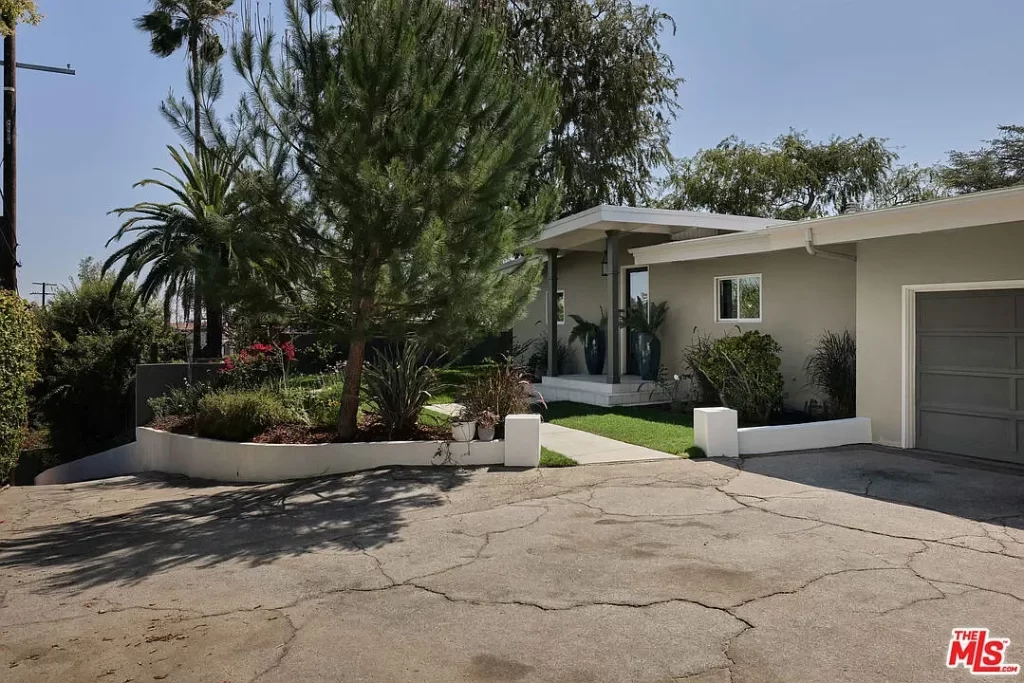
From the street, privacy is one of the property’s defining characteristics. The home is positioned above the road on a 20,265-square-foot parcel, with a private gate and mature landscaping creating separation between the residence and Eagle Vista Drive.
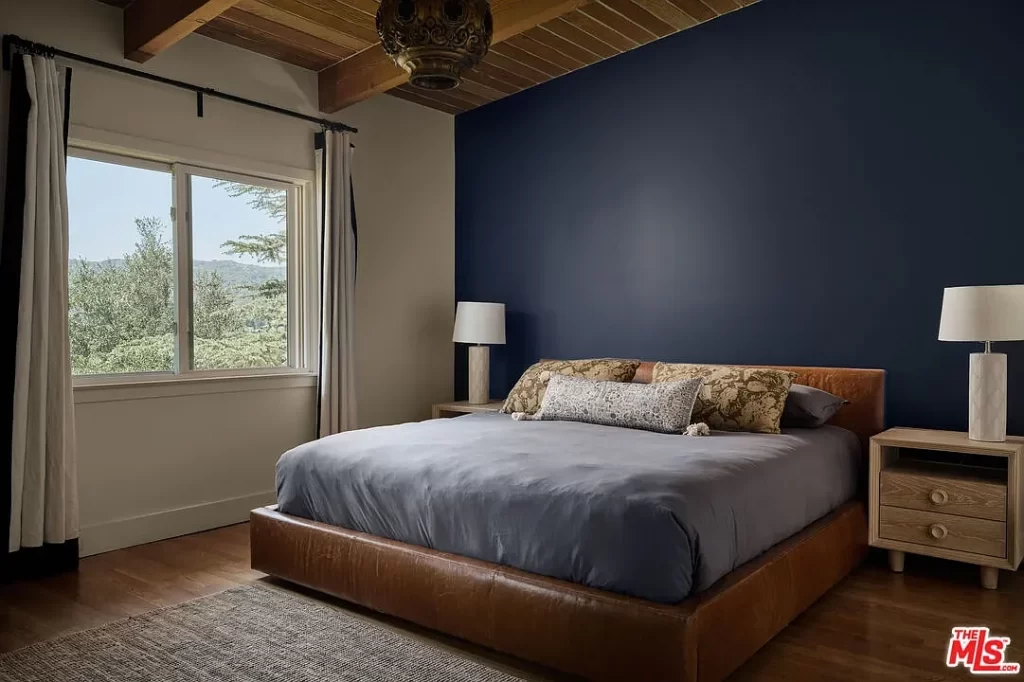
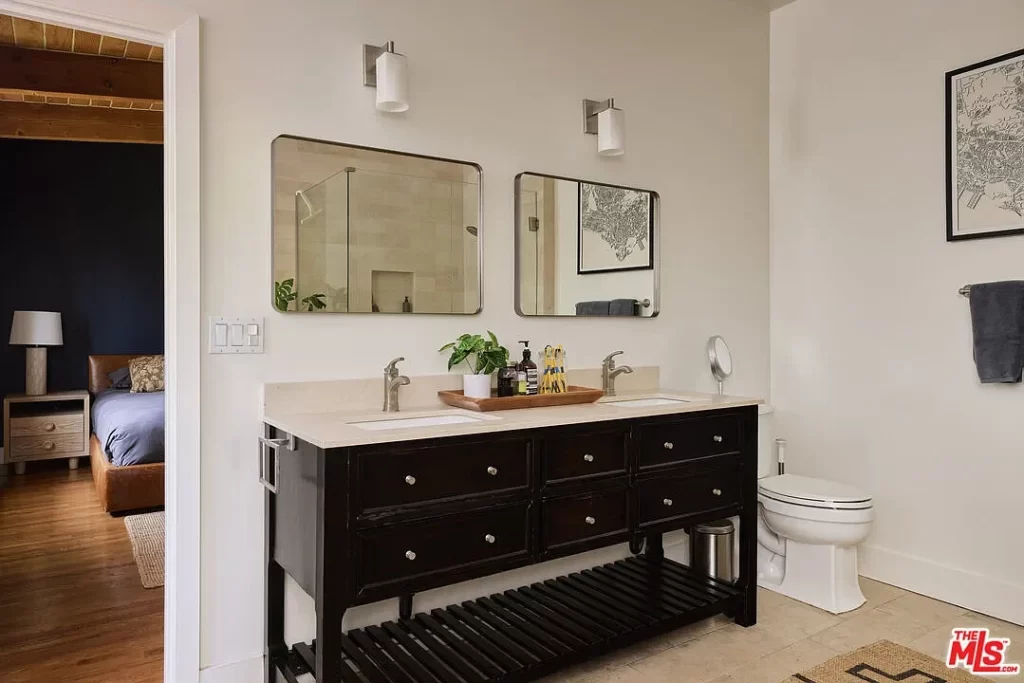
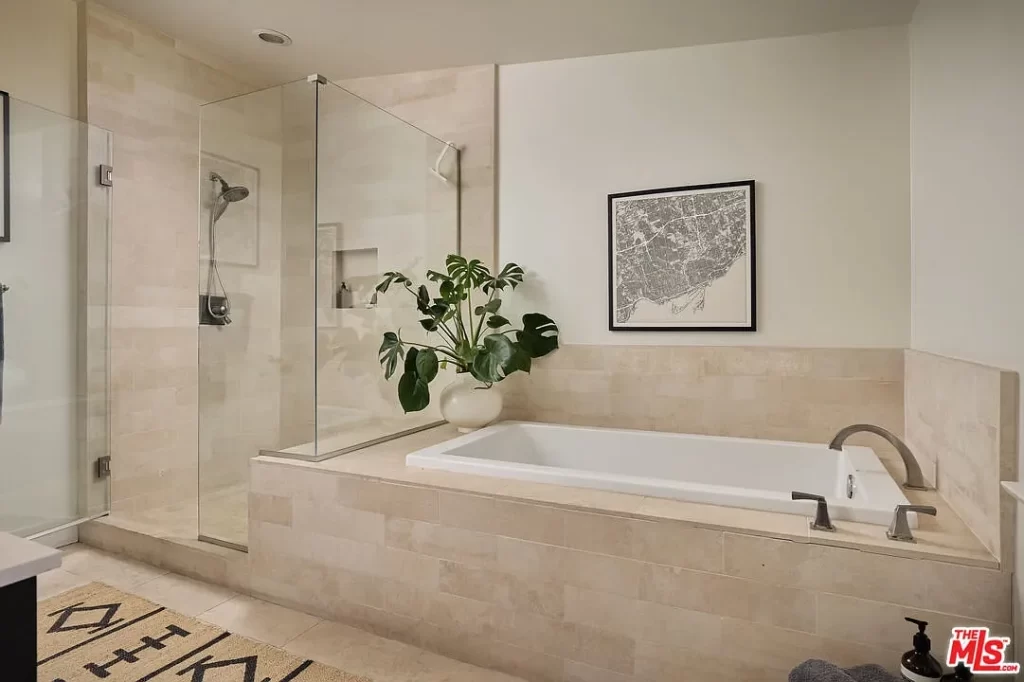
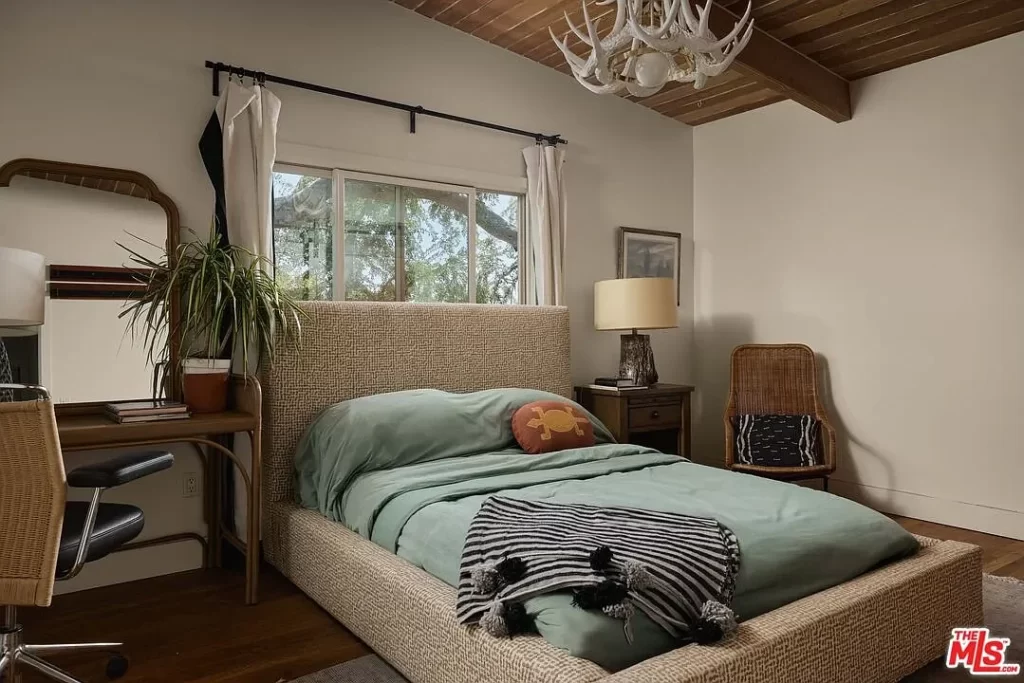
The current listing describes the property as a mid-century compound, and other real estate records identify its architectural style as Mid-Century or Mid-Century Modern. The two-story residence offers five bedrooms and four bathrooms, with mountain and canyon views, central heating and cooling, a two-car garage and additional driveway parking.
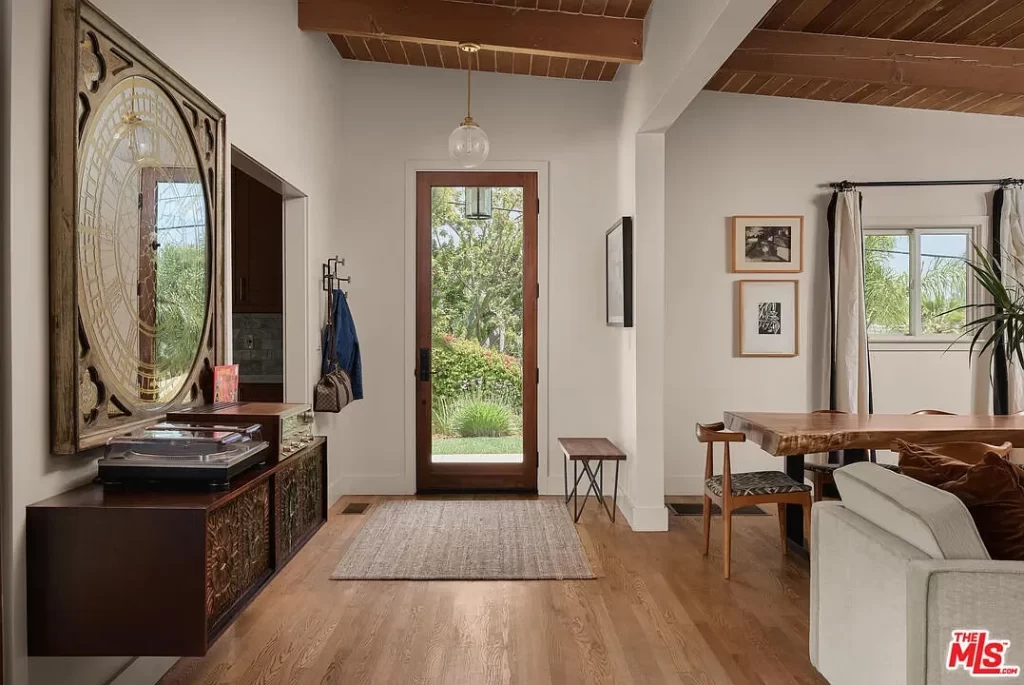
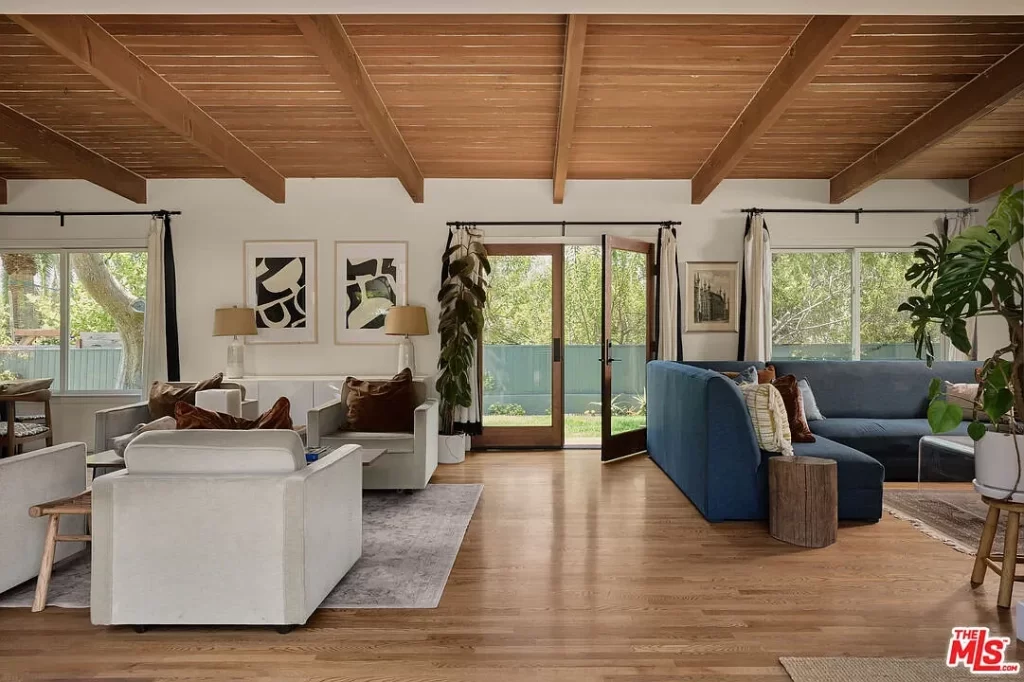
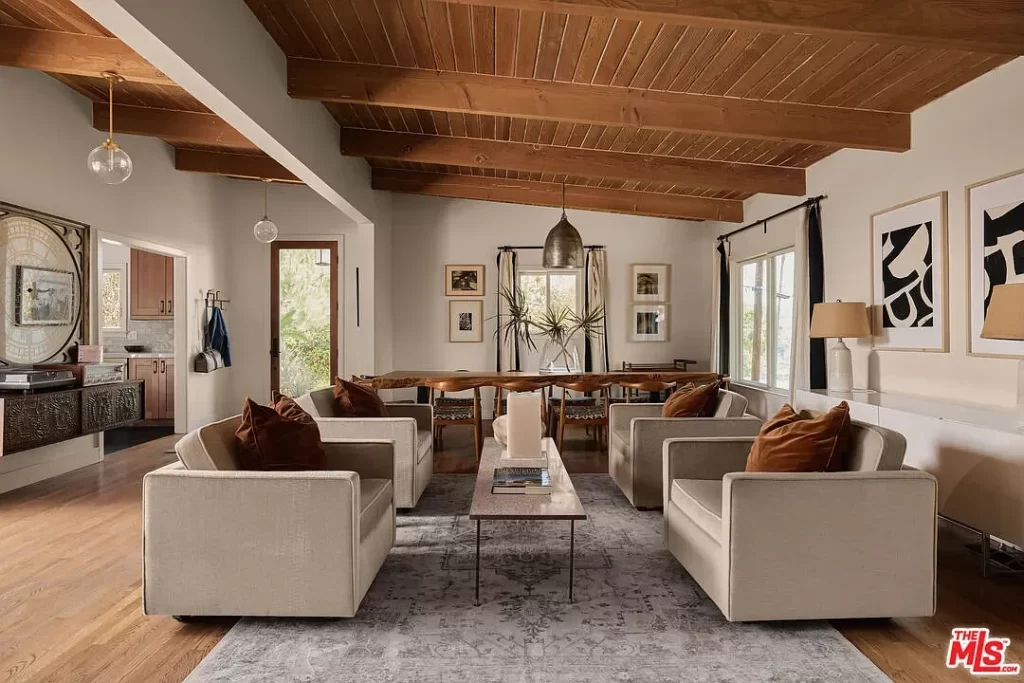
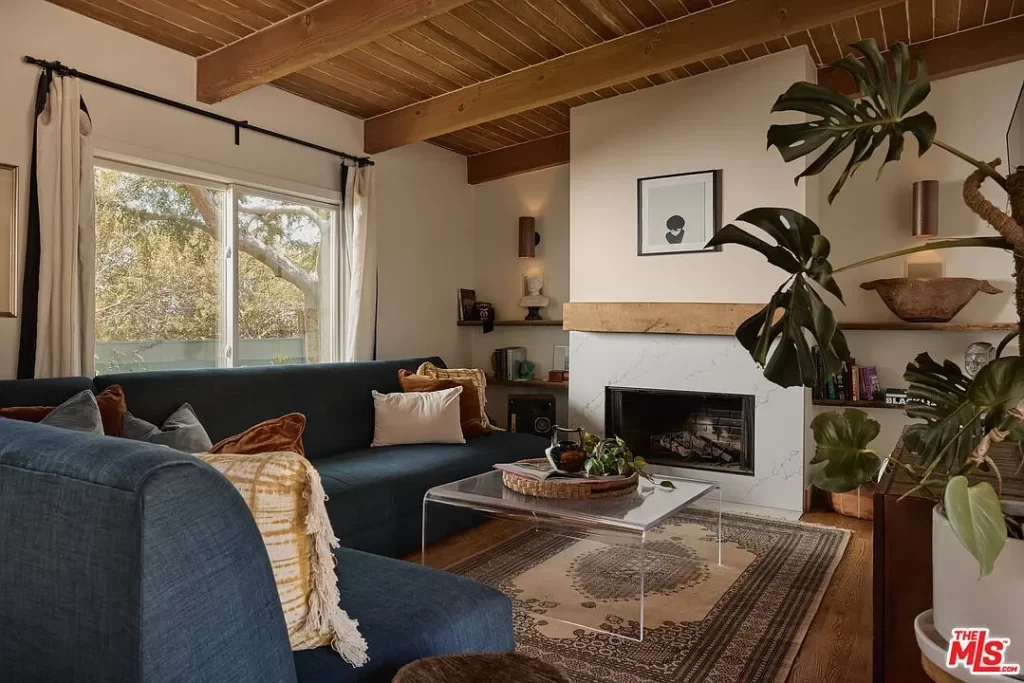
Inside, the architecture retains several of the details associated with California’s mid-century tradition. Vaulted ceilings crossed by exposed wood beams establish the visual character of the main living spaces, while large expanses of glass connect the interiors with the landscaped grounds.
The living area is arranged as an open sequence of gathering spaces. A dining zone sits near the entry, while the main lounge is organized around a fireplace with a marble surround and wood mantel. Built-in shelving, large windows and glass doors reinforce the home’s connection to the surrounding hillside.
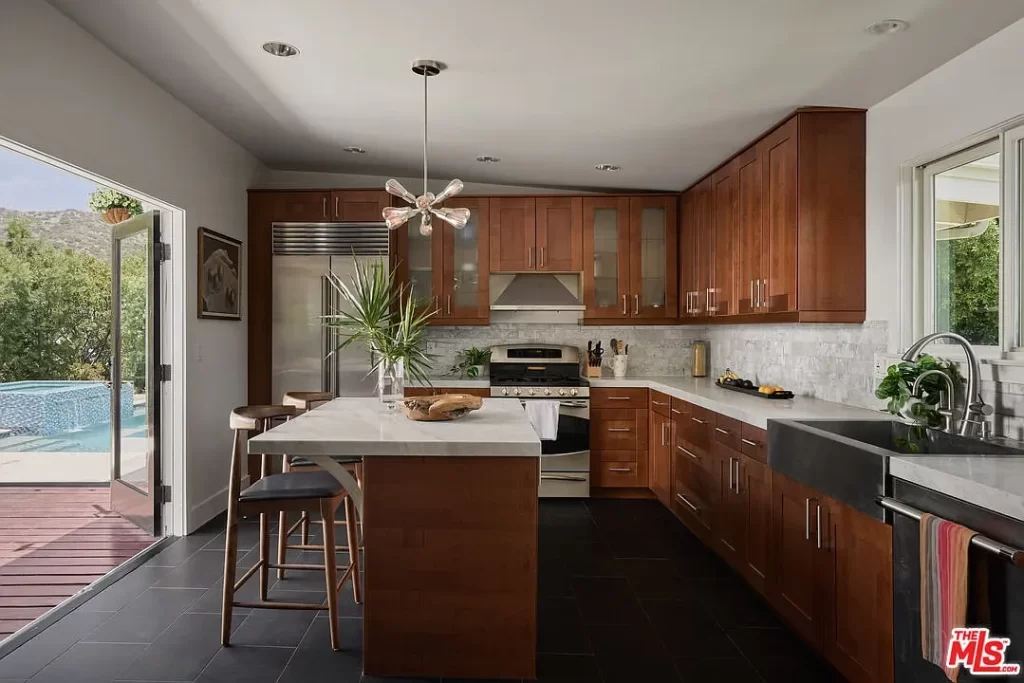
The kitchen continues the warmer material palette with wood cabinetry, pale stone counters, a textured backsplash and a central island. Glass doors open toward the outdoor deck, making the transition from indoor entertaining to outdoor living particularly direct.
That relationship between house and landscape is arguably one of the property’s strongest qualities. Rather than treating the backyard as an afterthought, the floor plan allows the grounds to function as an extension of the living areas.
A Musician’s Home With a Dedicated Studio
For Shriner, who has served as Weezer’s bassist since 2001, the property’s music-oriented spaces are perhaps its most personal feature.
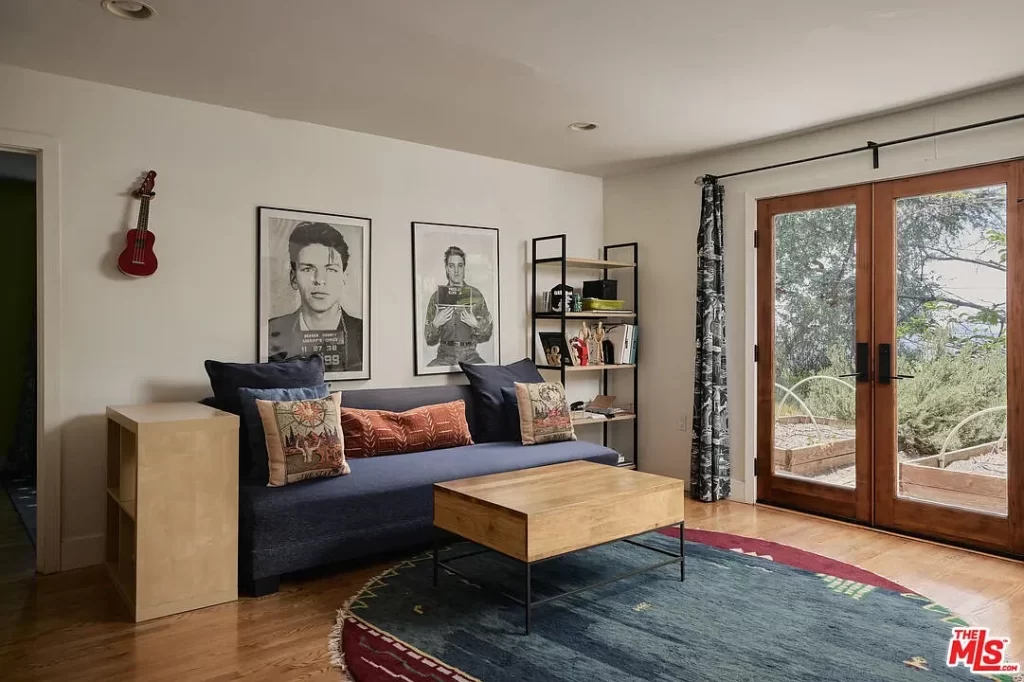
A dedicated music studio occupies part of the residence, with acoustic treatment, instruments, amplifiers, keyboards, electronic drums and recording equipment. Guitars are displayed alongside a substantial vinyl collection, turning the room into something considerably more personal than a conventional home office or entertainment room.
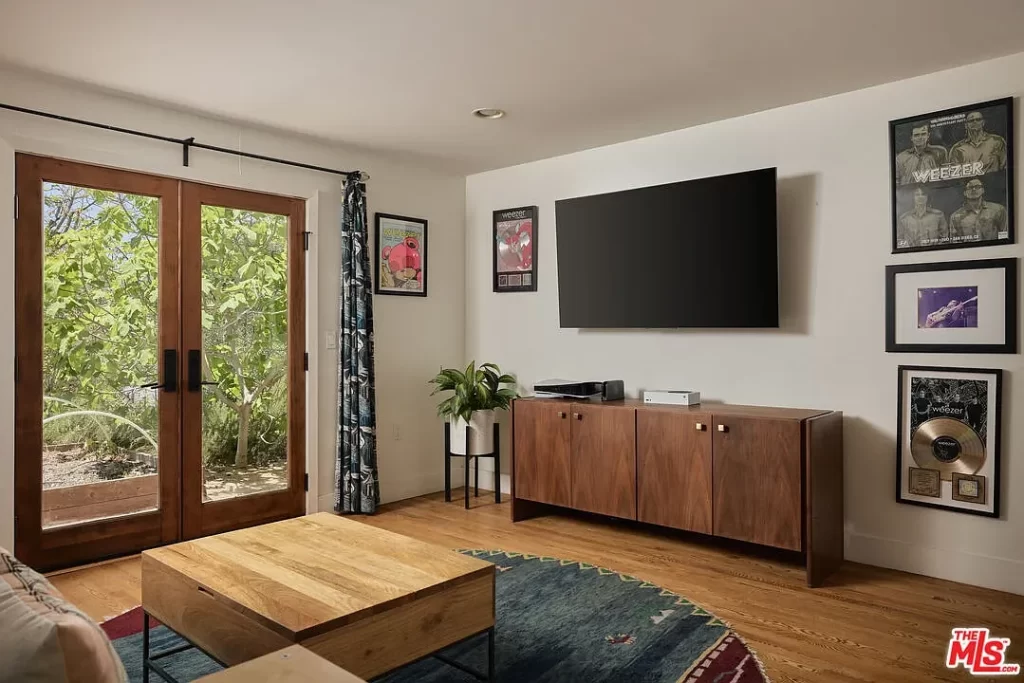
The adjacent media room carries the same sense of personality. Framed Weezer memorabilia, including concert posters and record plaques, gives the space a direct connection to Shriner’s career.
That detail is significant from a luxury real estate perspective. Celebrity homes can easily become defined entirely by their former occupants, but in this case the music studio is also a functional amenity that could appeal to another musician, producer or collector.
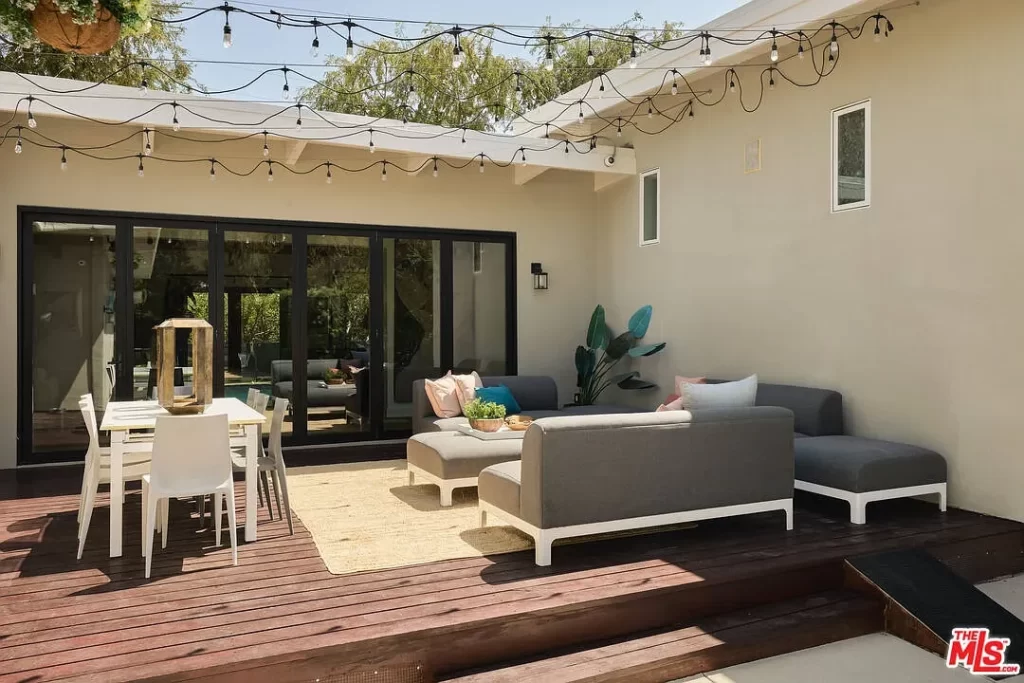
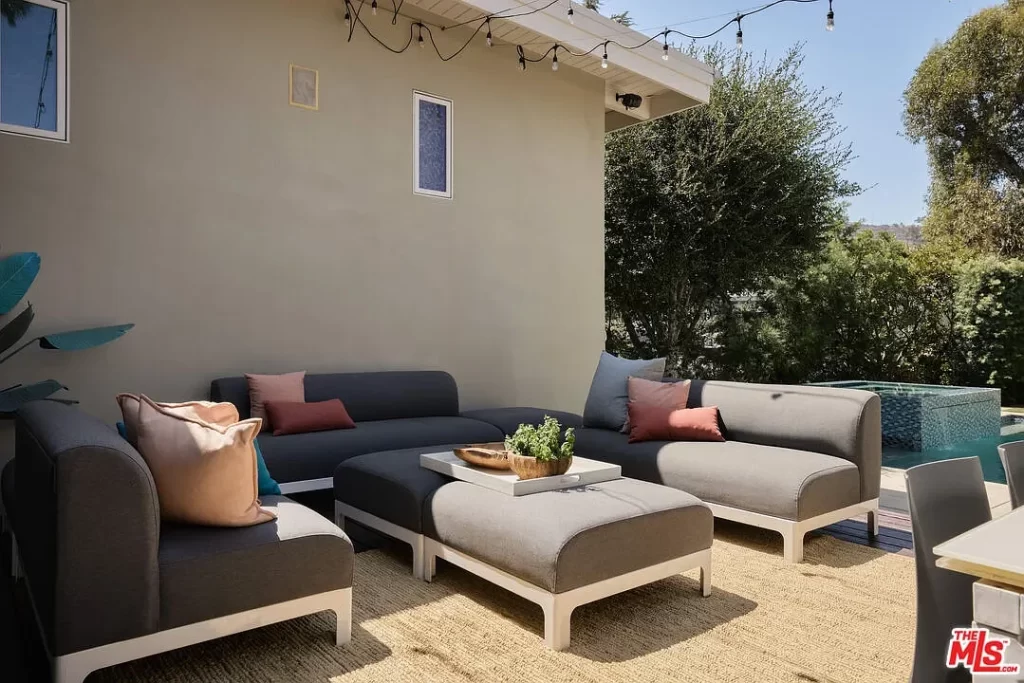
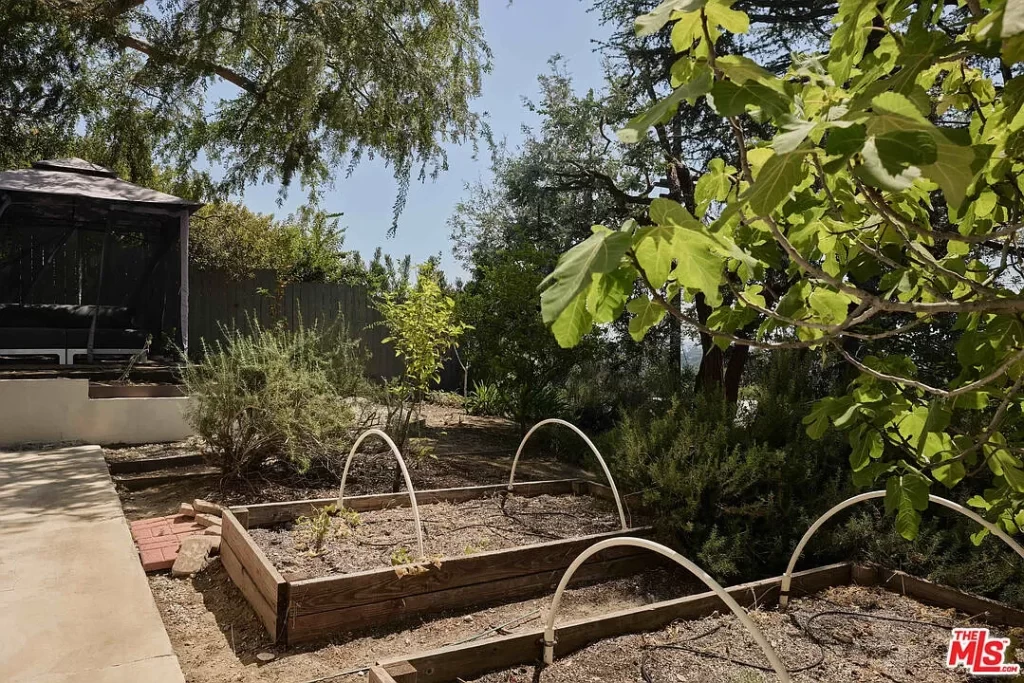
The private outdoor areas add another layer to the property’s entertainment potential. A raised wood deck sits outside the principal living spaces, providing room for outdoor dining and lounging beneath string lights. Steps lead toward a swimming pool positioned alongside mature landscaping, while a heated spa and garden areas create additional destinations across the hillside lot.
The result is less about formal grandeur and more about creating a secluded California retreat: a place where a homeowner can move from a recording session to the pool, from an indoor dinner to an outdoor gathering, without leaving the property.
The Shriner-Lauren Real Estate Timeline
The current $2.959 million asking price represents a substantial increase over the couple’s 2018 acquisition.
Public property records show that the residence sold for $1.75 million in April 2018, after being listed at $1.699 million earlier that month. Zillow’s historical record also shows a previous sale at $1.155 million in November 2011 and another recorded sale at $465,000 in May 2011.
At the current asking price, the property is being offered for approximately 69 percent more than the $1.75 million purchase price in 2018. The current listing equates to roughly $975 per square foot.
The Eagle Rock property was not the couple’s only notable Los Angeles real estate holding. In 2018, the Los Angeles Times reported that Shriner sold a modern home in Silver Lake for $2.4 million, about $250,000 above its asking price. Shriner had purchased that property in 2014 for $1.725 million. Linda Chamberlain was also the listing agent for that Silver Lake sale.
The couple had previously owned another Eagle Rock-area property, a roughly 1,500-square-foot Craftsman cottage near Colorado Boulevard. According to reporting published at the time of the Silver Lake transaction, they bought that home in 2006 for $810,000 and sold it in 2014 for $849,000.
The latest listing arrives after a turbulent period in the couple’s personal lives. Lauren filed for divorce from Shriner in December 2025 after 20 years of marriage, citing irreconcilable differences, according to court documents reported by the Los Angeles Times and other news organizations.
That history has inevitably brought additional attention to the Eagle Rock property, but the house itself remains a distinctive example of the type of private hillside residence that defines parts of Northeast Los Angeles.
Life in Eagle Rock: Dining, Shopping and Access to Los Angeles
One of the property’s advantages is that its secluded setting does not mean isolation.
Eagle Rock has developed a reputation for combining a quieter, neighborhood-oriented atmosphere with convenient access to the broader Los Angeles region. The Los Angeles Times described the community as having a “small town within a big city” character, with Colorado Boulevard, Eagle Rock Boulevard and York Boulevard forming the neighborhood’s principal commercial corridors.
Colorado Boulevard is particularly important to the area’s lifestyle appeal. The corridor brings together independent restaurants, coffee shops, specialty stores and everyday services, while Eagle Rock Plaza at 2700 Colorado Boulevard provides a more conventional shopping option. Discover Los Angeles lists Eagle Rock Plaza among the neighborhood’s commercial destinations.
Dining is another part of Eagle Rock’s appeal. The neighborhood has long been known for independent restaurants and established local institutions, with options ranging from Italian and Mexican food to contemporary restaurants, coffee shops and bakeries. The Los Angeles Times’ 2025 neighborhood guide highlighted the area’s independent retail and dining culture as one of its defining characteristics.
For recreation, the Eagle Rock Recreation Center is located on Eagle Vista Drive and offers sports, fitness and cultural programs, including tennis, basketball, soccer, gymnastics, dance and outdoor fitness facilities.
The location also provides access to several major Los Angeles corridors, making the neighborhood attractive to buyers who want a residential setting without giving up connectivity to Pasadena, Glendale and central Los Angeles.
For a buyer considering this particular home, that balance may be just as important as the swimming pool or music studio. The property offers privacy at the end of the driveway while remaining close to the everyday amenities that make Eagle Rock a desirable place to live.
For CaliforniaLuxuryHouses, the appeal of 1205 Eagle Vista Drive ultimately lies in that combination. It is a celebrity-owned property with a recognizable story, but its real estate value is rooted in more enduring qualities: a 1954 mid-century design, a sizeable hillside lot, a private setting, strong indoor-outdoor connections and a neighborhood with an established local identity.
After purchasing the residence for $1.75 million in 2018, Shriner and Lauren are now offering the property for $2.959 million. Whether the next owner is drawn by its music history, its architectural character or simply the opportunity to own a secluded piece of Eagle Rock, the house represents a distinctly Los Angeles interpretation of mid-century living.