

Oheka Castle, the grand Long Island estate where Taylor Swift filmed her 2014 “Blank Space” music video, is heading to auction on October 27, offering buyers a rare opportunity to acquire one of America’s most storied historic residences.
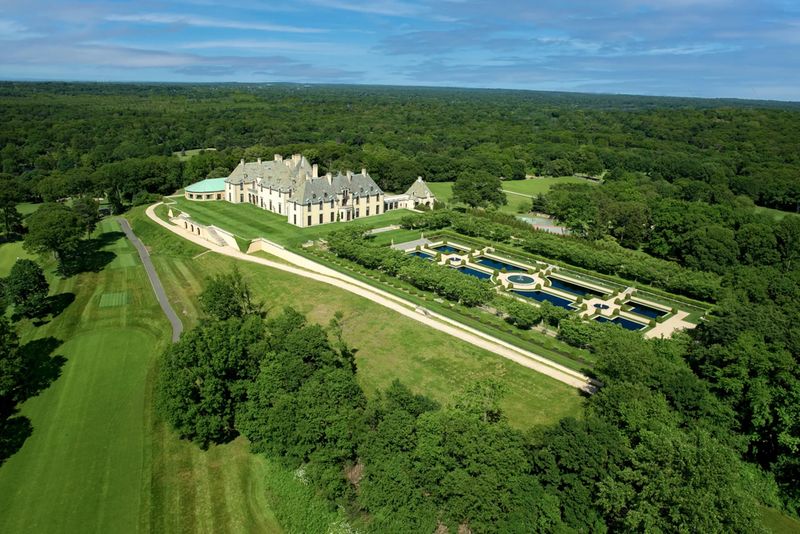
Set atop one of the highest points on Long Island’s Gold Coast in Huntington, New York, the 127-room French Renaissance-style estate is being offered through Concierge Auctions in cooperation with Adam Modlin of The Modlin Group. The property encompasses approximately 112,895 square feet across 23 acres and includes a hospitality and events operation, 34 individually designed guest suites, formal gardens and an approved opportunity for 95 luxury condominium residences on an adjacent 5.13-acre portion of the estate.
For a property whose history stretches back more than a century, however, the auction represents far more than another luxury real estate transaction. The next owner will inherit an architectural landmark, a hospitality business and a property woven into the history of Hollywood, New York society and American popular culture.
Oheka Castle Has a Hollywood-Level Pedigree
Taylor Swift’s connection to Oheka Castle remains one of its most recognizable modern chapters.
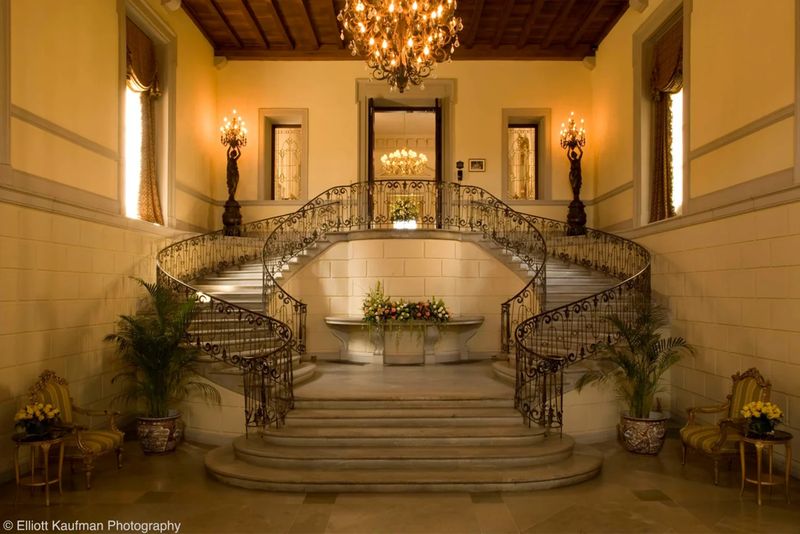
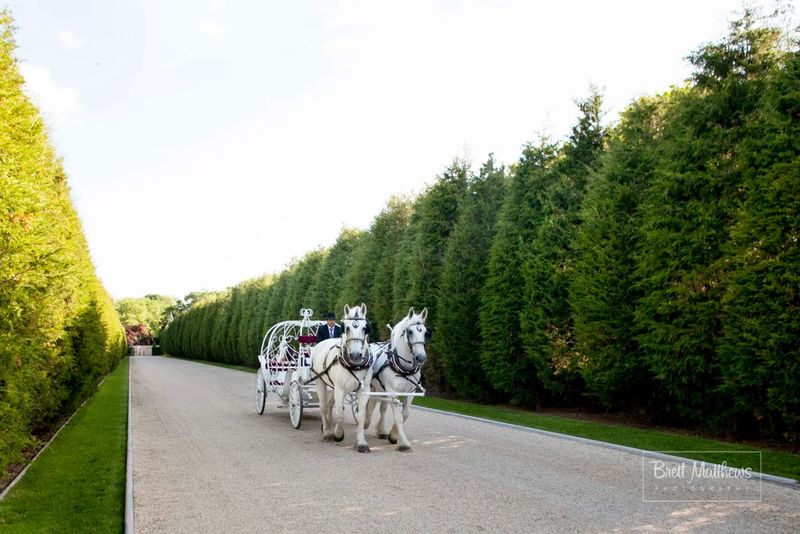
In 2014, the singer transformed the estate into the backdrop for “Blank Space,” one of the defining music videos of her career. The grand staircase, formal gardens and long tree-lined grounds became instantly recognizable to millions of viewers.
But Swift was hardly the first celebrity connection.
Oheka Castle has appeared in productions including “Citizen Kane,” “Royal Pains” and “Succession,” giving the estate an unusually deep relationship with film and television. Its grounds famously stood in for Xanadu in the opening sequence of Orson Welles’ 1941 classic “Citizen Kane,” while later productions introduced the property to new generations of viewers.
That pop-culture history adds another layer to a residence that was already exceptional long before Hollywood arrived.
Built for Otto Kahn During the Gold Coast Era
Oheka Castle was commissioned by financier and arts patron Otto Hermann Kahn during the height of Long Island’s Gold Coast era.
Designed by Delano & Aldrich, the estate was conceived as an extravagant summer retreat and entertainment setting. Construction took place over several years, with the property completed in 1919. At the time, Kahn’s estate represented the extraordinary scale and ambition associated with America’s Gilded Age elite.
The original property stood within a much larger 443-acre estate. Oheka itself contained 127 rooms and measured roughly 109,000 square feet in its original configuration, making it the second-largest private residence ever constructed in the United States, behind North Carolina’s Biltmore.
The name Oheka was derived from Otto Hermann Kahn’s initials, an unusually personal signature for a property intended to embody the grandeur of its owner.
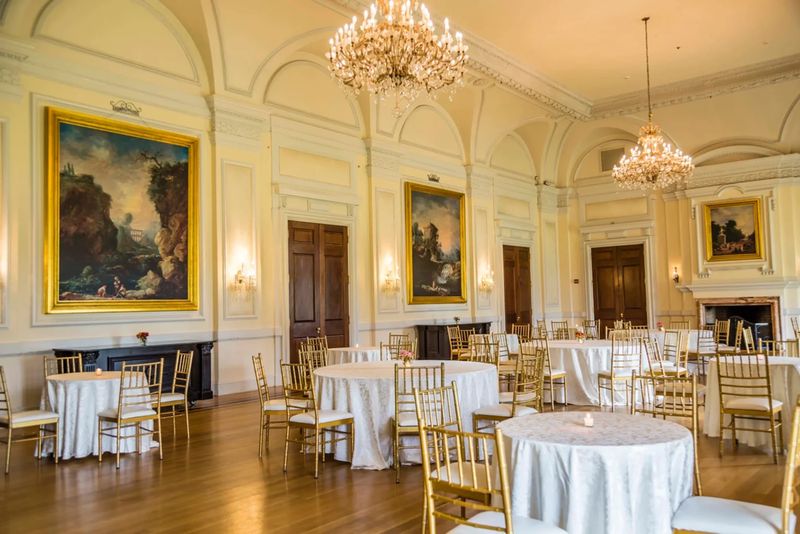
The estate’s architecture was equally deliberate. Its grand staircase was inspired by the exterior staircase at the Château de Fontainebleau in France, while the ballroom rises beneath a 24-foot ceiling. The library features faux-bois detailing intended to give plaster surfaces the appearance and warmth of fine wood paneling.
The result was less a conventional mansion than a private château built for entertaining on an almost theatrical scale.
From Gilded Age Mansion to Abandoned Estate
Oheka Castle’s story was not one of uninterrupted grandeur.
Following Kahn’s death in 1934, the estate passed through several different uses. It became a retirement home for New York City sanitation workers, a Merchant Marine radio operator school and later the home of Eastern Military Academy.
The military academy occupied the property for decades, during which time much of the original character was altered. Gardens were destroyed, rooms were subdivided and architectural finishes were covered or neglected.
After the academy went bankrupt, Oheka Castle was abandoned in the late 1970s and fell into severe disrepair.
By the time Long Island developer Gary Melius acquired the property in 1984, the estate had lost much of the grandeur that had defined its early years.
Melius subsequently embarked on an enormous restoration effort intended to return Oheka Castle to its original architectural character. According to the estate’s history, the restoration ultimately represented a $40 million investment, making it one of the most ambitious private residential restorations in American history.
A $40 Million Restoration Brought Oheka Castle Back
Restoring Oheka Castle required considerably more than cosmetic renovation.
Architects, historians and preservation specialists researched the original estate so that damaged or missing details could be recreated as faithfully as possible. Hundreds of windows and doors were replaced, the roof was rebuilt using slate from the same Vermont quarry associated with the original materials, and specialists restored the elaborate faux-bois finishes in the library.
The formal gardens were also reconstructed using original landscape plans associated with the Olmsted Brothers, with landscape architect Beatrix Farrand contributing to the estate’s original garden design.
Today, the property combines its historic architecture with the infrastructure of a modern hospitality and events destination.
Adam Modlin of The Modlin Group, who represents the property, described the opportunity in unusually lofty terms.
“OHEKA CASTLE is one of the truly extraordinary estates in the world,” Modlin said. “Its architectural significance, extraordinary craftsmanship, storied history and spectacular grounds place it in a category of its own.”
He added that the next owner would not simply be purchasing an estate, but assuming stewardship of an important piece of American history.
Inside the Mansion’s Grandest Spaces
The scale of Oheka Castle becomes most apparent inside its principal entertaining rooms.
The Grand Staircase rises dramatically from the main hall, with two sweeping flights beneath a coffered wood ceiling. The space became particularly recognizable after appearing in Taylor Swift’s “Blank Space” video.
The ballroom is even more imposing. Stretching more than 72 feet beneath a 24-foot ceiling, it was designed for the kind of large-scale entertaining that defined the estate during Otto Kahn’s era.
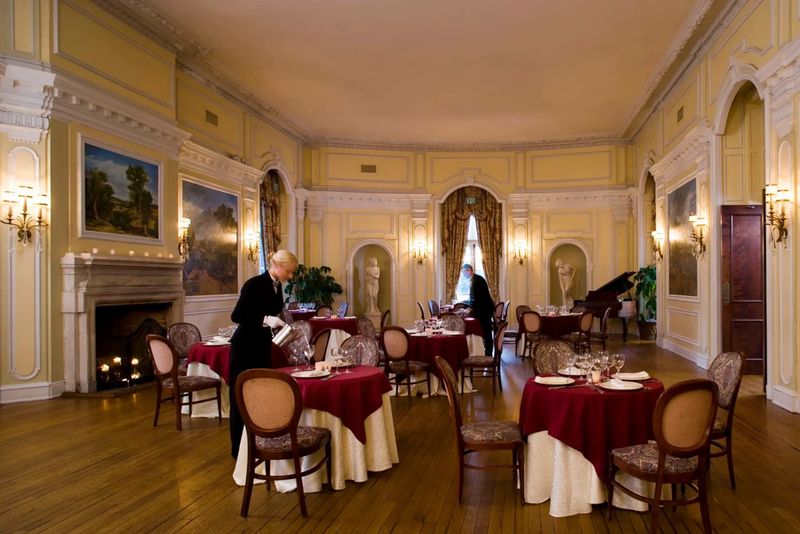
Elsewhere, the formal dining room combines paneled walls, a fireplace and an expansive layout suitable for large gatherings.
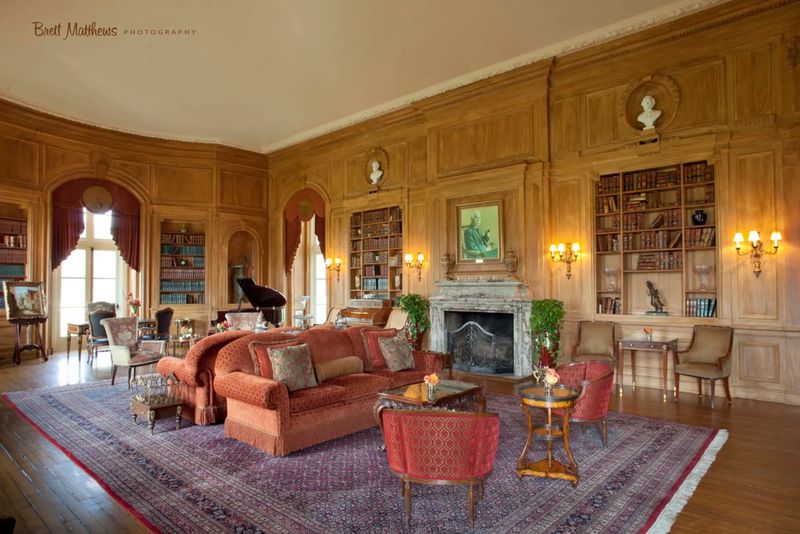
The restored library offers a quieter contrast. Hand-finished faux-bois walls surround the room, with built-in bookcases, arched window bays and a marble fireplace creating an atmosphere that feels closer to a European country house than a modern American mansion.
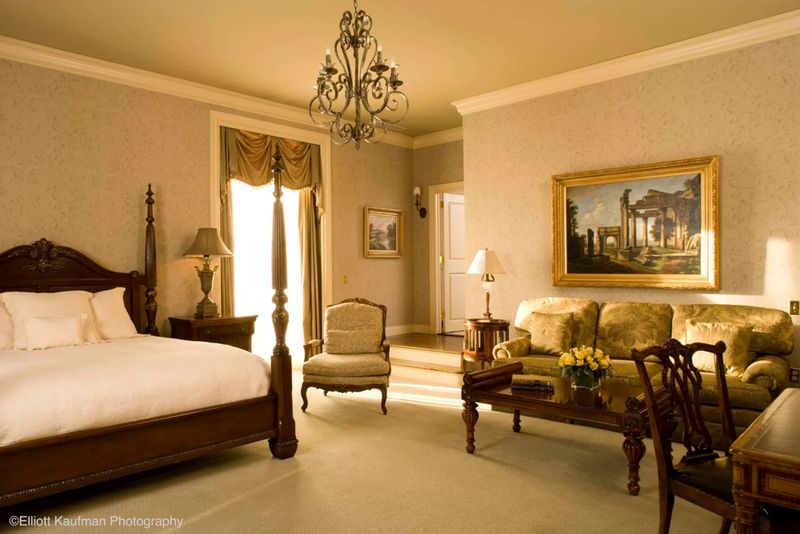
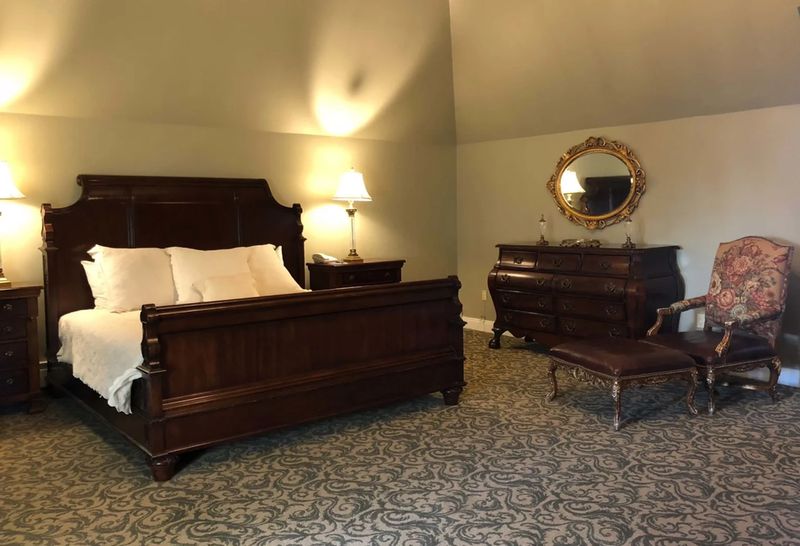
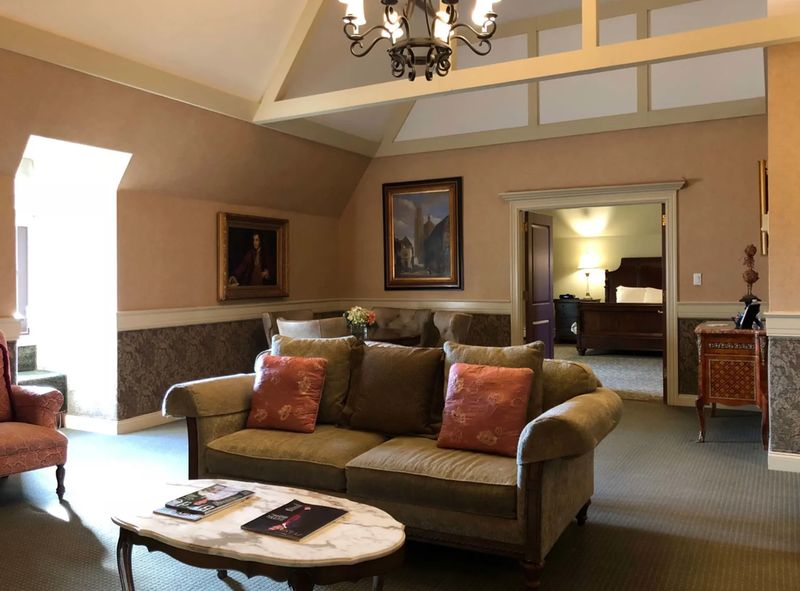
The estate also contains 34 individually designed guest suites, allowing Oheka Castle to function as both a private retreat and a full-scale hospitality property.
Gardens Designed for a Château
Outside, the grounds are nearly as important as the architecture.
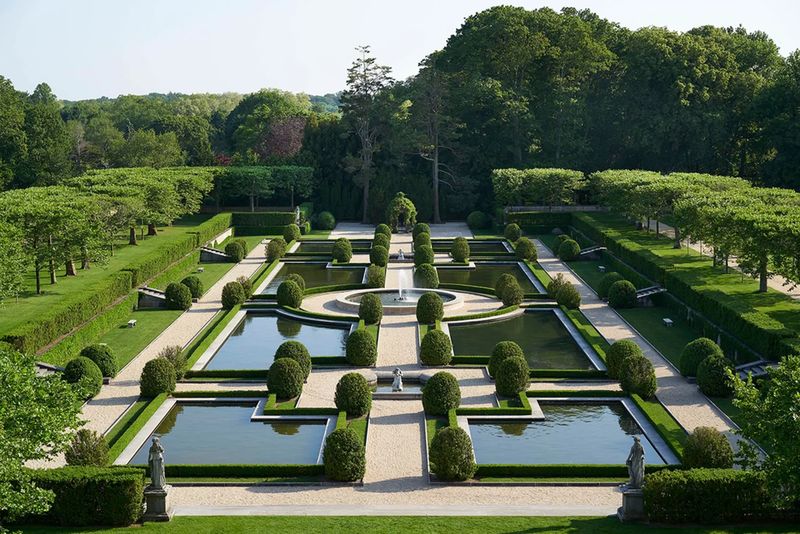
Formal gardens extend from the mansion through manicured terraces, reflecting pools, fountains and tree-lined paths. Nine reflecting pools and three fountains have been recreated from historic landscape plans, reinforcing the connection between the restored property and its original design.
The grounds also contain one of the most recognizable locations from Taylor Swift’s “Blank Space”: a long, carefully framed avenue of trees leading through the estate.
The combination of architecture and landscape is one of the reasons Oheka Castle feels more like a European estate transplanted to Long Island than a conventional American mansion.
A Rare Development Opportunity Comes With the Estate
For prospective buyers, the appeal extends beyond the historic residence itself.
The Town of Huntington has approved a development opportunity on approximately 5.13 acres at the southeastern corner of the property, entitled for 95 luxury condominium residences.
That development potential could give the next owner an opportunity to build a substantial new residential component while preserving the historic core of Oheka Castle.
Concierge Auctions CEO and co-founder Chad Roffers described the property as an exceptionally rare offering.
“There is simply no comparable property in the American real estate market,” Roffers said, pointing to Oheka Castle’s combination of scale, history, cultural significance and operating business.
The property is therefore being positioned not merely as a trophy residence, but as a potentially complex real estate investment encompassing hospitality, events, historic preservation and future residential development.
Why Is Oheka Castle Going to Auction?
The upcoming sale follows years of financial pressure surrounding the property.
Oheka Castle is controlled through an entity connected to Gary Melius, who purchased the estate in 1984 and spent decades restoring and operating it.
In 2025, the property owner filed for Chapter 11 bankruptcy protection amid creditor disputes. According to reporting by Newsday, Melius said his debt burden had become too heavy to carry and that he had little choice but to move toward a sale.
The auction is expected to resolve those financial obligations while determining who will take control of the estate’s next chapter.
Joseph S. Maniscalco, an attorney for the property’s ownership entity, told Newsday that the auction is intended to sell the real estate, development rights and hospitality operations together.
The sale is scheduled for October 27, 2026, with Concierge Auctions handling the auction. Bidders are required to provide a $750,000 deposit, according to the auction terms.
For californialuxuryhouses, the story is particularly notable because the identity of a future buyer remains unknown. The estate’s next owner will inherit not only the physical property but also the responsibility of preserving an address that has survived more than a century of changing ownership, economic fortunes and cultural relevance.
Living on Long Island’s Gold Coast
Oheka Castle’s location adds another dimension to its appeal.
The estate sits in Huntington within Long Island’s historic Gold Coast, an area long associated with large country estates, waterfront properties and the wealth of New York’s Gilded Age.
Despite its secluded setting, Oheka Castle is positioned close to modern transportation and amenities. The Cold Spring Harbor Long Island Rail Road station is approximately five minutes away, providing rail access toward Manhattan.
Downtown Huntington offers restaurants, shops, cultural attractions and entertainment, while the surrounding area includes Huntington Harbor, championship golf courses and preserved natural landscapes.
The nearby Cold Spring Harbor Whaling Museum, Heckscher Museum of Art and Vanderbilt Museum and Planetarium add cultural depth, while Caumsett State Historic Park Preserve provides access to Long Island’s coastline and open space.
The combination is unusual: a historic estate with the atmosphere of a private country retreat, yet within commuting distance of New York City.
The Next Chapter for an American Landmark
Oheka Castle has already lived several different lives.
It began as Otto Kahn’s Jazz Age retreat, became a military academy, endured abandonment, underwent one of the country’s most ambitious private restoration projects and eventually emerged as a luxury hotel, wedding venue and cultural landmark.
Taylor Swift’s “Blank Space” introduced the estate to a new generation, while productions such as “Citizen Kane” and “Succession” cemented its place in popular culture.
Now, more than a century after its construction, Oheka Castle is approaching another defining moment.
As the October 27 auction approaches, the question is no longer whether the estate can survive another chapter. It is who will become its next steward—and what that owner will choose to do with one of America’s most recognizable historic residences.
For a property of this scale and provenance, the auction may ultimately be less about acquiring a mansion than acquiring a piece of American history with the potential to write another century of its story.