

The Cambridge, Massachusetts, home where Julia Child brought French cooking into American living rooms has sold for $6.525 million, giving a new owner the keys to one of the most recognizable residential addresses in modern culinary history. The Victorian property, located at 103 Irving Street, was Child’s home for approximately four decades and the setting for several of her celebrated television cooking programs.
Built in 1889, the residence encompasses 6,321 square feet across three levels and occupies a quarter-acre parcel in one of Cambridge’s established residential neighborhoods. Its six bedrooms, gracious proportions and carefully renovated interiors offer the scale and privacy expected of a distinguished New England residence. Yet its significance reaches far beyond its architecture or real estate value.
For generations of viewers, the address was associated with Child’s distinctive voice, generous personality and famously practical approach to cooking. It was here that she demonstrated recipes, welcomed fellow chefs and helped transform the way Americans thought about food. The house has since undergone a substantial renovation, but its place in the story of American television and gastronomy remains unmistakable.
The sale closed on October 29, 2026, according to property records, following a relatively brief period on the market. Listed by Gail Roberts and Ed Feijo of Coldwell Banker, the property attracted attention not simply as a luxury Cambridge home, but as a residence with an unusually rich cultural history.

A Victorian Residence With a Place in Culinary History
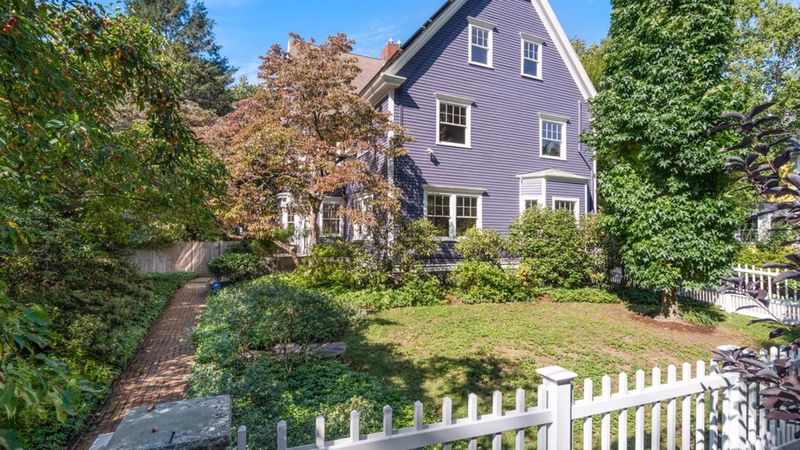
Set along Irving Street, 103 Irving Street dates to 1889 and reflects the architectural character of Cambridge’s historic residential fabric. Its traditional exterior, pale grape-colored paint, steeply pitched roof, classic windows and covered entrance give the property a distinctive presence.
The house became internationally recognizable through its association with Julia Child. She and her husband, Paul Child, moved to Cambridge in 1961, following his professional posting in Europe. They made the Victorian residence their home for approximately 40 years, during which Julia developed the television personality and culinary influence that would reach millions of households.
The kitchen was particularly important to their domestic life. Paul helped design its layout and work surfaces to accommodate Julia’s height and needs as a cook. The result was a highly personal workspace, organized around the practical demands of preparing food rather than conventional kitchen decoration.
According to History Cambridge, the couple’s life on Irving Street coincided with the rise of Child’s career, beginning with the publication of Mastering the Art of French Cooking in 1961 and her television breakthrough with The French Chef.
The residence therefore occupies a special position in the history of Cambridge. It was not simply the home of a famous television personality; it was also the setting in which an important part of American food culture took shape.
The Kitchen That Found a New Home at the Smithsonian
Although the house has changed substantially, Julia Child’s original kitchen has been preserved. In 2001, Child donated the kitchen to the Smithsonian Institution, where it was carefully documented, dismantled and later reconstructed at the National Museum of American History in Washington, D.C.
The installation forms part of the museum’s FOOD: Transforming the American Table exhibition. It recreates the working environment in which Child prepared meals and filmed several of her later television programs.
The Smithsonian notes that the reconstructed kitchen measures approximately 20 by 14 feet, matching the dimensions of the original room. Its maple countertops, cabinets, appliances, utensils and familiar pegboard wall were arranged to reflect their original positions when the museum documented the space in 2001.
The kitchen also preserves details that made it recognizable to television audiences. The pegboards held Child’s cookware, while production equipment used during the filming of her programs was incorporated into the room. The museum collected approximately 1,200 individual objects associated with the kitchen.
Among the television series filmed there were In Julia’s Kitchen with Master Chefs, Baking with Julia and Julia and Jacques Cooking at Home. The original kitchen consequently became more than a domestic room. It was a working television set and a place where culinary knowledge was shared with a national audience.
Its preservation gives the story of 103 Irving Street an unusual dimension. The physical kitchen is no longer part of the house, but visitors can still encounter the room and many of its original contents in a museum setting.
A Major Renovation Transformed the Interior
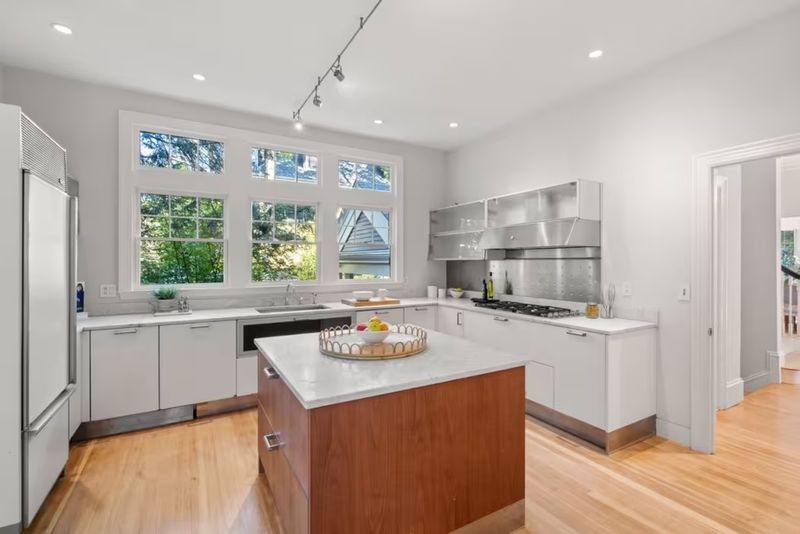
The property underwent a gut renovation before its current sellers acquired it in 2009 for $3.7 million, according to public property records. The renovation substantially changed the interior, replacing the familiar kitchen and updating the residence for contemporary living.
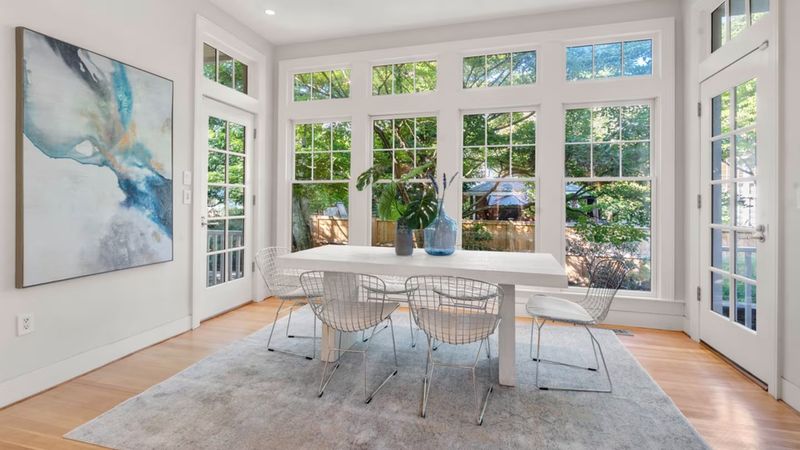
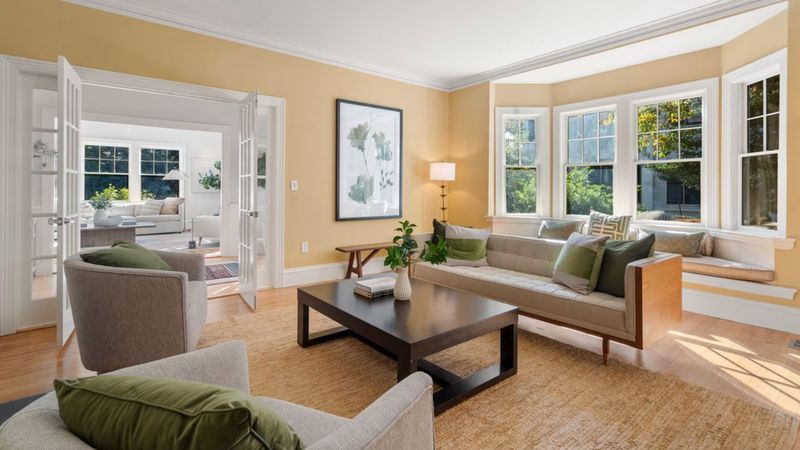
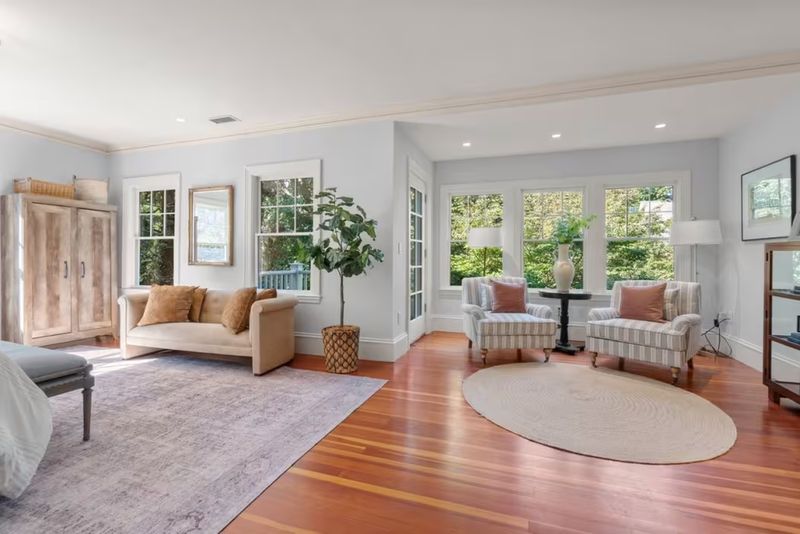
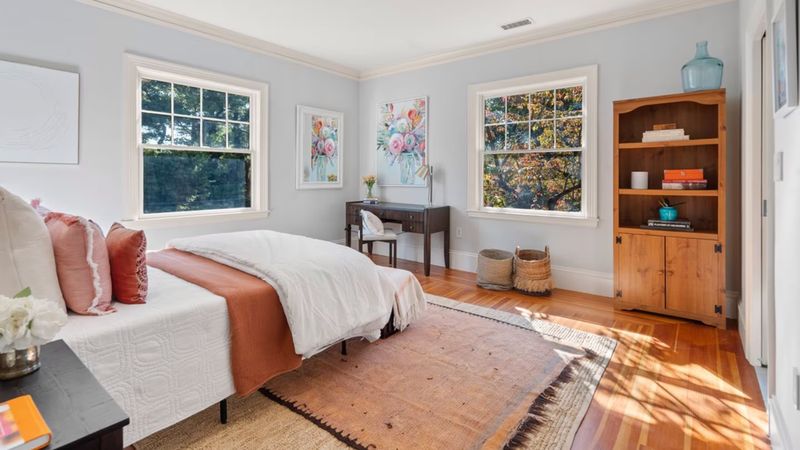
The current home offers six bedrooms and a total of six bathrooms, including four full bathrooms and two half bathrooms, according to the listing information. Its 6,321 square feet are arranged across three levels, providing generous space for family life and entertaining.
The modern kitchen reflects the property’s transformation from a historically significant family residence into a contemporary luxury home. Listing materials describe Poggenpohl cabinetry and a well-equipped butler’s pantry that can also function as a caterer’s kitchen.
Other features include hardwood flooring, interior French doors, gas fireplaces, a wine room and Lutron lighting. A solar panel system adds an energy-related feature to the property.
Outside, landscaped grounds surround a brick patio framed by a stone wall. A long driveway leads to a porte cochère, providing sheltered parking while reinforcing the home’s traditional residential character.
The result is a residence that retains the scale and exterior presence of a late-19th-century Cambridge home while offering updated amenities suited to modern ownership.
Four Decades of Julia Child and a Lasting Cambridge Connection
Julia Child’s relationship with Cambridge extended well beyond her front door. The city was the backdrop to her professional development and her everyday life, providing the neighborhood connections that accompanied her rise to national prominence.
She became a familiar presence in the local community, visiting businesses and food establishments in the Harvard Square area. Her television career also developed in Boston, where WGBH helped introduce her approach to cooking to a nationwide audience through The French Chef.
The influence of her work was significant. Child helped make French techniques and ingredients more approachable to American home cooks, encouraging viewers to experiment rather than be intimidated by unfamiliar recipes. Her television presence was direct, humorous and practical, helping establish a style of food programming that combined instruction with personality.
The home at 103 Irving Street became part of that story. Viewers who watched her programs could associate the kitchen with the person behind the recipes, giving the property a cultural recognition rarely attached to a private residence.
After Child donated the house to Smith College, her alma mater, the property was sold. Smith College has since acknowledged that proceeds from the sale of the Cambridge home helped partially fund its campus center, later named the Julia McWilliams Child ’34 Campus Center in her honor.
A Potential Historical Marker for 103 Irving Street
The property’s cultural importance has also prompted renewed interest from local officials. In August 2026, the Cambridge City Council adopted a request asking the city manager to work with the Cambridge Historical Commission, the property owner and other relevant parties on the possibility of placing a historical marker at 103 Irving Street.
The proposed marker would recognize Child’s life, work and connection to Cambridge. Its final wording and implementation remain subject to the city’s process and the necessary permissions, including coordination with the property’s new owner.
The discussion reflects a broader recognition that historic significance is not always confined to public buildings, museums or formally designated landmarks. A private home can also represent an important chapter in a city’s cultural identity.
The property may also carry a connection to another notable figure. According to the former owner, Harvard law professor Michael Klarman, the house’s first inhabitant was philosopher Josiah Royce, who was recruited to Harvard by William James. Any future marker could potentially acknowledge this earlier history as well.
A $6.525 Million Sale for a Distinctive Cambridge Address
At $6.525 million, the sale of 103 Irving Street places the property among the notable residential transactions in Cambridge during the fall of 2026. The home offers 6,321 square feet, six bedrooms and a quarter-acre setting, but its distinction cannot be measured by conventional property specifications alone.
Its appeal rests on the intersection of historic architecture, contemporary renovation and a cultural legacy recognized far beyond Massachusetts. The original kitchen has been preserved at the Smithsonian, while the residence itself has entered a new chapter under different ownership.
For the buyers, the acquisition represents an opportunity to own a substantial Victorian home close to Harvard Yard and Cambridge’s cultural institutions, while becoming the next custodians of an address associated with one of America’s most influential culinary figures.
As californialuxuryhouses observes, the story of 103 Irving Street illustrates a particular dimension of luxury real estate: some homes carry a significance that survives renovation, changes of ownership and the passage of generations. Julia Child’s former Cambridge residence is one of them. Its kitchen may now welcome visitors in Washington, but the home where she lived, worked and helped change American cooking remains an enduring part of Cambridge history.