

A rare piece of New Orleans architectural history has entered the luxury real estate market, offering prospective buyers the opportunity to own a nearly 176-year-old residence overlooking one of the city’s most recognizable waterways. Known as the Morel House, the Greek Revival property at 1347 Moss Street is listed for $2.2 million, combining preserved 19th-century craftsmanship with a location that places some of New Orleans’ most celebrated cultural attractions within walking distance.
Built in 1850, the approximately 4,416-square-foot residence occupies a prominent position along Bayou St. John in the historic Faubourg St. John neighborhood. Its five bedrooms, three full bathrooms and one half bathroom are arranged across three levels, while original hardwood floors, five fireplace mantels, pocket doors and soaring 14-foot ceilings preserve much of its historic character.
Yet the property’s appeal extends beyond its architectural heritage. Across the waterway, the Magnolia Bridge provides a pedestrian connection to the Fair Grounds Race Course, home of the annual New Orleans Jazz & Heritage Festival. For buyers considering New Orleans luxury real estate, few historic residences offer such a direct connection between private waterfront living and the city’s cultural identity.
A Historic Greek Revival Home Along Bayou St. John
The Morel House occupies a particularly distinctive setting in Faubourg St. John, a neighborhood recognized for its historic architecture, mature live oak trees and relationship with Bayou St. John.
The house is officially identified in the City of New Orleans’ historic landmarks records as the Morel-Stytz House, with a construction date of 1850. Its designation places it among the city’s recognized historic properties and reinforces the importance of preserving its architectural character.
Greek Revival architecture was particularly popular in New Orleans between approximately 1820 and 1860. The style drew inspiration from classical Greek architecture, emphasizing balanced proportions, formal entrances, symmetrical arrangements and restrained decorative details.
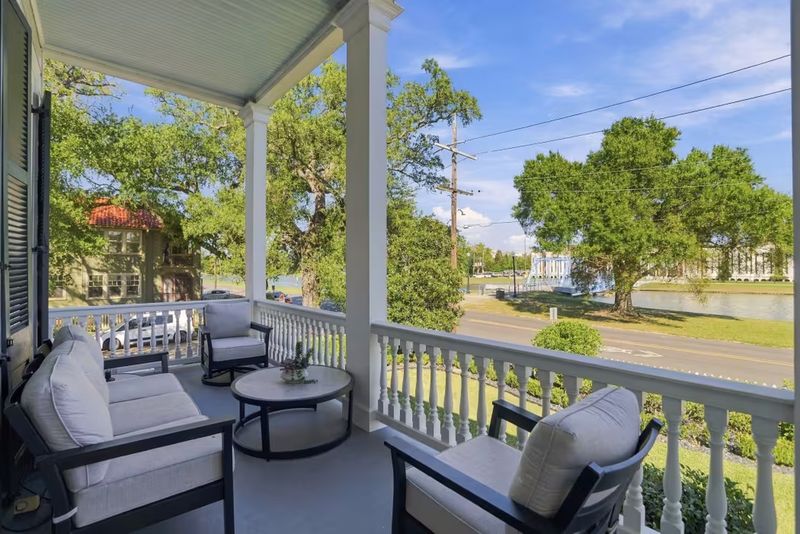
At 1347 Moss Street, the historical character is especially evident in the raised front porch, original windows and traditional center-hall arrangement. A staircase leads to the covered porch overlooking the bayou, while tall windows with exterior shutters frame the entrance.
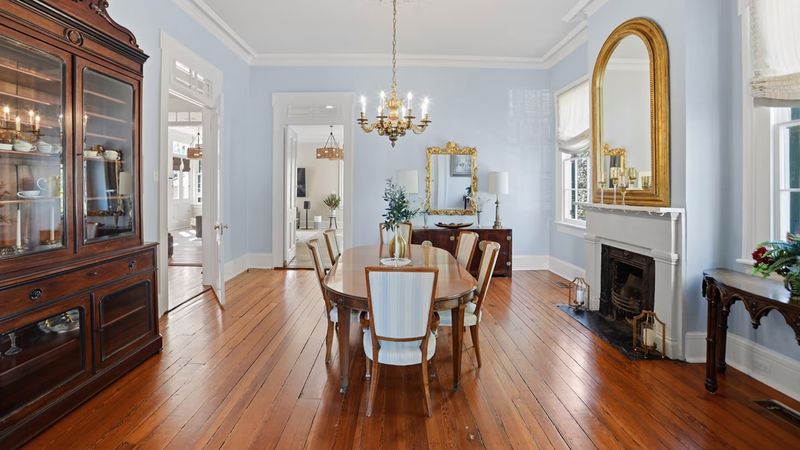
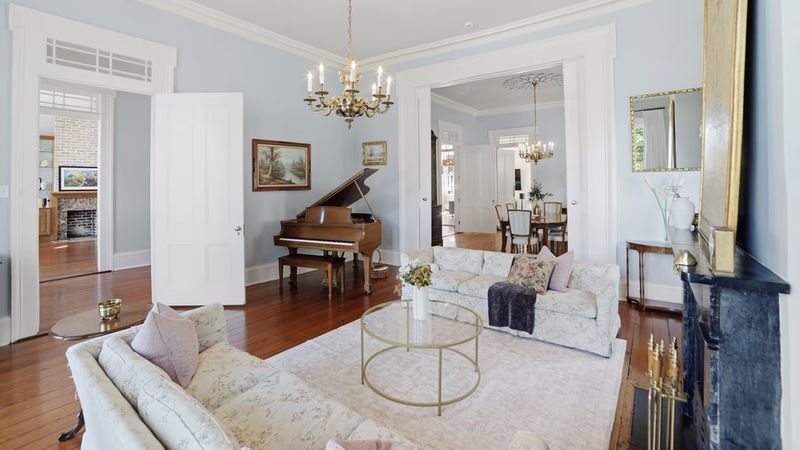
The architectural presentation is complemented by a series of original interior elements that have survived through successive periods of ownership. These include five fireplace mantels, pocket doors, hardwood flooring and ceilings reaching approximately 14 feet.
Because the property falls within the city’s historic preservation framework, exterior modifications are subject to review by the Historic District Landmarks Commission. This oversight helps protect the architectural character of the residence and its surrounding streetscape, although it also means that future renovation plans will need to respect applicable preservation requirements.
A Front Porch Overlooking the Bayou
For the property’s current owners, Pete and Stephanie Tucker, the most memorable part of the house has not necessarily been its historic interiors or architectural details. Instead, it is the covered front porch overlooking Bayou St. John.
The couple relocated from Austin, Texas, nearly six years ago, attracted by the neighborhood’s distinctive atmosphere and proximity to the water.
“It’s a real smooth, calm waterway where you can go kayaking, paddleboarding and canoeing,” Pete Tucker told Mansion Global. He also described spending evenings on the porch with friends, enjoying wine and cheese while watching pelicans fly over the water and residents moving along the bayou.
That description captures an important aspect of the property’s appeal. Rather than functioning simply as a historic residence, 1347 Moss Street offers a lifestyle shaped by outdoor recreation, waterfront views and the everyday activity of a well-established New Orleans neighborhood.
The bayou provides opportunities for kayaking, canoeing and paddleboarding, while its grassy banks and surrounding pathways are popular with residents who enjoy walking, jogging and spending time outdoors.
For buyers searching for a historic home in New Orleans, this combination of architectural character and direct access to nature is a compelling alternative to the more formal residential settings found in some of the city’s traditional luxury districts.
Preserved Interiors Meet Contemporary Convenience
Behind the traditional exterior, the Morel House offers a substantial interior arranged around a long central hallway extending through much of the residence.
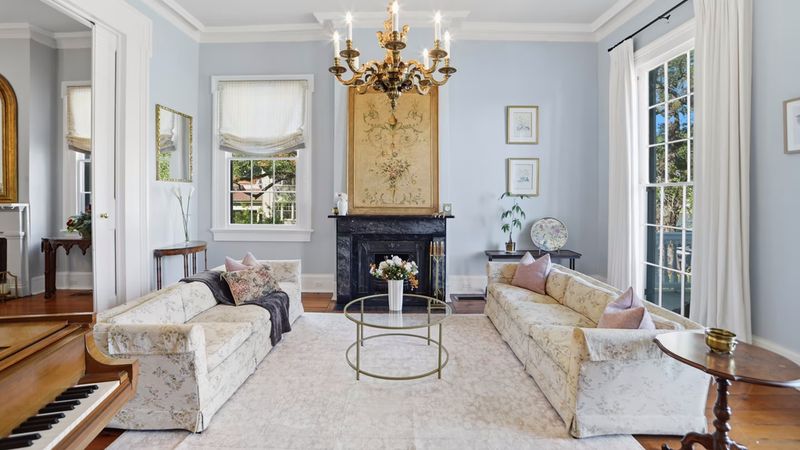
The entrance opens into a formal circulation space connecting the principal living areas, including the living room, dining room and primary suite. Each of these rooms features a fireplace, reinforcing the traditional character of the home’s original layout.
At the opposite end of the hallway, the family room connects with the kitchen, creating a more informal gathering area for everyday living and entertaining.
The residence’s original hardwood floors, pocket doors and fireplace surrounds provide continuity between the different rooms. Meanwhile, the 14-foot ceilings and tall windows contribute to a sense of openness that is characteristic of many historic New Orleans residences.
The remaining four bedrooms are distributed between the upper floor and the lower level, which sits at ground level beneath the raised front porch.
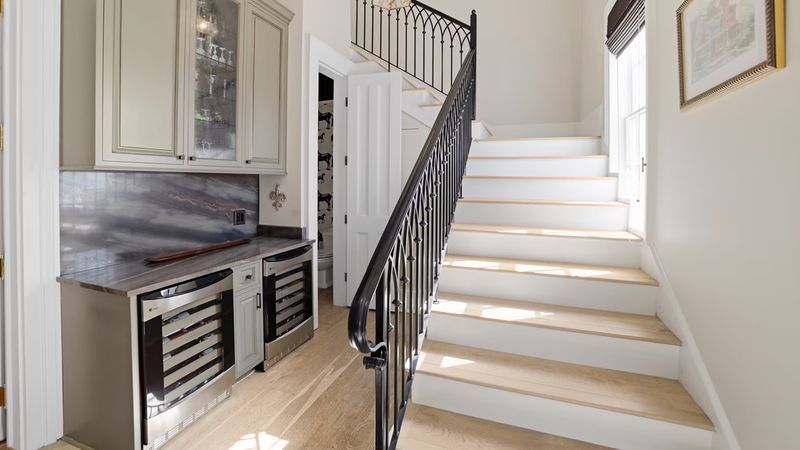
Although the house retains much of its 19th-century character, its infrastructure has been adapted to contemporary residential expectations. Modern additions include a whole-house generator, solar panels and a Tesla electric-vehicle charging port.
These features are particularly relevant for buyers seeking the atmosphere of a historic residence without entirely sacrificing modern convenience.
The listing describes the Morel House as an American architectural treasure, emphasizing its combination of historic significance, waterfront positioning and preserved craftsmanship.
Jazz Fest, City Park and the Cultural Appeal of Faubourg St. John
Location is arguably one of the strongest selling points of 1347 Moss Street.
The property stands across Bayou St. John from the Fair Grounds Race Course, where the New Orleans Jazz & Heritage Festival takes place each spring. Crossing the distinctive blue Magnolia Bridge brings residents toward the festival grounds, creating an unusually convenient connection to one of Louisiana’s most important annual cultural events.
Listing agent Tricia King of Compass highlighted the neighborhood’s appeal to Jazz Fest enthusiasts when discussing the property’s arrival on the market.
“When a house comes up in Bayou St. John, it’s scooped up just because people want to live by the jazz fest,” King told Mansion Global.
The attraction, however, is not limited to the festival season. The surrounding community offers an established lifestyle built around outdoor recreation, neighborhood restaurants, independent businesses and historic public spaces.
New Orleans City Park, one of the largest urban parks in the United States, encompasses approximately 1,300 acres and is only a short distance from the property. Its attractions include the New Orleans Museum of Art, the Sydney and Walda Besthoff Sculpture Garden, the Botanical Garden, golf facilities, walking trails and recreational areas.
The neighborhood also provides access to several distinctive local dining destinations. Residents can explore Creole and Louisiana-inspired cuisine at nearby restaurants, visit Parkway Bakery & Tavern for its celebrated po’boys or enjoy the casual outdoor atmosphere of Bayou Beer Garden.
For those who appreciate New Orleans’ traditional culinary culture, the French Quarter remains accessible by public transportation or a short drive. Its restaurants, historic bars, boutique hotels and independent retailers provide an additional dimension to the neighborhood’s residential appeal.
Transportation connections are another practical advantage. The Canal Streetcar network, particularly the City Park/Museum route, links the surrounding area with downtown destinations and cultural attractions. Nearby bus services provide additional connections throughout the city.
Faubourg St. John itself has a long history, dating back to 1708, before the formal establishment of New Orleans. According to the Faubourg St. John Neighborhood Association, the community today has more than 4,000 residents and maintains a strong identity shaped by historic architecture, local businesses and its relationship with the bayou.
What the $2.2 Million Asking Price Represents
At $2.2 million, the Morel House enters the market as a distinctive offering within the New Orleans luxury real estate landscape.
The asking price represents approximately $498 per square foot based on the 4,416-square-foot living area reported in the current MLS listing. The property also occupies an approximately 8,505-square-foot lot, providing a relatively substantial setting for a historic residence in this part of the city.
Its value proposition is not based solely on interior dimensions or bedroom count. Instead, the combination of architectural preservation, waterfront positioning, historic designation and proximity to the Fair Grounds creates a more specialized appeal.
The current listing is represented by Tricia King of Compass Uptown-Maple Street. The property is being marketed as the Morel House, an opportunity to acquire a recognized piece of New Orleans history.
Historical transaction information requires some qualification. Louisiana is a nondisclosure state, and the current owners’ purchase price has not been publicly disclosed in the reporting available for this listing. Consequently, a reliable comparison between their acquisition cost and the current asking price cannot be established from the available information.
The property’s longer ownership history would require further deed research through the Orleans Parish conveyance records and city archives. No unverified historical sale prices or previous owners have been included here.
A Rare Opportunity to Own a Piece of New Orleans History
The Morel House represents a particular kind of luxury that cannot easily be recreated through contemporary construction.
Its appeal comes from the preservation of original architectural details, the atmosphere of a historic neighborhood and the experience of living beside Bayou St. John. The residence also benefits from an unusually close relationship with the cultural life of New Orleans, from Jazz Fest and City Park to the restaurants and historic streets of the surrounding community.
For californialuxuryhouses, properties such as 1347 Moss Street illustrate why historic architecture continues to attract attention in the broader American luxury residential market. While newer estates often compete through scale, technology and resort-style amenities, historic homes can offer something equally compelling: authenticity, cultural significance and a direct connection to the history of their surroundings.
The next owner of the Morel House will inherit more than a five-bedroom residence. They will become the steward of a recognized 1850 landmark, with an opportunity to preserve its architectural legacy while enjoying one of New Orleans’ most distinctive waterfront settings.