
For François Bardonnet, restoring an old house is less about making it new than understanding what should be left alone.
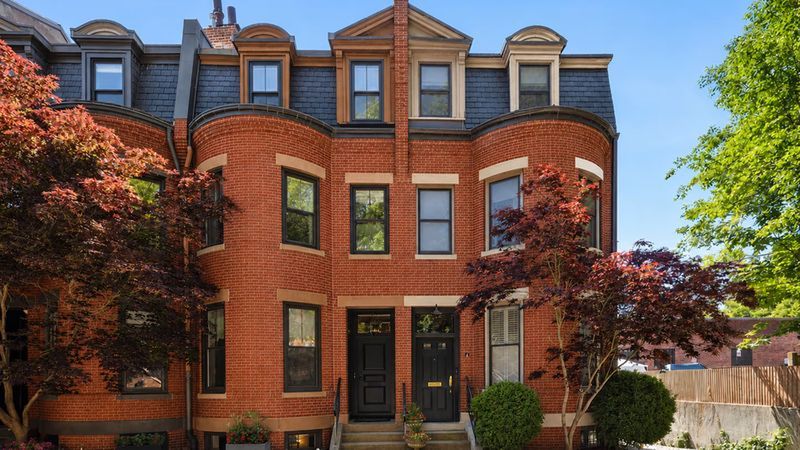
That philosophy is now on display in a restored Victorian townhouse in Boston’s historic South End, where the Paris-born antiques dealer has listed his four-level residence for $3.695 million. The approximately 2,700-square-foot home dates to 1890 and is attributed to Gridley J.F. Bryant, one of the most influential architects in Boston’s 19th-century development.
Bardonnet, the owner of Antiques Period in Beacon Hill, purchased the townhouse with his husband for $1.675 million in 2019, according to property records cited in the listing report. The couple subsequently undertook a thoughtful restoration, retaining significant original elements while adapting the residence for contemporary life.
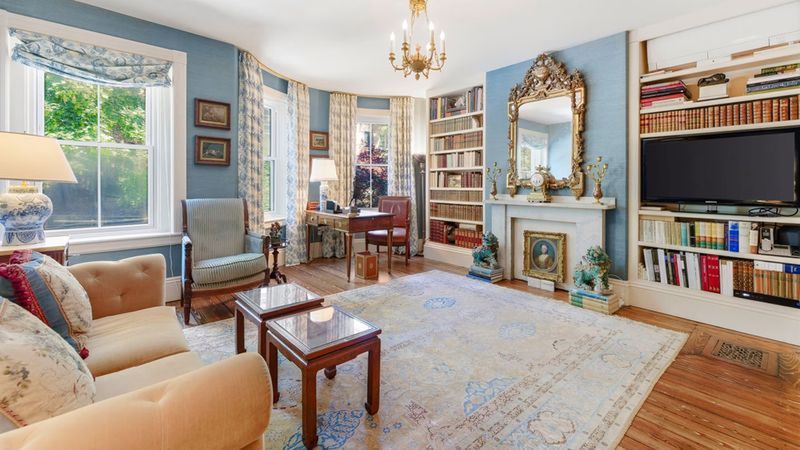
The result is a three-bedroom Boston townhouse that pairs Victorian architecture with an unusually personal collection of French antiques, artwork and design pieces.
For californialuxuryhouses, the property is a reminder that luxury real estate is not always defined by size. In historic neighborhoods, provenance, craftsmanship and architectural integrity can be just as valuable as square footage.
A 19th-Century Boston Townhouse With Architectural Provenance
The house was built in 1890 by Gridley J.F. Bryant, whose career helped shape Boston’s architectural identity during the 19th century.
Bryant established his own architecture practice in 1837 and went on to design numerous public, commercial and residential buildings throughout New England. Among his better-known Boston works are Old City Hall, Horticultural Hall, Boston City Hospital and the Suffolk County Jail. Architectural historians have also credited him with playing a major role in the development of what became known as the Boston Granite Style.
His legacy is particularly relevant in the South End, a neighborhood whose Victorian architecture remains one of its defining characteristics.
Boston’s South End Landmark District was designated in 1983, while the neighborhood itself was developed primarily from the mid-19th century onward with long rows of fashionable single-family houses. The resulting streetscape is remarkably cohesive, with historic brick and brownstone residences arranged around a series of landscaped squares.
Against that backdrop, the townhouse’s deep red-brick facade, black slate roof and dormer windows feel less like decorative choices than pieces of a much larger architectural story.
A Restoration Built Around What Was Already There
When Bardonnet and his husband acquired the property in 2019, the house had spent roughly 80 years in the same family and required work.
Rather than stripping away its Victorian character, they concentrated on preserving the elements that gave the residence its identity.
“We approached it by trying to keep as many of the original details as possible,” Bardonnet said.
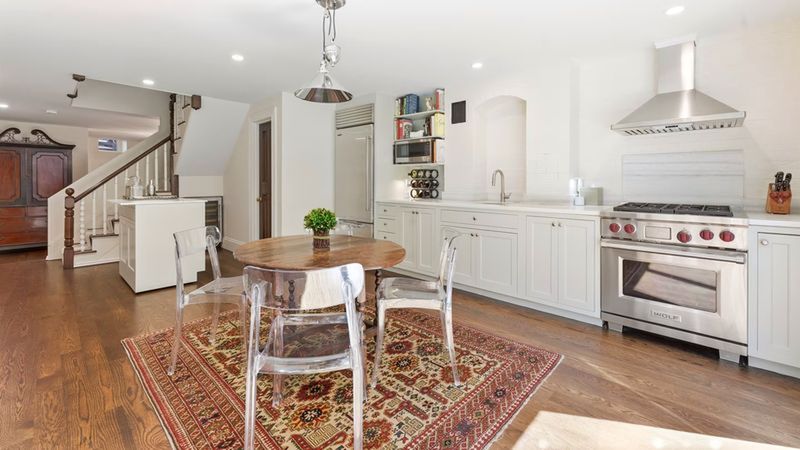
The centerpiece is a balustraded wooden staircase extending through the home’s four levels. A skylight above the stairwell draws daylight deep into the interior, turning what could have been a circulation space into one of the property’s defining architectural features.
The restoration also introduced a number of updates designed for modern living. Two bathrooms were added, gas fireplaces were installed, and the rear wall between the kitchen and garden was opened to create a stronger connection between the interior and outdoor space.
Upstairs, the entire top floor was transformed into a primary suite, while two additional bedrooms occupy the second floor.
The approach is characteristic of a sophisticated historic-home renovation: modern amenities are present, but the architecture is still allowed to tell its own story.
A Parisian Eye Meets Victorian Boston
Perhaps the most distinctive part of the renovation came from Bardonnet’s own background.
Although the townhouse was firmly rooted in Victorian Boston, its owner is Parisian by birth and works professionally with European antiques. That influence eventually made its way into the architecture itself.
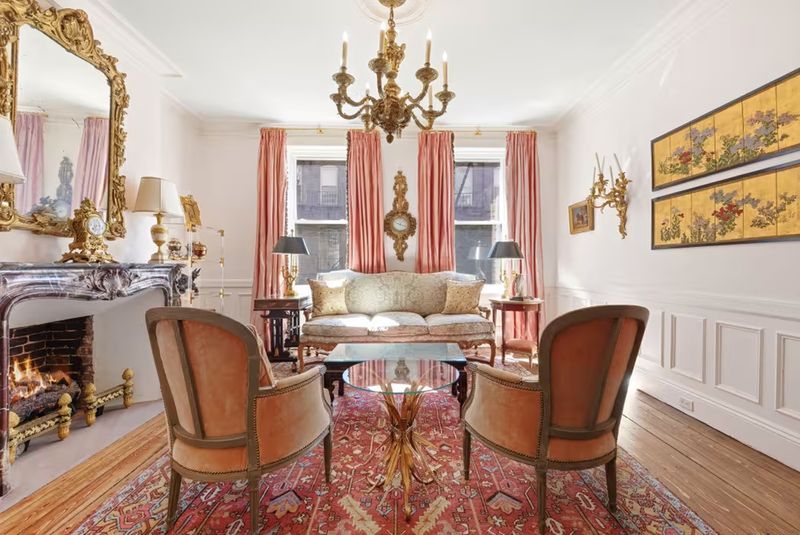
Bardonnet replaced the original period fireplaces in the living and dining rooms with antique marble fireplaces imported from Burgundy.
“I wanted something more French in tone,” he said.
It is an intervention that could easily have overwhelmed a historic property. Here, however, it becomes part of the home’s layered identity: 19th-century Boston architecture interpreted through a French collector’s eye.
The distinction matters because Bardonnet’s relationship with design extends well beyond decorating a house for sale. His Beacon Hill antiques business specializes in European furniture, with an emphasis on period and neoclassical pieces, as well as antique books and old-master drawings.
That expertise is visible throughout the residence.
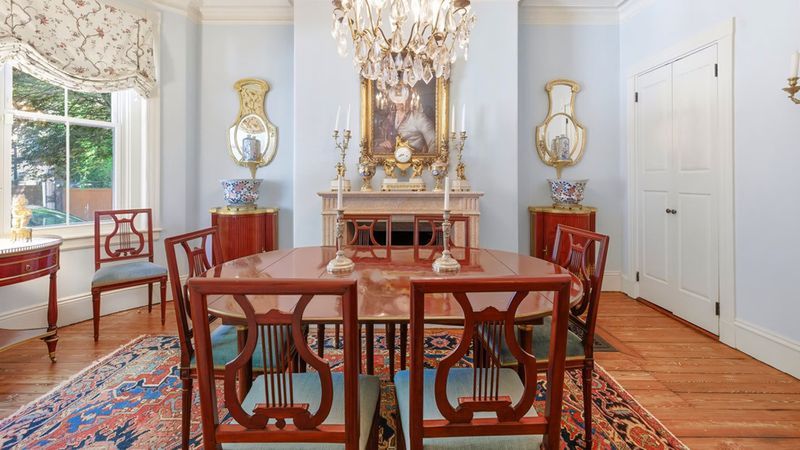
The House Became a Private Cabinet of Curiosities
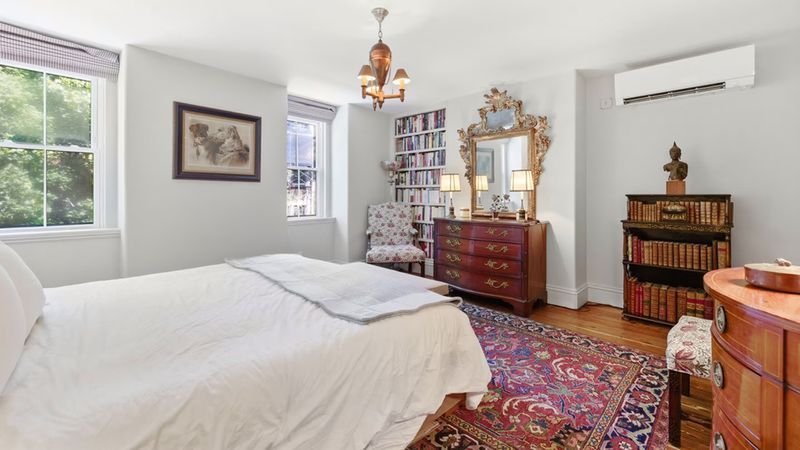
During Bardonnet’s ownership, the townhouse was filled with antiques, rugs, chandeliers, mirrors and artworks.
He joked that he sometimes had to warn friends to bring their climbing shoes when visiting because of the sheer quantity of objects displayed throughout the house.
“That’s really my medium; and that includes the rugs, the chandeliers, the mirrors, and the furnishings,” Bardonnet said.
The furnishings, however, are not included with the sale.
That may initially seem like a disappointment for a buyer attracted to the photographs, where the antiques and artwork contribute so strongly to the atmosphere. But it also creates an interesting opportunity: the next owner inherits the architectural framework without being required to preserve Bardonnet’s particular collection.
In other words, the house can become something new while retaining the restoration work that has already been done.
A Historic Exterior With a Remarkably Private Setting
The townhouse forms part of a row of four attached homes and sits along a private way within the South End.
Its exterior remains notably restrained. The red-brick facade, slate roof and dormer windows preserve the historic character of the residence, while the garden-facing side provides a more private counterpart to the formal street presence.
That balance between historic streetscape and privacy is one of the property’s strongest selling points.
“This property is a wonderful example of a historic South End single-family home that has been thoughtfully brought into the modern era without losing its architectural character,” listing agent Manny Sarkis of Douglas Elliman said via email.
“The property also has an incredible sense of privacy while remaining in the heart of the South End.”
For a buyer seeking a Boston townhouse, that combination is difficult to manufacture. New construction can replicate finishes, but it cannot reproduce 130-plus years of architectural continuity.
Life in Boston’s South End
The South End’s appeal extends well beyond its architecture.
Boston describes the neighborhood as a landmark district anchored by Tremont Street, Columbus Avenue and Massachusetts Avenue, with nearly 30 parks, an established arts scene and a strong restaurant culture. Tremont Street is known locally as “Restaurant Row,” while Shawmut Avenue combines boutiques and restaurants along a tree-lined streetscape.
The neighborhood’s retail and cultural character also gives the townhouse a lifestyle advantage.
The SoWa Art + Design District brings galleries, studios, independent businesses and the popular SoWa Open Market to the area, while nearby streets offer an assortment of restaurants, cafes and specialty shops. Visit Boston describes the South End as a neighborhood where historic brick townhouses, pocket parks, independent boutiques and restaurants coexist within walking distance of downtown and Back Bay.
The dining scene is particularly established. Boston’s official neighborhood business guide currently lists restaurants ranging from The Beehive on Tremont Street to Toro, Mesob, Fuji at Ink Block and other independent establishments throughout the district.
For residents, the location offers the rare urban luxury of being able to move between home, restaurants, galleries, parks and downtown without leaving the neighborhood’s historic fabric.
Preservation Is Part of the Address
One of the less visible benefits of buying a property in the South End is the level of architectural protection surrounding the neighborhood.
The South End Landmark District regulates certain exterior changes, including work involving front facades, visible rooftops and some side or rear elevations facing public ways. The review process is intended to protect the historic architectural character of the district.
That protection can be meaningful to owners who are buying not merely a house, but a piece of Boston’s built heritage.
The neighborhood was listed on the National Register of Historic Places in 1973, and the South End Historical Society identifies it as the largest Victorian brick rowhouse district in the United States.
In that context, the townhouse’s renovation becomes part of a broader preservation story.
Bardonnet did not attempt to erase the building’s age. Instead, he worked with it, introducing contemporary functionality while allowing the staircase, facade, proportions and historic character to remain central.
From $1.675 Million Purchase to a $3.695 Million Listing
The property’s transaction history adds another dimension to the story.
Bardonnet and his husband purchased the townhouse for $1.675 million in 2019, according to property records cited in the original listing report. It is now being offered for $3.695 million.
That represents a nominal increase of approximately $2.02 million, or about 121%, before accounting for renovation costs, carrying expenses and changes in the broader Boston housing market.
The difference is significant, but the asking price is not simply a reflection of appreciation.
The current offering also represents the value added through the restoration itself, as well as the scarcity of architecturally distinguished historic single-family homes in a neighborhood where preservation is central to its identity.
For an antiques dealer, perhaps there is an appealing symmetry in that.
Bardonnet bought a historic object in need of care, studied its original character, repaired what could be preserved and added pieces from another architectural tradition without completely obscuring what came before.
Now, the house is ready for its next chapter.
A Historic Home With a Collector’s Sensibility
The most compelling aspect of this Boston townhouse may ultimately be its sense of authorship.
Bryant gave the property its original architectural language in 1890. Decades of ownership added another layer of history. Bardonnet’s restoration introduced a distinctly French sensibility, while the property’s location places it within one of the country’s most important surviving Victorian residential districts.
It is not a blank canvas, and that is precisely the point.
At $3.695 million, the residence offers approximately 2,700 square feet across four levels, three bedrooms, a garden, restored historic details and an architectural pedigree that cannot be recreated. But the real luxury lies in the accumulated layers: Boston history outside, Victorian craftsmanship within and a Parisian collector’s eye woven through the renovation.
For californialuxuryhouses, it is the kind of property that demonstrates why the most interesting luxury homes are often the ones with something to say before the new owner ever moves in.
The townhouse is listed with Manny Sarkis of Douglas Elliman.