
A Hollywood Actress’s Former New Mexico Retreat Returns to the Market
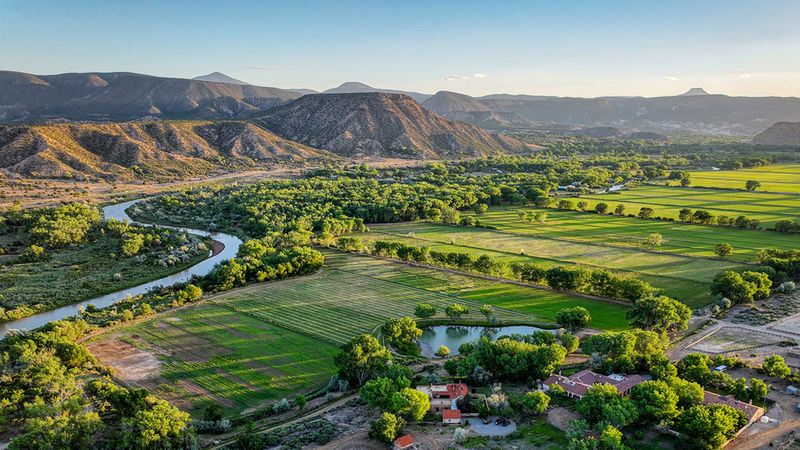
Abiquiu Valley Farm, a distinctive riverfront estate in northern New Mexico once owned by actress Marsha Mason, has returned to the luxury real estate market with an asking price of $13.5 million. Spanning approximately 228 acres along the Rio Chama, the property combines Southwestern architecture, productive agricultural land and a landscape that has long attracted artists, outdoor enthusiasts and buyers seeking a quieter alternative to conventional luxury living.
Located near Abiquiu, roughly 50 minutes north of Santa Fe, the estate occupies a setting defined by red sandstone cliffs, gray bluffs and towering cottonwood trees. Its approximately 1.4 miles of river frontage, private ponds and proximity to Carson National Forest contribute to a combination of recreational and agricultural possibilities that is unusual even among high-end rural properties.
The listing is represented by Cody Lujan and Chad Dugger of Hall and Hall, working with Matt Desmond of Corcoran Plaza Properties. Lujan described the property as exceptional within the regional market.
“Not only is it a special place for the New Mexico market, it’s a special place for the Western U.S.,” he said, according to Mansion Global.
For prospective buyers, Abiquiu Valley Farm offers more than a secluded residence. Its history as an organic medicinal herb farm, substantial adobe buildings and connection to the artistic landscape associated with Georgia O’Keeffe give the property a distinctive identity.
Marsha Mason’s Chapter in Abiquiu
Mason, the four-time Academy Award nominee known for films including The Goodbye Girl and Cinderella Liberty, moved to New Mexico in the early 1990s and established a medicinal herb business on the property. Away from the conventional rhythms of Hollywood, she developed the farm into an agricultural enterprise focused on medicinal plants and organic cultivation.
According to an Associated Press report published in February 2014, Mason bought the approximately 247-acre property in the 1990s and eventually sold it in a transaction that closed on January 31, 2014. The reported sale price was $6.2 million, below its previous $11 million asking price. The acreage cited at the time differs from the approximately 228 acres in the current listing, so the figures should not be treated as identical property measurements without further verification.
The farm subsequently attracted buyers interested in its combination of architecture, agricultural potential and equestrian facilities. A 2024 report identified Sarah and Peter Solmssen as the buyers in the 2014 transaction and described their stewardship of the biodynamic farm and improvements to the property. The current ownership has not been independently confirmed in the latest reporting.
The history is relevant to the property’s present appeal. Rather than being simply a celebrity-associated residence, Abiquiu Valley Farm has functioned as a working agricultural property with a documented connection to organic medicinal herbs.
A Southwestern Residence Designed Around a Courtyard
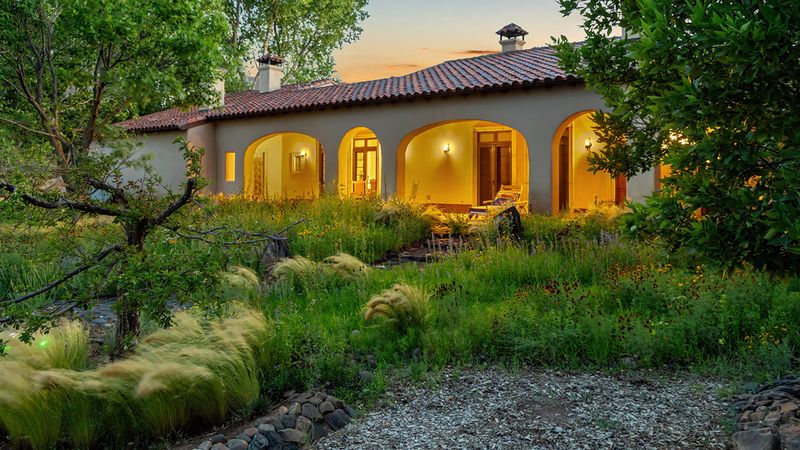
At the heart of Abiquiu Valley Farm is a 7,294-square-foot Spanish adobe-style residence designed by architect and designer Theodore Waddell. The house is arranged around a central courtyard, a traditional Southwestern planning approach that creates a sheltered outdoor gathering space while connecting the surrounding rooms.
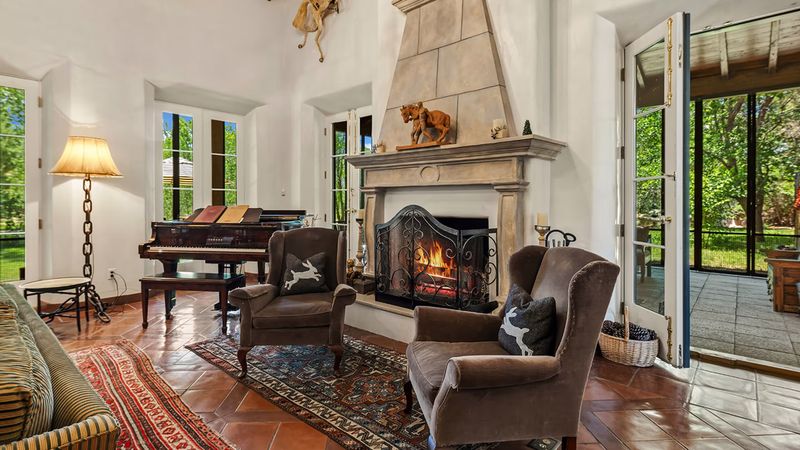
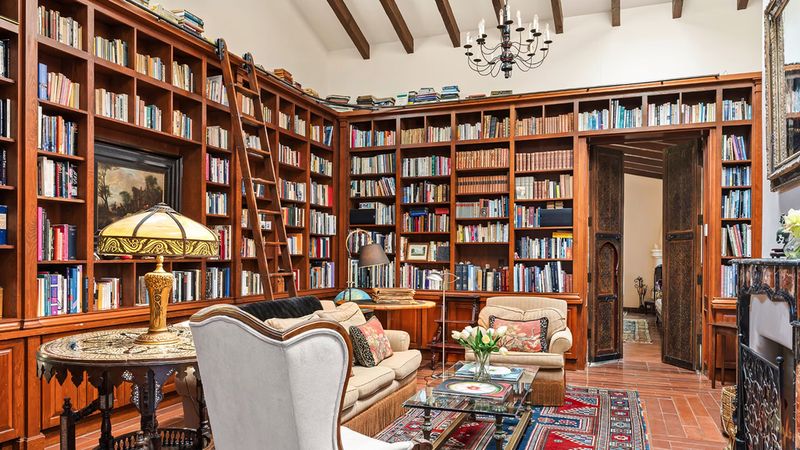
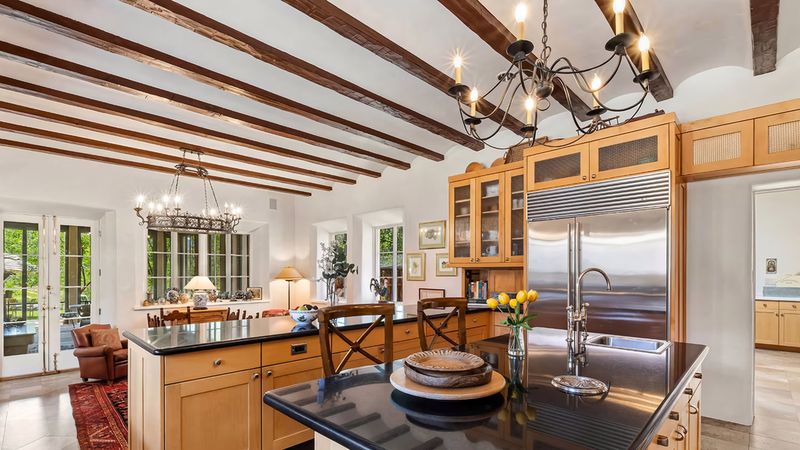
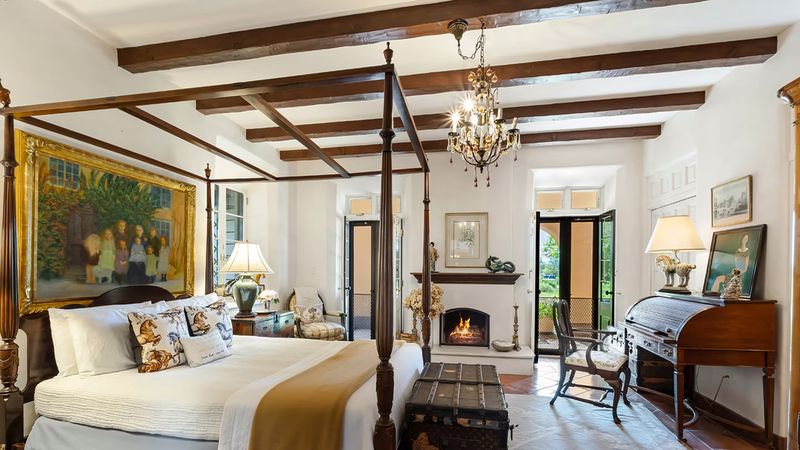
The interiors include a library, chef’s kitchen, offices, a primary suite and additional ensuite guest rooms. Vaulted ceilings and fireplaces in nearly every room contribute to an atmosphere that balances the solidity of adobe construction with the scale expected of a luxury estate.
The property extends well beyond the principal residence. A separate 4,685-square-foot adobe guest house includes three bedrooms and five bathrooms, with two individual casitas connected through a courtyard arrangement. A 5,373-square-foot cathedral-style adobe lodge contains two apartments and offers flexible space for entertaining, gatherings or other uses, subject to applicable regulations.
These buildings create a residential compound suited to extended family stays and hosting guests without requiring everyone to occupy the main house. The architectural vocabulary remains consistent with the region, favoring earthy materials, enclosed courtyards and a close relationship between indoor spaces and the surrounding landscape.
The ranch also includes solar power generation, geothermal heating and cooling, reverse-osmosis water filtration and established irrigation infrastructure, according to the listing materials.
River Frontage, Organic Farmland and Equestrian Amenities
The land is one of Abiquiu Valley Farm’s most significant assets. Approximately 70 acres of irrigated meadows have historically supported alfalfa, medicinal herbs and other crops. Hall and Hall describes the property as a Demeter-certified biodynamic organic farm, a designation associated with agricultural practices that emphasize ecological stewardship and soil health.
The property also benefits from acequia irrigation rights, reflecting the region’s longstanding communal irrigation traditions. Buyers considering continued agricultural operations would need to review the applicable water rights, certifications and operating requirements as part of their due diligence.
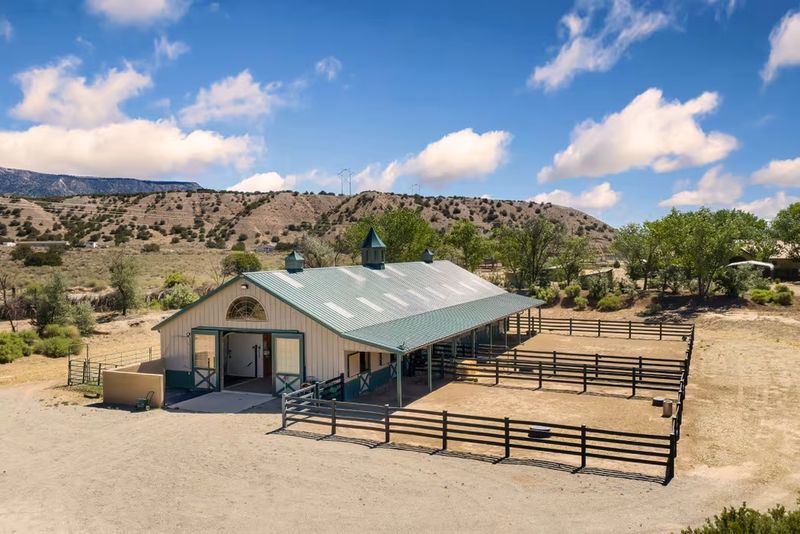
For equestrian owners, the estate includes a 10-stall horse barn with paddocks, watering facilities, a wash area and a heated tack room. A dressage arena, round pen and fenced pastures support a range of horse-related activities.
Outdoor recreation extends to the Rio Chama, where the property offers more than a mile of river frontage for trout fishing, as well as three ponds and private trails for horseback riding, walking and cycling. The nearby Carson National Forest provides additional access to trails and wilderness landscapes.
Wildlife is another attraction. The listing describes a resident elk population, while the wider area supports a variety of bird species and other wildlife. Lujan highlighted the richness of the property’s birdlife when describing its appeal.
“One morning I counted 17 different bird species on the property,” he said.
For buyers interested in land management, outdoor pursuits or an agricultural retreat, these features give Abiquiu Valley Farm a broader identity than a conventional luxury home.
The Artistic Landscape of Georgia O’Keeffe
Abiquiu Valley Farm sits within a landscape closely associated with Georgia O’Keeffe, whose paintings helped establish northern New Mexico as one of America’s most recognizable artistic destinations. Her former home and studio stand across the Rio Chama from the property and are managed by the Georgia O’Keeffe Museum.
The region’s visual character is unmistakable: sculpted sandstone formations, expansive skies, cottonwood-lined waterways and the flat-topped peak of Cerro Pedernal. These natural elements shaped O’Keeffe’s artistic practice and continue to attract visitors interested in the relationship between landscape, architecture and art.
The museum operates tours of O’Keeffe’s Abiquiu home and studio, with reservations required and the main tour season running from March through November. The nearby Welcome Center provides visitor information, while Abiquiu itself offers cafés, restaurants, galleries, inns and small shops.
The location also places residents within reach of Abiquiu Lake, Ghost Ranch and Ojo Caliente Mineral Springs Resort. Santa Fe, with its galleries, museums, restaurants and established cultural institutions, is approximately a 50-minute drive away. The Santa Fe Opera is roughly 45 minutes from the property, according to Hall and Hall.
For an owner seeking a rural residence without giving up access to cultural activities, the surrounding community adds meaningful value.
A Ranch with Broad Appeal Beyond Agriculture
The combination of river frontage, architecture, farmland and equestrian facilities allows Abiquiu Valley Farm to appeal to more than one category of buyer. It could suit someone seeking a private family retreat, an equestrian estate or a property with continued agricultural potential.
Lujan emphasized that breadth when discussing the listing.
“The property is unique in that it will be attractive to a wide range of buyers,” he said, explaining that it combines agricultural and recreational qualities rather than concentrating on a single use.
He also pointed to interest among buyers drawn to Southwestern architecture and the region’s arts and culture, noting that such purchasers are attentive to properties with this combination of landscape and character.
The estate’s asking price has changed over time. After Mason’s 2014 sale at a reported $6.2 million, the property was marketed again in 2024 at $16 million, according to published reporting. Its current $13.5 million asking price is a listing price, not a confirmed transaction value, and does not establish the property’s eventual sale price or the return achieved by subsequent owners.
For readers of californialuxuryhouses, Abiquiu Valley Farm stands out as a reminder that exceptional real estate is often defined by the life and landscape surrounding it as much as by its buildings. Its agricultural history, adobe architecture and position beside the Rio Chama give the estate a character that would be difficult to reproduce elsewhere.
Listed at $13.5 million, the property presents an opportunity to acquire a substantial New Mexico estate with established residences, equestrian infrastructure and a documented connection to the region’s artistic and agricultural heritage. Its next chapter will depend on a buyer who appreciates both the practical possibilities of the land and the distinctive sense of place that makes Abiquiu Valley Farm unusual.