

Two Manhattan penthouses once owned by John Legend and Chrissy Teigen have returned to the market for a combined $22.5 million, offering buyers a rare opportunity to acquire more than 6,100 square feet of residential space in a historic downtown building.
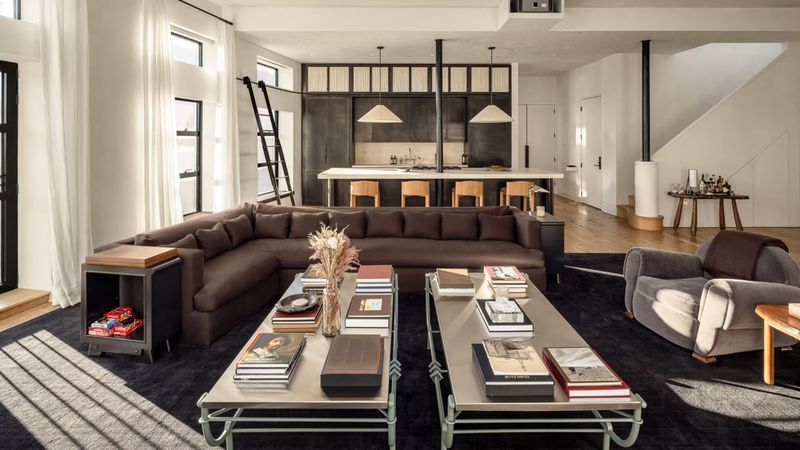
The two apartments occupy the upper floors of the Brewster Carriage House at 374 Broome Street in Nolita, a former carriage manufacturing facility whose exposed brick walls, cast-iron columns and expansive interiors preserve traces of its industrial past. The current owner has commissioned a redesign by interior designer Augusta Hoffman, introducing sculptural stone surfaces, refined natural materials and contemporary finishes while keeping the residences separate.
The arrangement creates two distinct buying opportunities. The south penthouse is asking $12.5 million, while the larger north residence is available for $10 million, bringing the combined asking price to $22.5 million. Buyers can acquire either apartment individually or purchase both and explore the possibility of creating a single, expansive residence.
For californialuxuryhouses, the property offers an intriguing intersection of celebrity real estate, architectural history and contemporary luxury design. Its story also raises a broader question for the Manhattan market: how much additional value can a carefully renovated residence command when its appeal rests on both its physical attributes and its previous celebrity ownership?
John Legend and Chrissy Teigen’s Manhattan Real Estate Story
Legend, the Grammy Award-winning singer, and Teigen, the model, television personality and cookbook author, acquired the two penthouses in separate transactions. They purchased the first unit in 2018 for approximately $9.02 million and the second in 2020 for $7.7 million, according to published property records.
The couple initially envisioned combining the apartments into a larger, multilevel home. Their plans ultimately changed as they focused more of their residential life on California and undertook other projects at their Beverly Hills property.
In January 2022, the two apartments were marketed together for $18 million. The sale closed later that year for $16.75 million, according to The Real Deal and other published reports. The buyer’s identity was concealed behind two limited liability companies.
The latest offering represents a significant increase over that previous transaction. At $22.5 million, the combined asking price is approximately 34% higher than the 2022 sale price. That comparison does not account for renovation expenditure, carrying costs, transaction expenses or any potential difference between the current asking price and the eventual closing price.
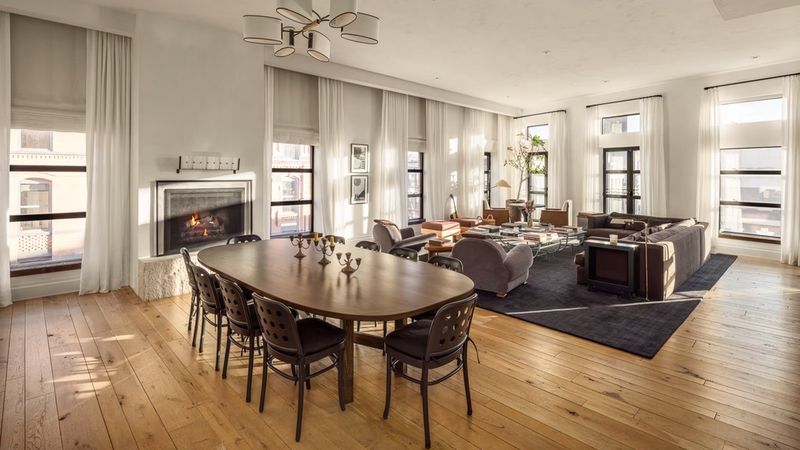
Nevertheless, the property has changed materially since the celebrity couple sold it. The current owner has chosen to preserve the two-unit configuration while undertaking a substantial interior redesign, creating an updated product for buyers who value the building’s historic character but want a more contemporary finish.
Augusta Hoffman Brings a Sculptural Design Language
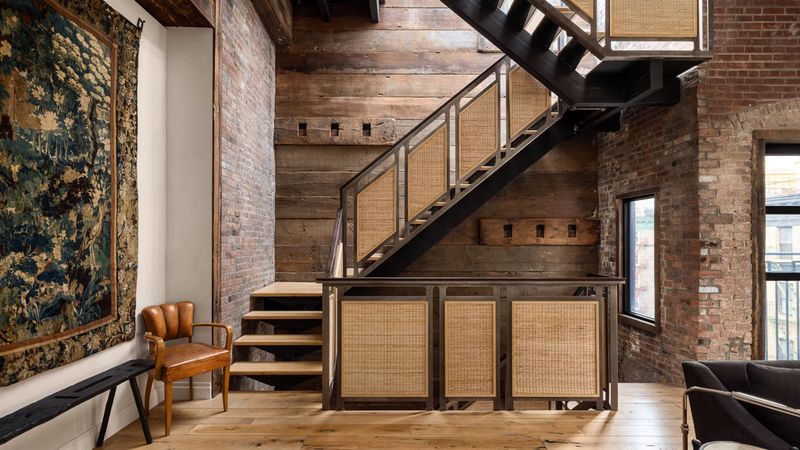
The redesign is central to the penthouses’ renewed market positioning. Rather than erasing the building’s industrial origins, the interiors incorporate those historic elements into a more restrained, tactile aesthetic.
Listing agent Kane Manera of Corcoran described the owner’s intentions in comments reported by Mansion Global: “My clients wanted to lean into something more sculptural, tactile and luxurious.”
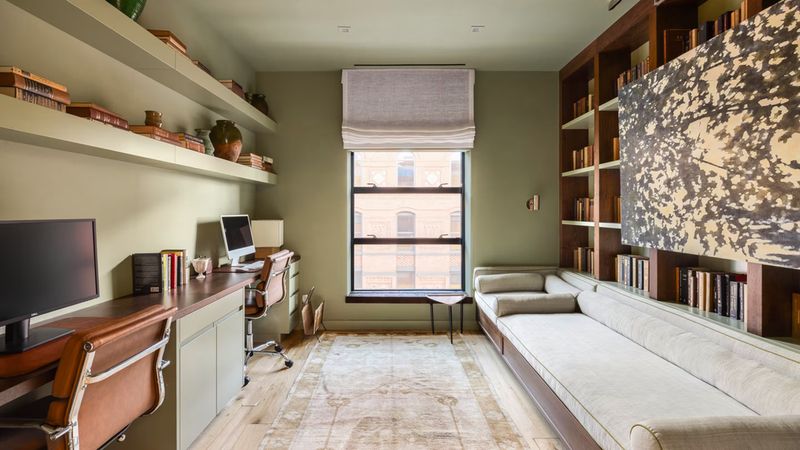
That approach is visible in the material palette, which includes travertine countertops, Calacatta marble bathrooms and sculptural stone vanities. These finishes introduce natural variation and texture while providing a counterpoint to the exposed masonry and cast-iron structural elements.
The design by Augusta Hoffman seeks to balance the apartments’ original character with the expectations of contemporary luxury buyers. Instead of relying exclusively on glossy finishes or overtly decorative details, the interiors emphasize material quality, proportion and the relationship between historic surfaces and modern furnishings.
For buyers considering a downtown Manhattan penthouse, that balance can be particularly appealing. The industrial features give the residences a sense of authenticity, while the renovation allows the spaces to feel more polished and current.
Manera also expressed reservations about combining the two apartments simply for the sake of creating a larger home. “It would be heartbreaking in a way to take away what is already so beautiful,” he said of the prospect, adding that the units “complement each other beautifully.”
The comments underscore the marketing strategy: the two residences are being presented not merely as components of a potential mega-penthouse, but as individual properties with their own architectural identities.
Two Penthouses, Two Distinct Residential Experiences
The south penthouse occupies approximately 2,600 square feet on the building’s sixth floor and is asking $12.5 million. Its layout and contemporary finishes offer a more compact alternative for buyers seeking a substantial downtown residence without taking on the larger combined property.
The north penthouse spans approximately 3,500 square feet across the fifth and sixth floors. It retains more of the building’s visible industrial character and offers additional space for bedrooms, entertaining and private living areas.
Together, the apartments offer the potential for six bedrooms, according to the listing. Their separate configurations also provide flexibility for buyers with different requirements, whether that means maintaining independent residences, accommodating extended family or pursuing a future combination subject to architectural, condominium and regulatory approvals.
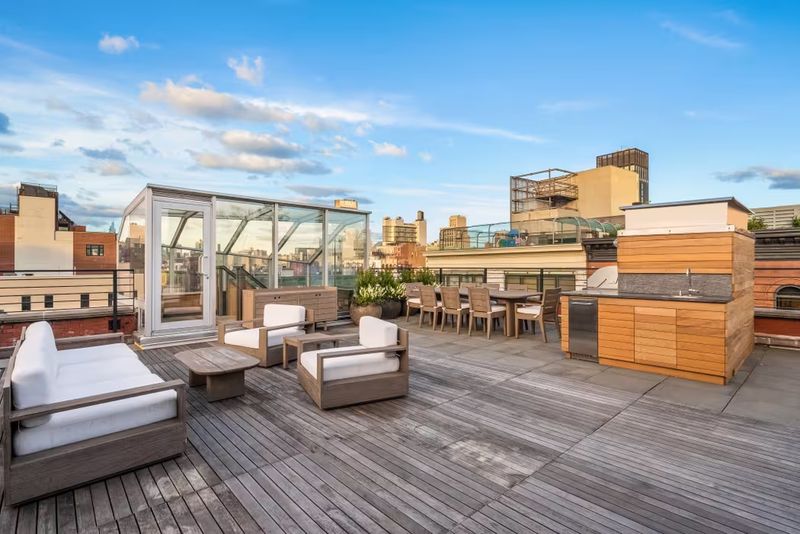
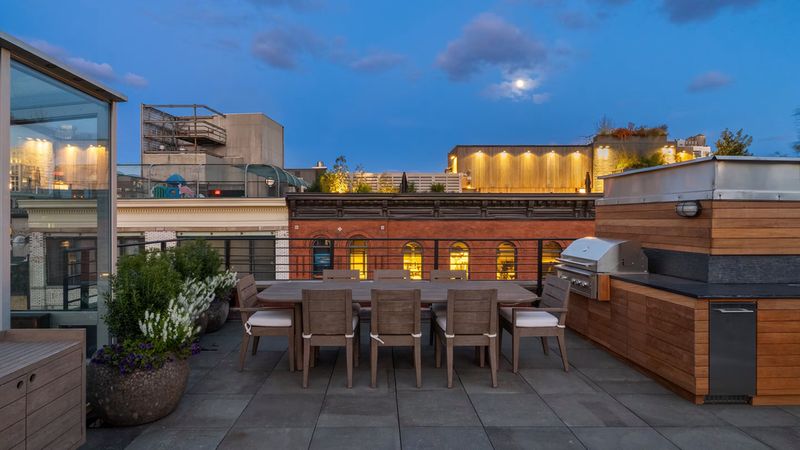
Outdoor space is another important component. Each apartment has access to rooftop space, and combining the properties would create a substantial private outdoor setting. The current marketing describes the combined rooftop opportunity as approaching 4,500 square feet, although buyers should confirm the precise dimensions and legal rights associated with each terrace during due diligence.
In a city where private outdoor space is often a major differentiator, the rooftop areas provide an additional dimension to the offering. They can support outdoor dining, entertaining and relaxation while giving residents an elevated perspective on the surrounding downtown streetscape.
From Carriage Manufacturing to Boutique Luxury Residences
The Brewster Carriage House has a history that predates the modern Manhattan luxury condominium market by more than a century.
The building was associated with Brewster & Co., a prominent carriage manufacturer that served affluent New York families during the nineteenth century. Its clientele reportedly included members of the Vanderbilt, Morgan and Astor families, reflecting the company’s position in an era when horse-drawn carriages were important symbols of wealth and social standing.
As transportation evolved, Brewster moved into automobile body manufacturing and coachbuilding. The business continued into the automotive era before the Great Depression disrupted the luxury vehicle industry.
The former industrial property eventually entered a new chapter as residential real estate. Developer Ross Morgan acquired the building in 2005 and pursued its conversion into condominiums. The residential offering reached the market in 2011, according to The Real Deal, and the building subsequently became a small collection of boutique residences.
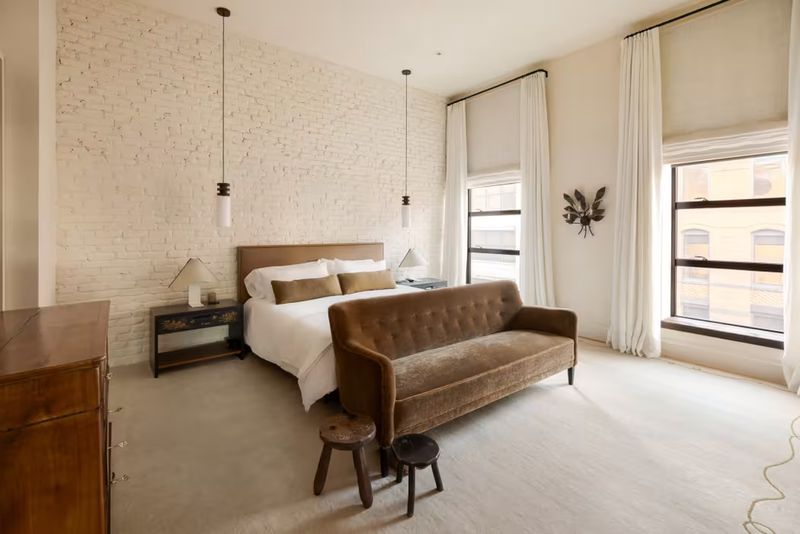
The conversion preserved elements that distinguish the property from a conventional new-build condominium. Exposed brick, cast-iron columns and generous interior volumes offer a tangible connection to its manufacturing history, while modern residential layouts introduce the comforts expected of high-end Manhattan housing.
The building’s appeal therefore extends beyond its association with celebrities. Its industrial provenance provides an architectural identity that is difficult to reproduce in a newly constructed apartment building.
Nolita Offers Downtown Manhattan at Its Most Walkable
The penthouses are located in Nolita, short for North of Little Italy, a compact neighborhood positioned between SoHo, Little Italy, the Lower East Side and the Bowery.
The area is known for independent boutiques, cafés, restaurants and historic streetscapes. Nearby SoHo expands the shopping options with designer flagships and fashion retailers, while Little Italy and Chinatown offer an extensive range of dining experiences and specialty food shops.
The surrounding culinary scene includes neighborhood restaurants as well as destinations recognized by the Michelin Guide. Establishments such as Thai Diner and The Musket Room illustrate the range of dining available in and around Nolita, from casual neighborhood meals to more elaborate restaurant experiences.
Transportation is another advantage. Nearby subway access includes the Spring Street stations, Broadway-Lafayette and Prince Street, connecting residents with other parts of Manhattan and the wider New York City network. The neighborhood is also well suited to walking and cycling, with many daily amenities concentrated within a relatively small area.
For a prospective buyer, this combination creates a different luxury proposition from a large suburban estate. Instead of relying on private grounds and extensive on-site amenities, the penthouses offer generous interior space within a lively urban environment where restaurants, shopping, cultural destinations and public transportation are close at hand.
Can the $22.5 Million Asking Price Find a Buyer?
The current offering places the two apartments in a premium segment of the downtown Manhattan condominium market. Their combined size, private rooftop access, historic setting and designer renovation distinguish them from more conventional apartments in the area.
The celebrity connection adds another layer of interest, but it is unlikely to be the only consideration for a buyer at this price point. Prospective purchasers will also evaluate the quality of the renovation, the practicalities of the separate floor plans, the condominium’s financial and legal documentation, and the costs associated with maintaining and operating the property.
The price history offers useful context. Legend and Teigen paid approximately $16.72 million across their two purchases and later sold the apartments for $16.75 million. The current owner is now seeking $22.5 million after redesigning the interiors. Whether the market supports that increase will depend on the response from buyers and the final terms of any transaction.
For californialuxuryhouses, the defining story is the transformation of a former industrial building into a contemporary luxury offering without losing the character that makes it distinctive. The penthouses can be purchased separately, yet together they present the possibility of a much larger downtown residence.
That flexibility, combined with the Augusta Hoffman redesign and the property’s celebrity history, makes the Brewster Carriage House offering a notable entry in Manhattan’s luxury real estate market. The next sale will determine whether the renovated residences can translate those attributes into a new benchmark for the building.