

Christine McVie’s former country estate in Kent, where the late Fleetwood Mac singer spent 25 years writing music and enjoying a quieter life away from the spotlight, has returned to the market with an asking price of £3 million. Known as the Quaives, the historic property combines a centuries-old main house with guest cottages, converted barns, landscaped gardens and approximately 20 acres of private countryside.
Located in the village of Wickhambreaux near Canterbury, the estate offers a rare combination of musical history, traditional English architecture and flexible spaces for modern country living. McVie owned the property from 1990 until 2015, making it a significant chapter in the life of an artist whose songs helped define Fleetwood Mac’s enduring legacy.
For buyers considering distinctive historic homes, the Quaives presents something beyond a conventional country residence: a substantial estate shaped by generations of English architectural tradition and a connection to one of rock music’s most celebrated songwriters.
Christine McVie’s Former Kent Estate Has a Remarkable Musical History
McVie acquired the Quaives in 1990, during a period when Fleetwood Mac’s members were pursuing individual projects and the singer was spending considerable time away from the group. The estate became a retreat where she could enjoy privacy while continuing to develop her music.
After leaving Fleetwood Mac in 1998, McVie largely withdrew from public life. The Kent property offered room for both solitude and creativity, and she reportedly undertook extensive renovations during her ownership, restoring and updating the historic buildings.
One of the estate’s most notable chapters came in 2004, when McVie recorded her solo album, In the Meantime, in a converted barn on the grounds. The outbuilding gave the musician a dedicated creative space, reinforcing the property’s identity as both a home and a working retreat.
McVie returned to Fleetwood Mac in 2014, joining the band again for touring and recording. As she began spending more time in London, the countryside estate became less central to her life, and it was placed on the market in 2015 for £3.5 million.
She died in 2022 at the age of 79, leaving behind a catalogue of songs that includes “Songbird,” “Don’t Stop,” “You Make Loving Fun,” “Everywhere” and “Little Lies.” The Quaives remains closely associated with the quieter years between major chapters of her musical career.
A Late 17th-Century House With Traditional English Character
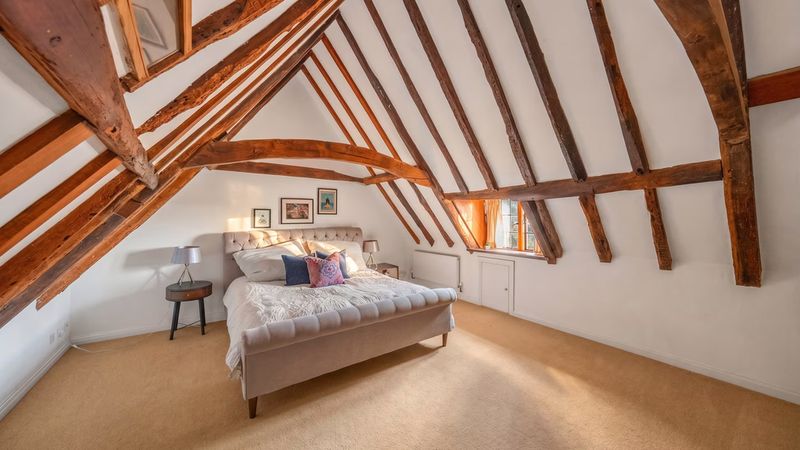
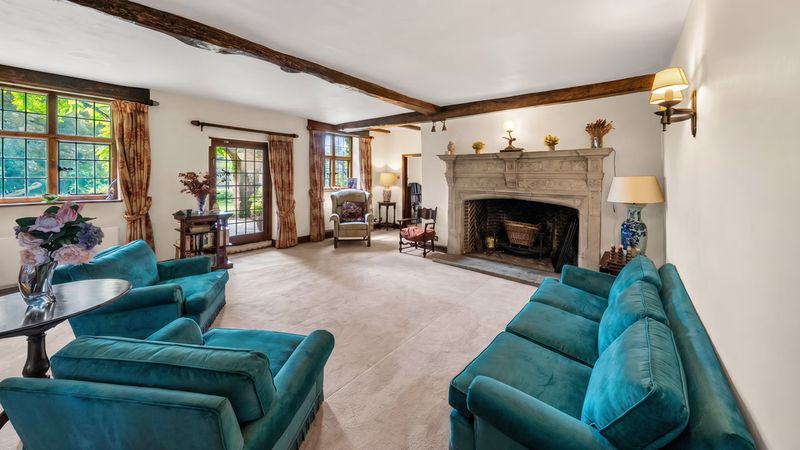
The main residence dates to the late 17th century and encompasses more than 6,000 square feet across three floors. Its seven bedrooms and multiple reception rooms provide the scale expected of a substantial country house, while surviving period features preserve a strong sense of architectural history.
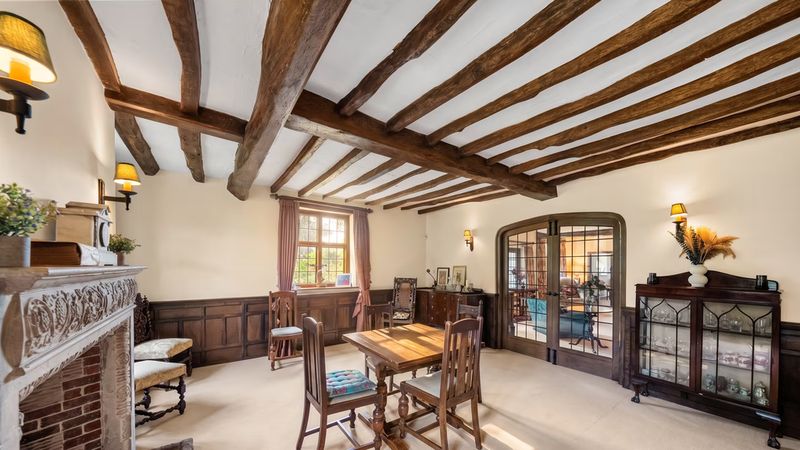
Dutch gables, exposed timber beams, paneled walls, casement windows and fireplaces contribute to the building’s traditional character. Rather than relying solely on its celebrity association, the house offers the architectural detail and generous proportions that continue to attract buyers to historic English estates.
The entrance hall introduces the house’s formal arrangement, leading to a collection of rooms suited to entertaining and everyday family life. A drawing room opens onto a south-facing terrace and the gardens, creating a natural connection between the interiors and the surrounding landscape. Separate sitting and family rooms provide additional places to gather, while a formal dining room accommodates larger occasions.
These spaces reflect the traditional country-house approach to living, in which entertaining, private relaxation and family activities can take place in distinct areas without sacrificing a sense of continuity.
A Country Kitchen Designed Around Gathering
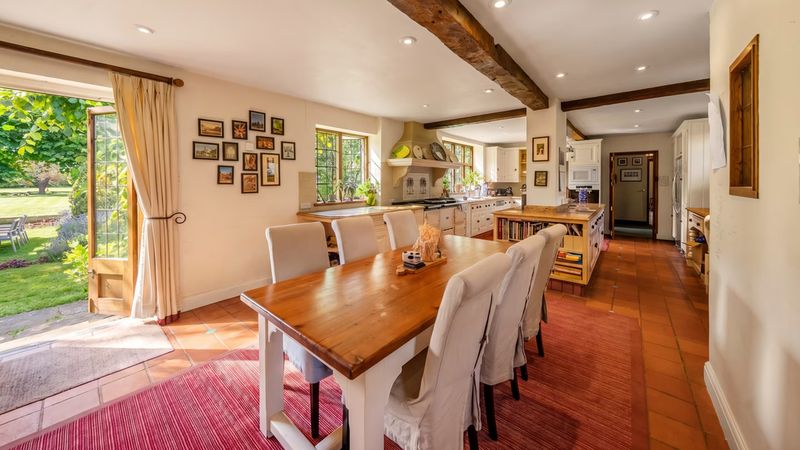
At the center of the home is a kitchen and family living area designed for practical use as well as informal entertaining. A central island provides workspace and a natural gathering point, while a traditional Aga range cooker reinforces the room’s connection to the English country-house aesthetic.
Doors open directly onto a terrace, allowing indoor and outdoor living to flow together during warmer months. The arrangement is particularly suited to an estate where gardens and open land are central to the experience of the property.
The kitchen’s position within the house also supports the idea of the Quaives as a lived-in retreat rather than a purely formal residence. With multiple reception rooms and additional accommodation elsewhere on the grounds, the main house can accommodate everyday routines while retaining the ability to host visitors.
Songbird Cottage and Additional Guest Accommodation
Beyond the principal residence, the estate includes three cottages, giving the property a degree of flexibility that is increasingly difficult to find in a single country-house purchase.
One of the most distinctive is Songbird Cottage, named after McVie’s much-loved Fleetwood Mac song. During her ownership, the cottage was used to house the musician’s records and awards, connecting a separate building on the estate to her personal and professional history.
The additional accommodation could appeal to buyers seeking space for extended family, visiting guests or independent work and creative pursuits. The exact use of each building would depend on the property’s configuration and applicable planning requirements, but the multiple residences distinguish the estate from a conventional single-house offering.
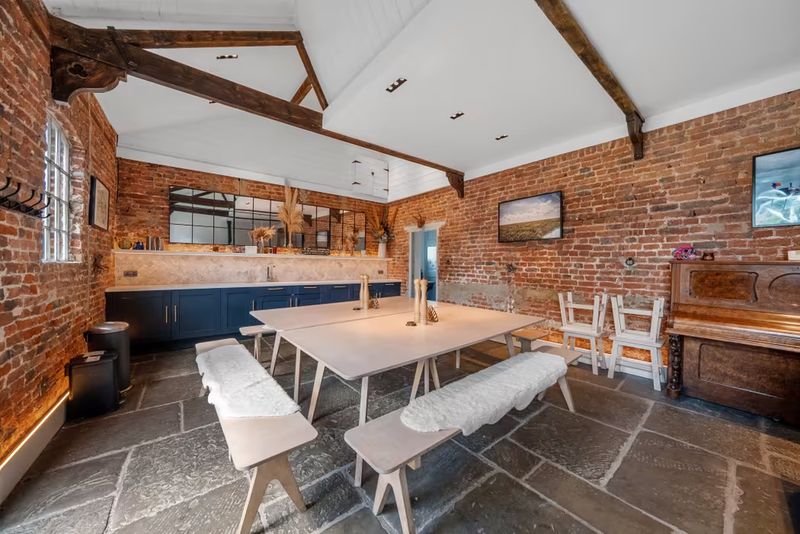
The grounds also contain several outbuildings. One timber barn has been converted into a yoga and wellness studio, while another includes a kitchen and bar. Together, these spaces provide possibilities for recreation, private events and retreat-style use, subject to any relevant permissions and operating requirements.
The current sellers, described as an architect and a yoga teacher, operate a wellness retreat and host events at the property. That use reflects the estate’s capacity to function as more than a private residence, although a future owner would need to assess the suitability of any continued commercial or hospitality activity.
Gardens, Woodland, a Lake and Tennis Facilities
The Quaives extends across approximately 20 acres, with grounds that combine formal landscaping and more natural countryside features. The estate includes formal gardens, paddocks, woodland and a lake, creating a varied setting around the historic buildings.
A kitchen garden and greenhouse offer space for growing produce, while an all-weather tennis court and pavilion introduce a recreational element. These facilities broaden the estate’s appeal beyond its interiors, particularly for buyers who value outdoor pursuits and a sense of separation from urban life.
The property has also previously benefited from planning permission for an outdoor swimming pool. Buyers interested in adding a pool would need to confirm the status, scope and continued validity of any permission before proceeding, rather than assume that an earlier approval remains usable.
The combination of open land, established gardens and multiple buildings gives the estate a scale that can support several different lifestyles. It could remain a private country home, provide accommodation for family and guests, or offer a setting for carefully planned wellness and creative activities.
Privacy and Space Remain Central to the Estate’s Appeal
Listing agent Mellony Morgan of Harding Green has described interest from buyers in London and overseas, including an American visitor from Detroit who arranged a viewing after learning about McVie’s connection to the property.
“A celebrity connection like this can certainly help generate interest,” Morgan said, noting that the association had attracted attention before some prospective buyers had received detailed information about the house.
She has also pointed to interest from people in the music industry, particularly artists drawn to the property’s privacy and the range of buildings and grounds. For buyers whose work requires space, discretion or room for creative projects, the combination of a substantial main house and separate outbuildings may be especially attractive.
Morgan has emphasized that McVie’s long residence gives the property a different kind of significance from a home briefly occupied by a famous figure. The estate was, she explained, a much-loved home where the singer spent a quarter of a century.
Her broader assessment is that the celebrity connection may introduce buyers to the property, but its physical qualities are what sustain the appeal: privacy, generous space and a distinctive countryside setting.
From the Kent Countryside to a London Penthouse
The Quaives represents one side of McVie’s life, shaped by rural surroundings and a period of relative retreat from the public eye. Her later London home offered a different setting after she returned to Fleetwood Mac and began spending more time in the capital.
In 2025, McVie’s former duplex penthouse in Belgravia sold for £6.95 million after being listed earlier that year. The apartment had three bedrooms and a private roof garden, illustrating the contrast between the musician’s London residence and the expansive Kent estate she sold in 2015.
The two properties also reflect different forms of luxury. The Belgravia penthouse offered a central London address and a more urban lifestyle, while the Quaives is defined by its acreage, historic architecture, guest cottages and outdoor amenities.
For prospective buyers, the Kent property’s appeal lies in the opportunity to acquire a substantial English country estate with a documented connection to music history. Its identity is not limited to that association: the historic main house, independent cottages, converted barns and landscaped grounds create a property with several potential uses.
A Historic Estate With a Story Beyond Its Famous Former Owner
Priced at £3 million, Christine McVie’s former Kent estate offers a distinctive proposition in the English country-house market. Its late 17th-century origins, seven-bedroom main residence and approximately 20 acres of grounds establish its scale, while Songbird Cottage and the converted barns give the property a particularly personal connection to McVie’s life and work.
The estate’s significance is rooted in the years she spent there, including the period when she stepped away from Fleetwood Mac and recorded solo music in the converted barn. Yet its future will ultimately depend on the qualities that matter to any country-house buyer: the condition of the buildings, the possibilities for the grounds, the privacy of the setting and the practicalities of maintaining a multi-building estate.
For californialuxuryhouses readers following exceptional celebrity properties, the Quaives is a reminder that some famous homes are more than addresses attached to a recognizable name. They are places where creative lives unfolded—and where architectural heritage, landscape and personal history remain intertwined.