
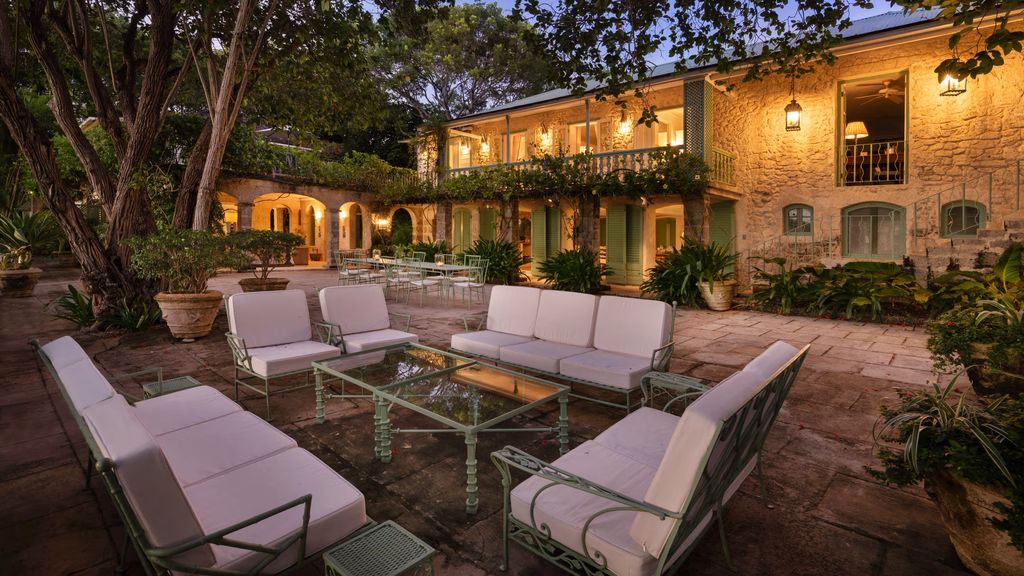
Historic Barbados Estate Overlooking the Caribbean Sea Lists for $22.5 Million
High above the Caribbean Sea on the northern coast of Barbados, a nearly 300-year-old estate with ties to British theatrical history and ancient island geology has quietly entered the luxury market for $22.5 million. Known as Fustic House, the historic Barbados estate combines colonial-era architecture, lush tropical landscapes, and a remarkably preserved network of coral caves hidden beneath the property — features rarely found together in today’s Caribbean luxury real estate market.
The Barbados estate is owned by Kit Braden, chairman of the U.K. branch of French beauty company L’Occitane Group, whose family has spent every winter at the property for more than a decade. Set across approximately 11 acres near Saint Lucy, the estate occupies an elevated ridge roughly 350 feet above the water, allowing uninterrupted views across the Caribbean coastline while maintaining a level of privacy increasingly difficult to find on the island.
Luxury real estate experts familiar with Barbados say properties with this level of architectural provenance and land scale rarely become publicly available. One Caribbean broker familiar with the listing told californialuxuryhouses that buyers at the ultra-high-end of the market are increasingly prioritizing “homes with genuine history and atmosphere over newer speculative builds that can feel interchangeable from island to island.”
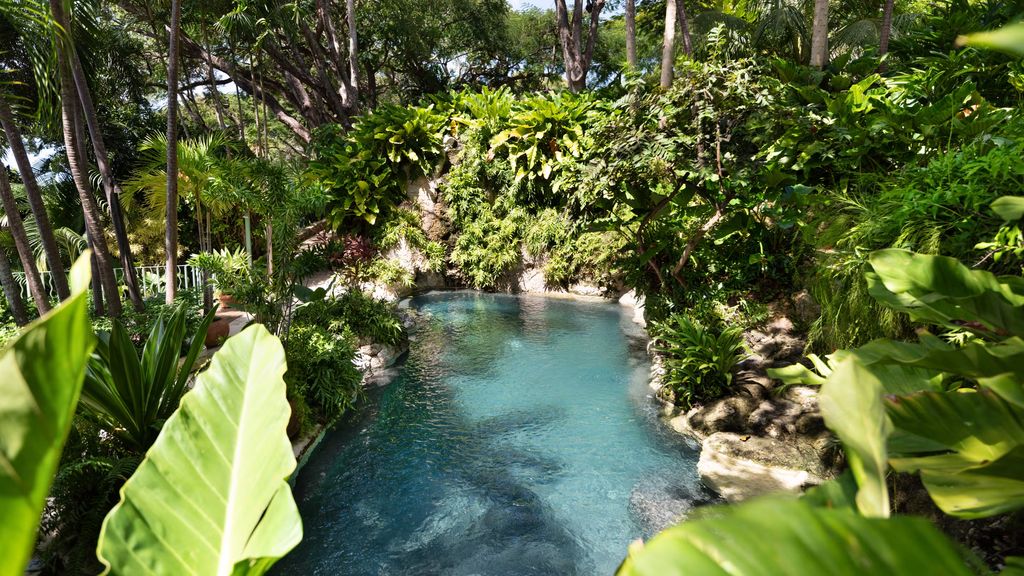
Oliver Messel’s Vision Transformed the Historic Barbados Estate
Originally built in 1712, the Barbados estate reflects several centuries of architectural evolution. While portions of the original coral stone structure remain intact, the property became especially notable during the 1970s when celebrated British stage designer Oliver Messel reimagined the estate for Charles Graves, brother of renowned poet Robert Graves. Messel, whose Caribbean work helped define a romantic vision of tropical luxury throughout the region, expanded the villa into a sprawling compound filled with theatrical flourishes, hidden courtyards, open-air terraces, and soft Caribbean pastel accents.
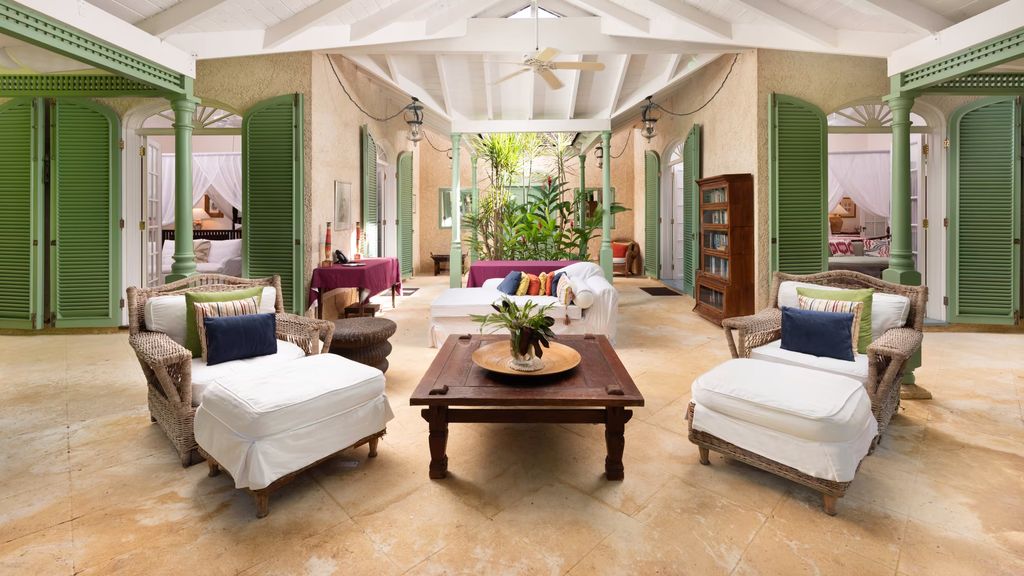
Today, the main residence spans approximately 15,000 square feet with seven en suite bedrooms arranged across three interconnected wings. Wide verandas frame sea views from nearly every angle, while rows of louvered doors allow the trade winds to move naturally through the interiors. At sunset, warm light filters across the coral stone walls and landscaped pathways, creating the sort of cinematic atmosphere more commonly associated with boutique resorts than private residences.
“The property was never designed to feel overly formal,” a representative associated with the listing explained to californialuxuryhouses. “It has always been about relaxed Caribbean living, where family and guests naturally gather outdoors from morning until late evening.”
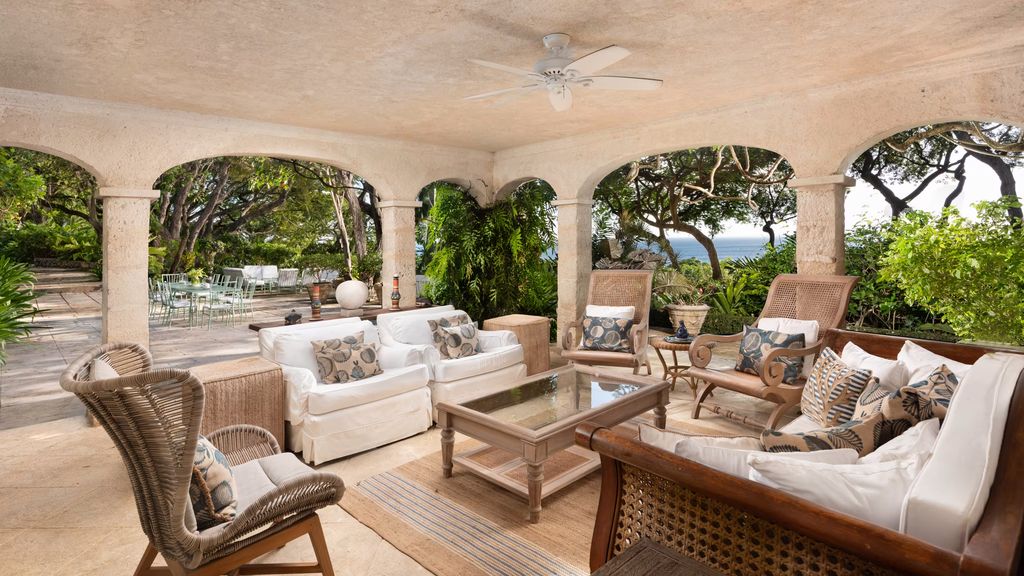
Tropical Gardens and Resort-Style Amenities Elevate the Barbados Estate
Unlike many newly developed Caribbean compounds focused heavily on glass-and-steel modernism, Fustic House leans into texture, landscape, and historical character. Tropical gardens filled with mature mahogany trees and palms cascade toward the coastline below, while reflecting ponds and shaded pathways create a sense of quiet separation from the outside world. One of the estate’s defining features remains the lagoon-style swimming pool originally designed by Messel, complete with naturalistic curves and a waterfall element intended to blend seamlessly into the surrounding gardens.
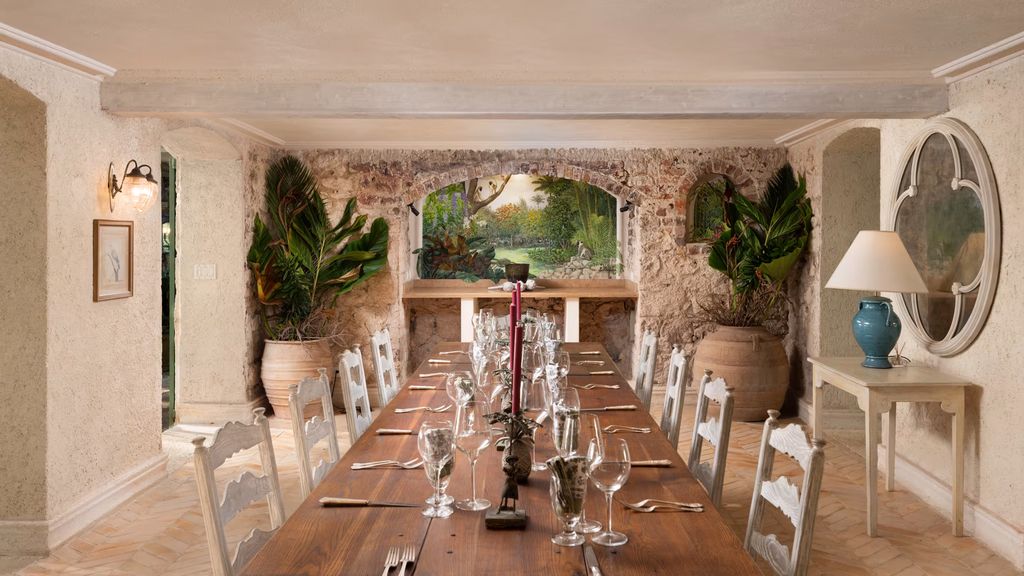
According to individuals familiar with the Barbados estate, the property also includes a professional-grade kitchen capable of hosting large-scale private events, an outdoor pavilion designed for yoga and wellness activities, and a full hospitality staff reportedly numbering around 15 people. In recent years, the estate has become a gathering place for multiple generations of the Braden family, who used the property as a winter retreat after first discovering it during a rainy New Year’s Eve visit in 2013.
Braden later described walking the estate’s perimeter through heavy rain while much of the land remained dense jungle. By the end of the visit, he reportedly became convinced the property was something extraordinary despite its untamed condition at the time. Over the following years, the family restored portions of the grounds, cleared overgrowth along the ridge, and acquired an additional sea-level parcel containing two beach cottages that now provide direct access to the waterfront below.
californialuxuryhouses also learned that the owners invested significantly in preserving the estate’s historic atmosphere rather than modernizing it beyond recognition, a decision many luxury agents believe has helped maintain the property’s authenticity in an increasingly homogenized luxury market.
Ancient Coral Caves Beneath the Barbados Estate Add Historical Significance
Still, the most unusual aspect of the Barbados estate may lie beneath the surface.
Because Barbados was formed through tectonic uplift and coral sedimentation millions of years ago, much of the island sits atop ancient coral rock formations. Beneath Fustic House, a network of naturally formed caves stretches through portions of the property, adding an archaeological and geological dimension rarely associated with luxury real estate listings.
According to Braden, historians believe the caves may once have sheltered the Arawaks, an Indigenous fishing people believed to have migrated northward from present-day Venezuela centuries before European settlement reached Barbados. Archaeological evidence discovered within some cave systems across northern Barbados has long fascinated local historians and geologists studying the island’s earliest human activity.
“There’s an incredible sense of continuity here,” one Barbados-based property advisor told californialuxuryhouses. “You’re talking about land that connects geological history, colonial history, and modern Caribbean luxury living all in one place. That’s exceptionally rare.”
On windy afternoons, the northern coastline of Barbados feels noticeably different from the island’s resort-heavy west coast. The atmosphere is quieter, more rugged, and far less commercialized — qualities that continue attracting wealthy international buyers searching for privacy and authenticity rather than purely resort-driven experiences.
Saint Lucy Offers Privacy With Access to Barbados Luxury Lifestyle
The surrounding parish of Saint Lucy further distinguishes the Barbados estate from many properties concentrated along the island’s heavily developed western coastline. Known for its rugged scenery, elevated cliffs, and quieter atmosphere, Saint Lucy has increasingly attracted buyers seeking privacy without sacrificing access to Barbados’ luxury amenities. Fine dining destinations, beach clubs, marinas, and golf courses remain within driving distance, while Grantley Adams International Airport offers direct connections to London, Miami, New York, and Toronto.
Luxury agents operating throughout the Caribbean say demand for historically significant estates has remained resilient even amid broader global market fluctuations. Waterfront compounds with architectural pedigree, acreage, and long-term ownership histories continue attracting ultra-high-net-worth buyers seeking assets that feel both experiential and irreplaceable.
One broker specializing in Caribbean luxury real estate told californialuxuryhouses that homes like Fustic House appeal to “buyers who are no longer chasing trends but instead looking for places with emotional permanence and cultural significance.”
Transaction History and Legacy Ownership Add to the Estate’s Appeal
Although the Barbados estate carries a guide price of $22.5 million, agents familiar with the upper tier of the Caribbean market note that properties with comparable land scale, direct sea access, historical significance, and architectural pedigree seldom trade publicly. In many cases, similar estates remain quietly held by families for generations.
Historical ownership records tied to the property date back centuries, while the Braden family’s stewardship over the last decade focused heavily on preserving the estate’s original atmosphere instead of pursuing aggressive modernization. That long-term approach has become increasingly attractive among global luxury buyers seeking homes with authenticity and architectural continuity.
For now, Fustic House stands as one of the Caribbean’s most distinctive offerings — a centuries-old retreat shaped by theatrical design, tropical landscape architecture, and the ancient coral foundations of Barbados itself.