

Pebble Court Los Angeles and Its Hollywood Legacy
Nestled in Laurel Canyon, Pebble Court Los Angeles stands as a rare 1930s time capsule with the kind of provenance that makes collectors take notice. The three-bedroom, three-bath residence is offered at $2.25 million and presents a tightly edited 1,300 square feet of living space crafted around light, volume, and period detail. Long favored by creatives, the home served for years as the base of celebrated costume designer Theadora Van Runkle, whose work on Bonnie and Clyde, The Godfather II, and Peggy Sue Got Married earned industry acclaim and left an indelible mark on American cinema. Her studio famously incorporated an immense wine vat reportedly sourced from the set of Wuthering Heights, a reminder that this address has always blurred the line between stagecraft and daily life.
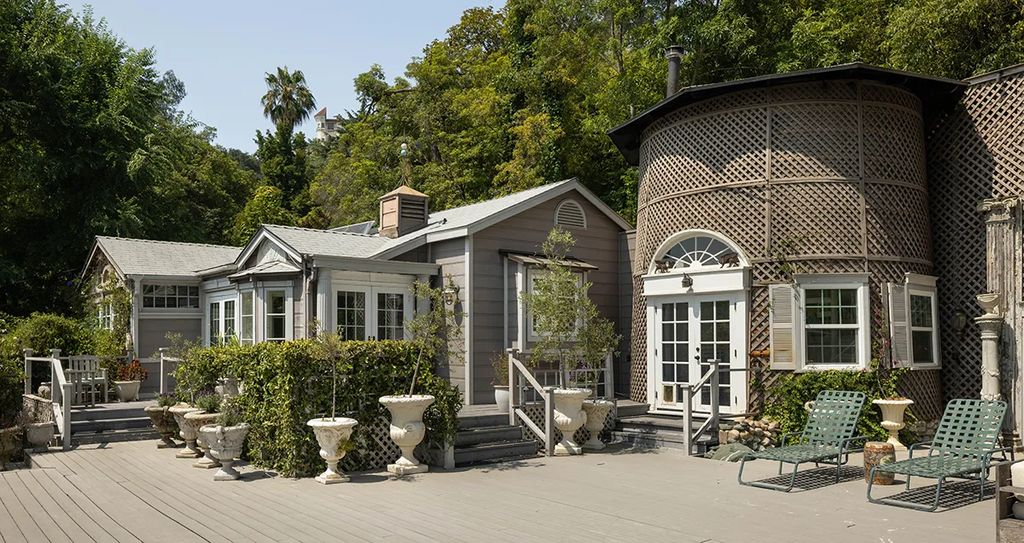
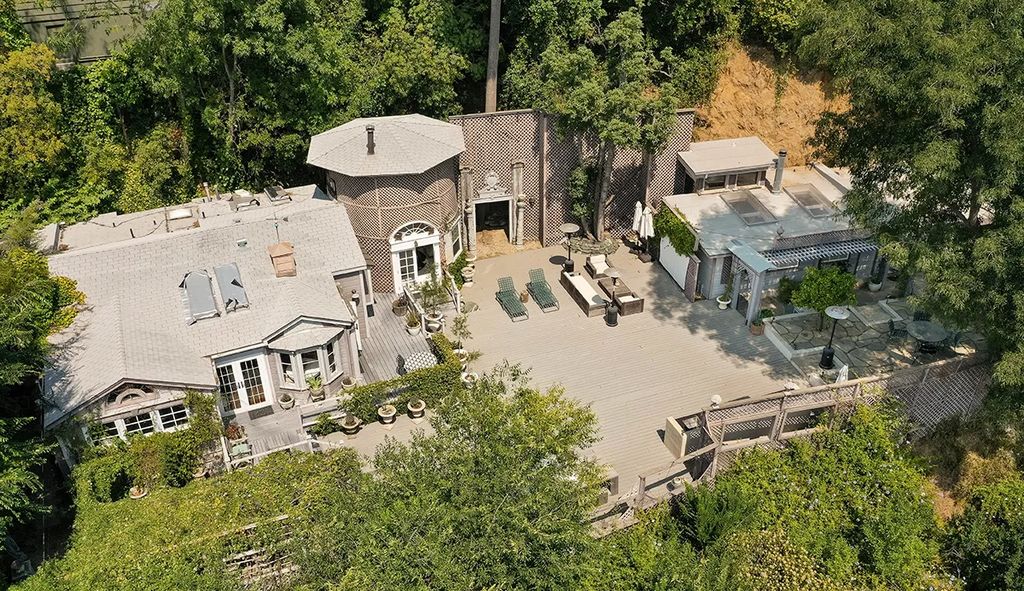
Listing agent Madeline Goldberg of Compass frames the offering succinctly: “Every inch of this home is steeped in artistry, legacy, and vision. It is a true piece of art and still carries the creative energy of Laurel Canyon circa 1967.” That sense of energy is not marketing hyperbole but a reflection of the neighborhood’s cultural fabric.
The Cultural Tapestry of Laurel Canyon
Laurel Canyon has long been synonymous with creative cross-pollination, and Pebble Court is woven into that history. The area counted Jim Morrison, John Lennon, Frank Zappa, and Joni Mitchell among its notable residents and regulars. The Doors’ Robby Krieger and John Densmore lived just down the street; Morrison reportedly roamed the surrounding hills before returning with lyrics to the hit “People Are Strange.” Within this milieu, Pebble Court Los Angeles became part of a larger narrative about how place shapes output. Van Runkle shared the home at one point with her ex-husband Bruce McBroom, the photographer who shot Farrah Fawcett’s iconic red-swimsuit poster—an image now housed at the Smithsonian’s National Museum of American History. Few Los Angeles homes for sale can credibly claim ties to both film and pop-culture history on this level.
Goldberg notes the intangible quality that sets the property apart: “What makes Pebble Court extraordinary is not only the property itself but also the stories embedded in its walls. It offers buyers the chance to live where history, art, and culture converge.”
Architecture, Light, and Detailing
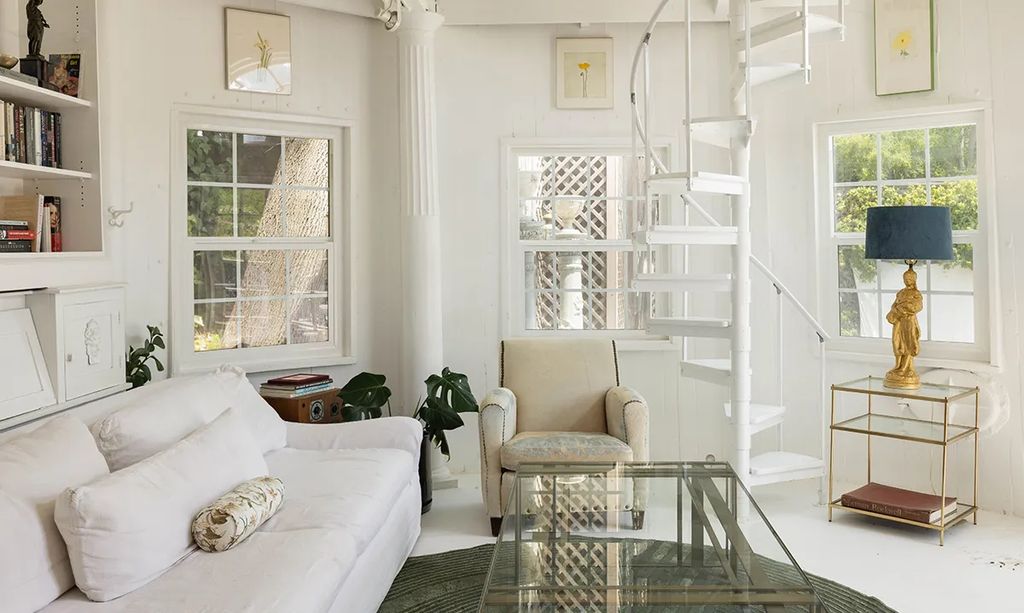
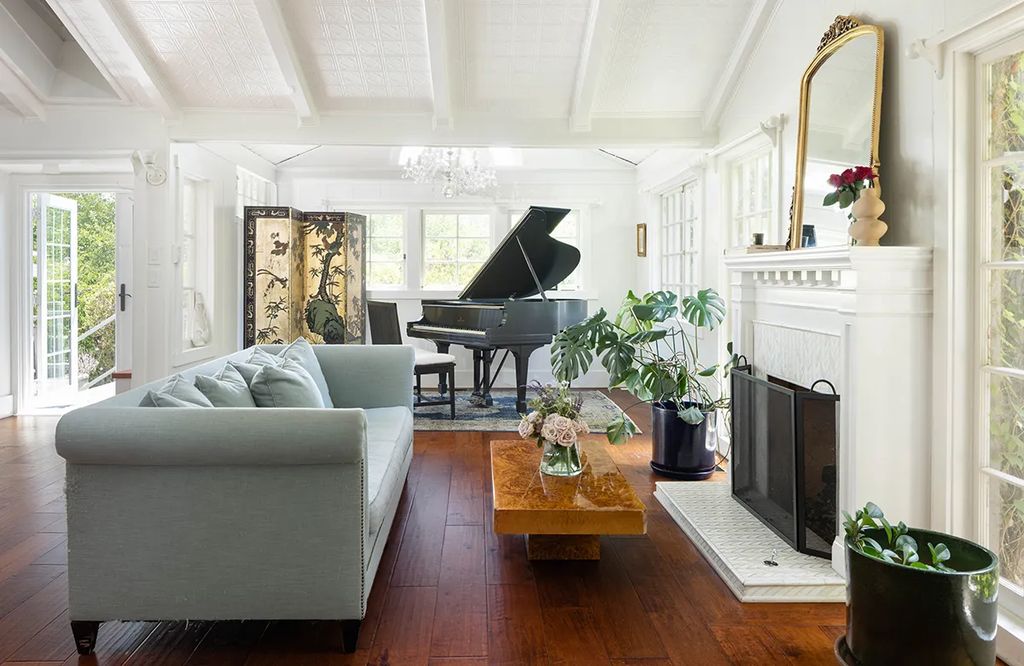
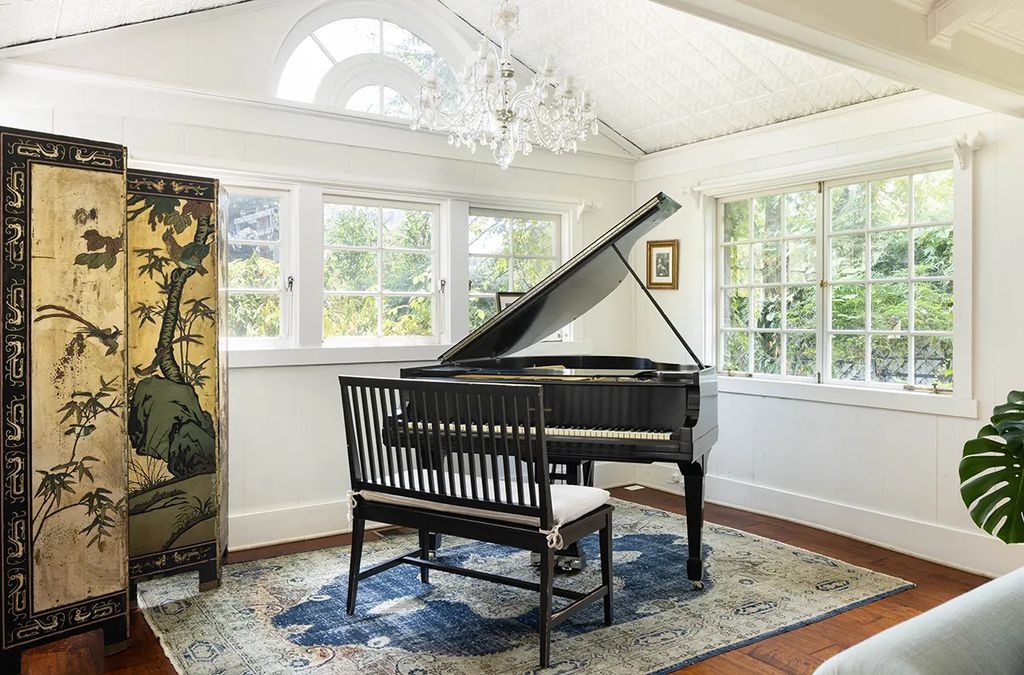
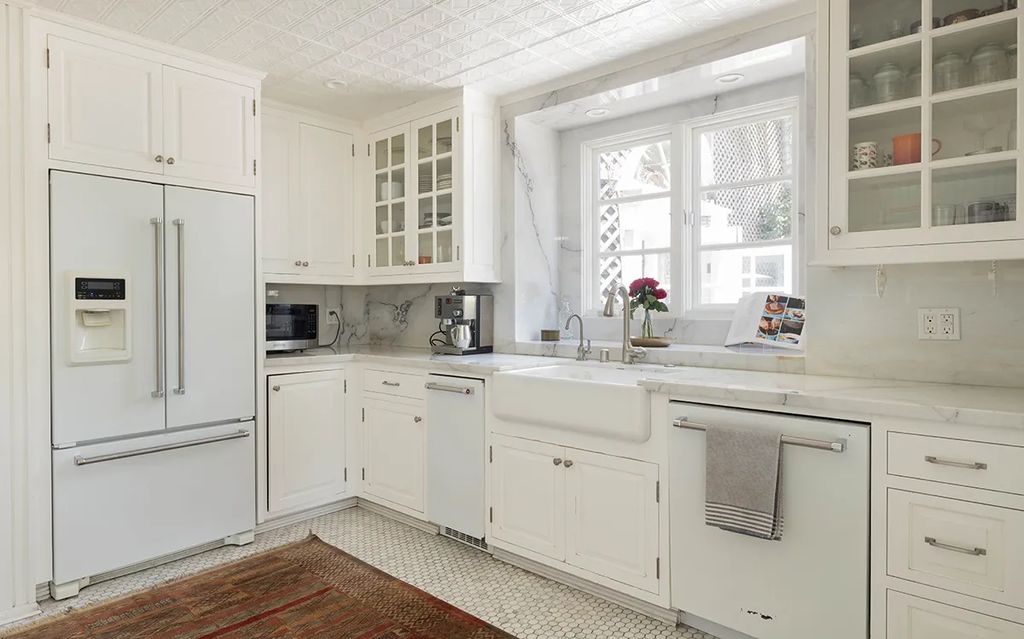
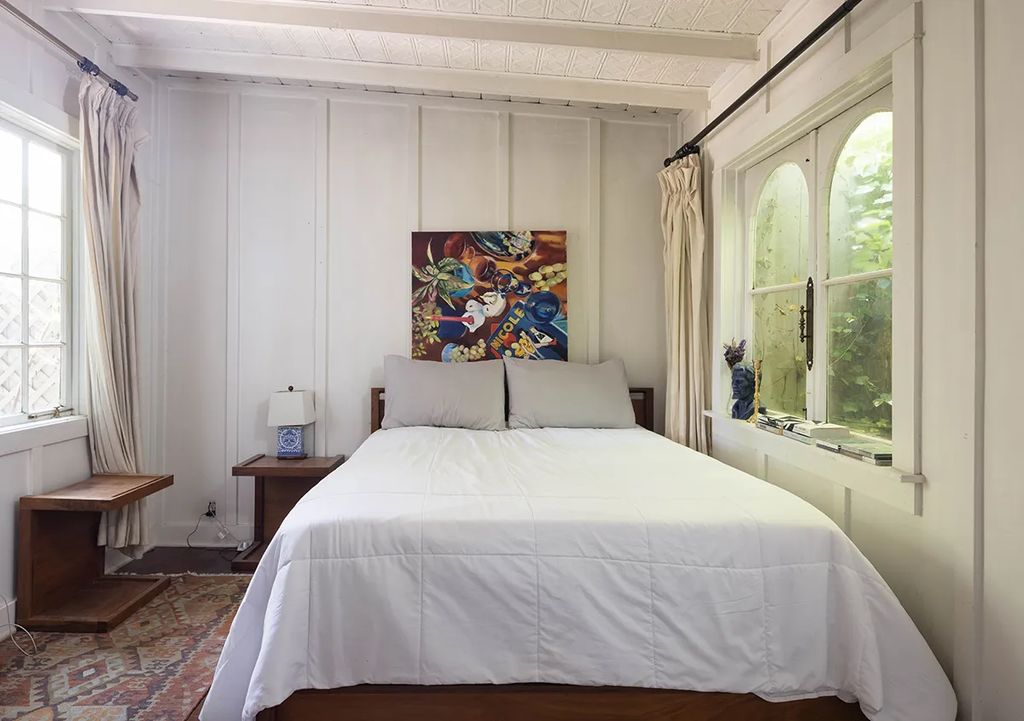
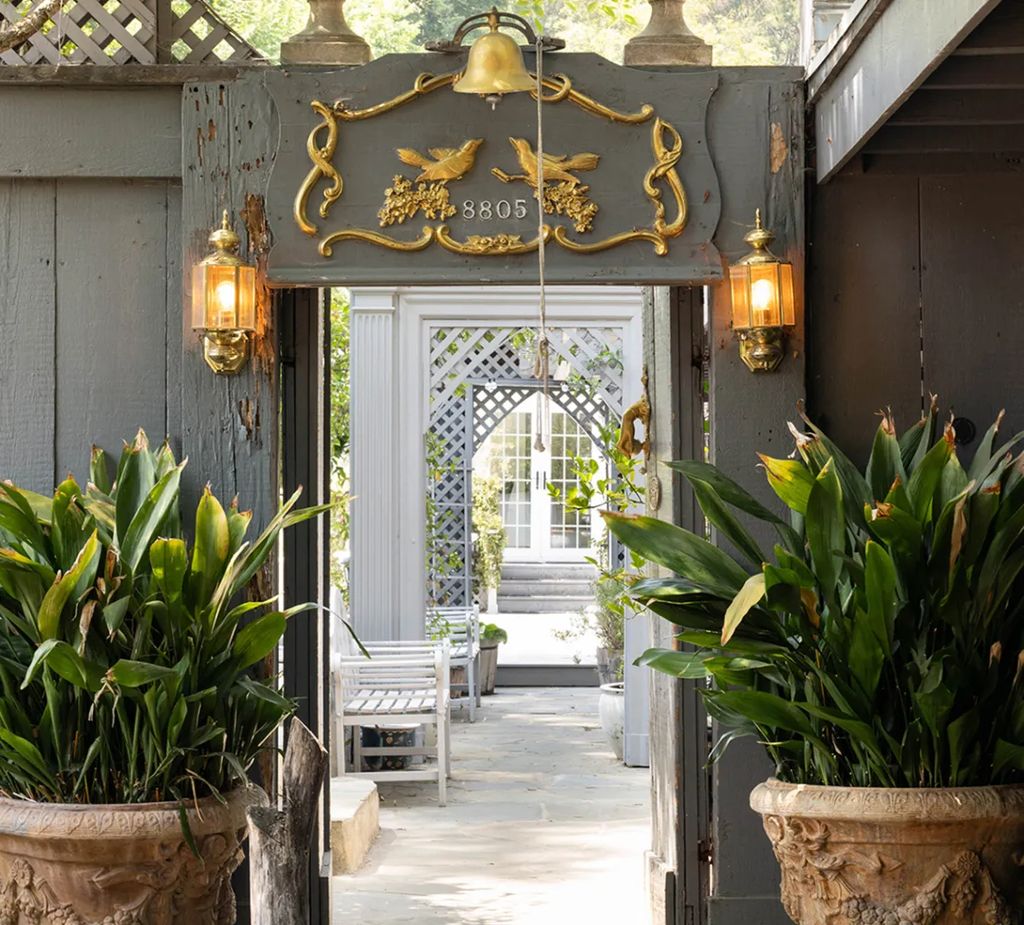
Tucked behind a long gated drive on nearly half an acre, the residence reveals itself gradually, emphasizing privacy and approach. Inside, the architecture celebrates verticality and texture. Wood-paneled walls and a mix of hardwood and penny-tile floors establish a tactile palette, while pressed-tin ceilings with skylights lift the volumes and invite daylight deep into the plan. In the living room, a crystal chandelier becomes a sculptural focal point and quietly underscores the home’s 1930s bones without slipping into nostalgia.
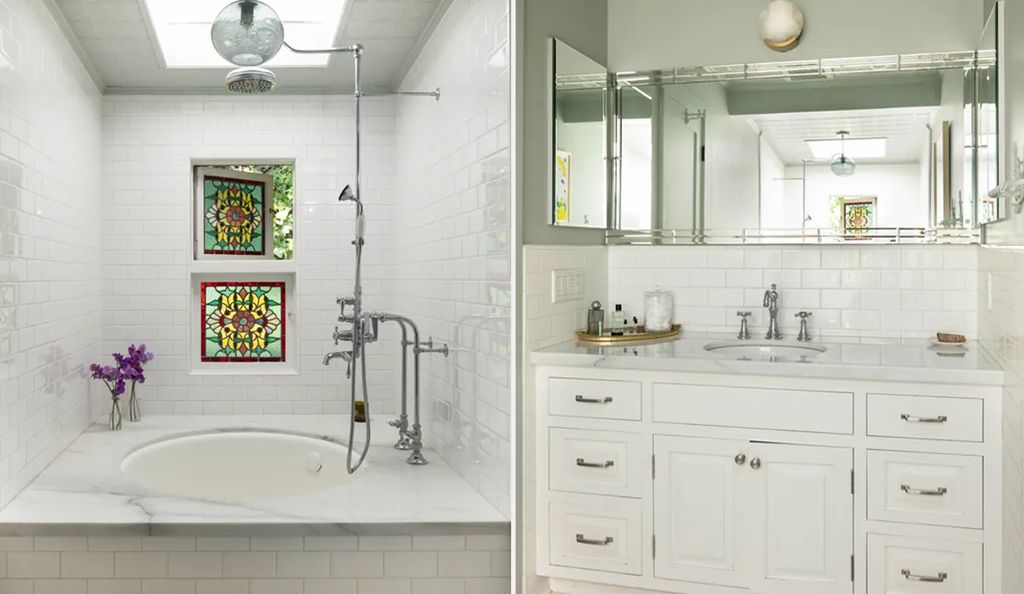
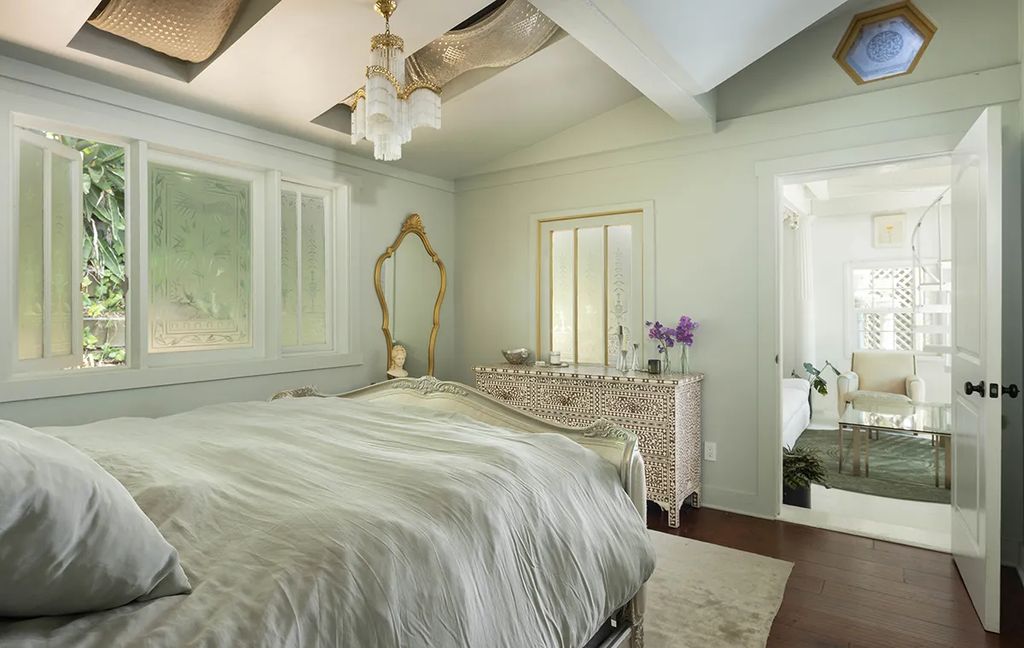
The kitchen centers on an antique O’Keefe & Merritt range, with a window-wrapped breakfast nook oriented to morning light and garden views. The primary suite features a fireplace and an en suite bath anchored by an oval soaking tub framed by twin stained-glass windows—an arrangement that reads both practical and poetic. A nearby sitting room adds flexibility, and a spiral stair leads to a loft that naturally suggests reading, sketching, or score-writing. The result is a small but considered footprint that privileges atmosphere over sheer size—an increasingly rare stance in contemporary California Real Estate.
“This property is not simply a house—it is a canvas,” Goldberg says. “The upgrades have been careful and calibrated, preserving its bohemian character while layering in comfort for current lifestyles.”
Gardens, Outdoor Living, and the Casita
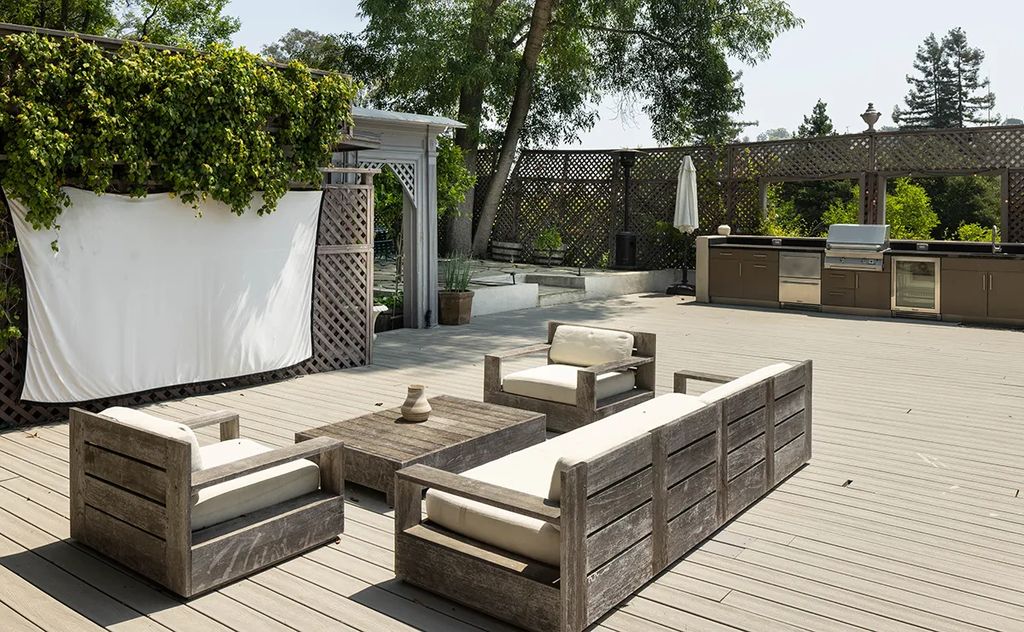
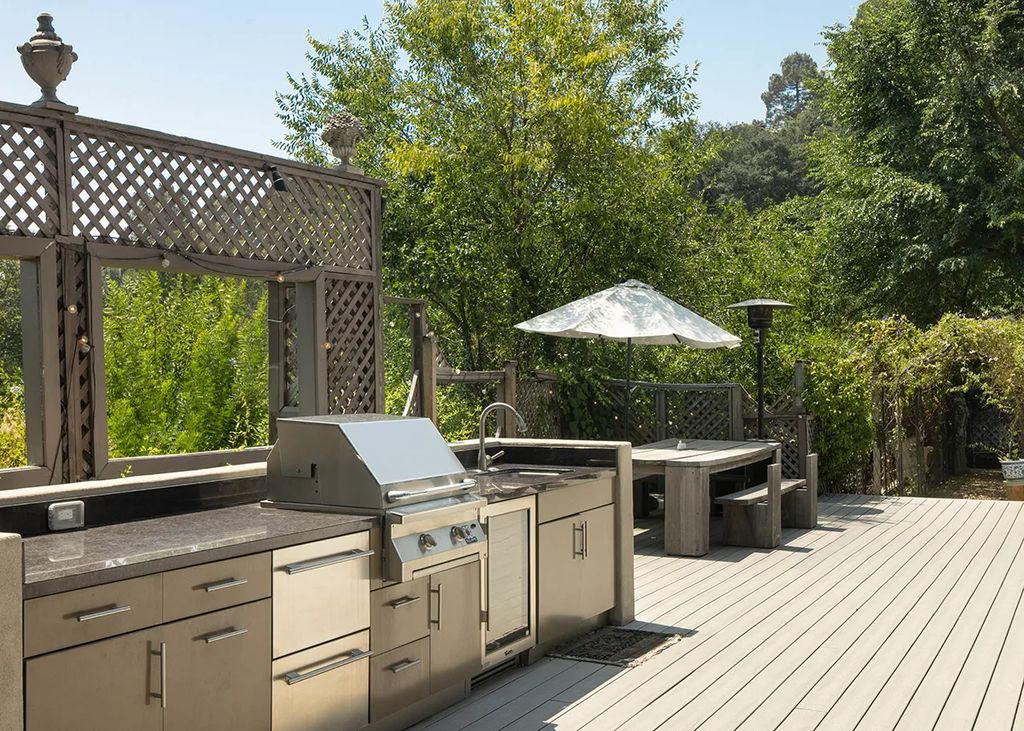
The name Pebble Court nods to the original pebble-strewn paths Van Runkle laid across the site. While entertaining decks have been added to accommodate gatherings, stones still appear in subtle moments along the walkways—quiet markers of authorship and continuity. The main deck organizes alfresco life around a new outdoor kitchen and a flagstone terrace, a practical counterpoint to the home’s cinematic interiors. Mature plantings shape views and help define micro-zones for dining, lounging, and small performances or readings.
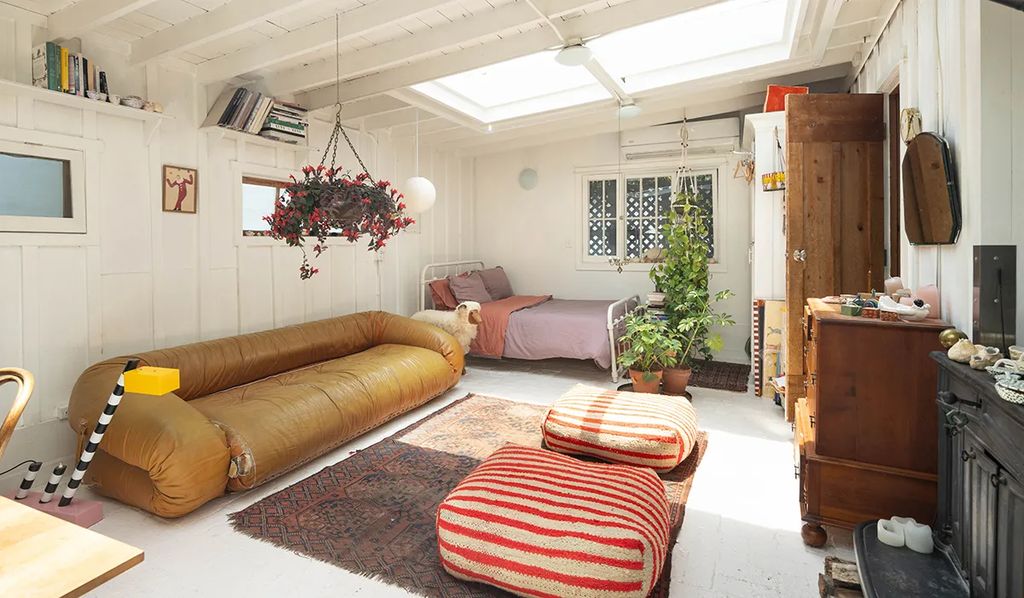
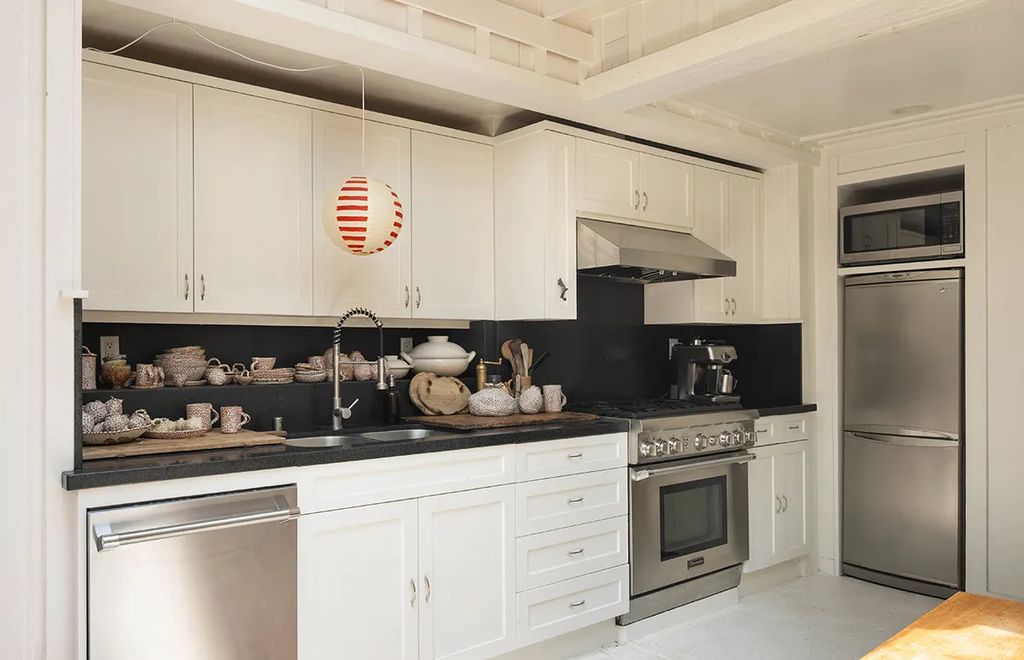
A detached one-bedroom, one-bath casita expands the program meaningfully. With its own kitchen, living area, and fireplace, the annex works as a guest suite, an independent studio, or an office separated from the main house’s rhythms. For buyers surveying Los Angeles Real Estate with an eye toward versatility, the casita shifts the property from charming to genuinely multi-functional.

Sales History and Market Context
Van Runkle lived in the home until her passing in 2011 at age 83. The property last sold in late 2015 for $1.7 million and returns to market a decade later at $2.25 million. That arc broadly tracks the premium tier of California Real Estate, where well-located, character-rich properties have appreciated on the strength of scarcity. In areas like Laurel Canyon, the pool of 1930s homes with intact detailing and legitimate cultural provenance is finite. Inventory remains tight, and the delta between generic flips and pedigree properties has widened as buyers prioritize narrative and neighborhood identity.
Goldberg contextualizes the moment: “Homes of this caliber rarely surface. There’s a growing appreciation for residences that offer authenticity and a point of view, and Pebble Court delivers both.” For collectors, the value lies not only in square footage but in the convergence of location, architecture, and story.
Community, Access, and Everyday Life
Beyond the gate, daily life in Laurel Canyon offers a balance of seclusion and access. The address sits within minutes of the Sunset Strip’s venues and West Hollywood’s dining scene, while Beverly Hills and its luxury retail are a short drive away. Proximity to the Hollywood Bowl, Runyon Canyon, and Griffith Park layers in culture and recreation, and the route to LAX or downtown remains straightforward outside peak hours. Cafés, gourmet markets, and neighborhood restaurants add day-to-day convenience, and the hills themselves offer the simple pleasure of twilight walks and canyon breezes. For many, that blend—privacy, creative lineage, and connectivity—defines the upper tier of Los Angeles homes for sale.
Conclusion
Pebble Court Los Angeles is a compelling proposition: a 1930s Hollywood Hills residence with cinematic lineage, luminous interiors, resolved outdoor living, and a flexible casita, offered at $2.25 million. For buyers navigating California Real Estate in search of something singular, the home reads as both sanctuary and artifact. It captures the spirit of Laurel Canyon while remaining fully livable today, and it invites its next steward to add a chapter to an already storied address.