

Photographer Douglas Friedman, one of the most recognizable visual storytellers in American design culture, is parting ways with his striking West Texas retreat. Located in the artistic enclave of Marfa, the 10-acre estate blends modern architecture, soulful desert scenery, and the photographer’s unmistakable taste—now offered for $2.99 million.
Designed and built by Friedman in 2016, the residence reflects his personal journey from New York’s high-rise bustle to the boundless quiet of the Southwest. After two decades capturing the interiors of America’s most admired homes—including the Malibu sanctuary of global icon Cher—Friedman applied the same discerning eye to create a property that feels curated, cinematic, and intentionally remote.
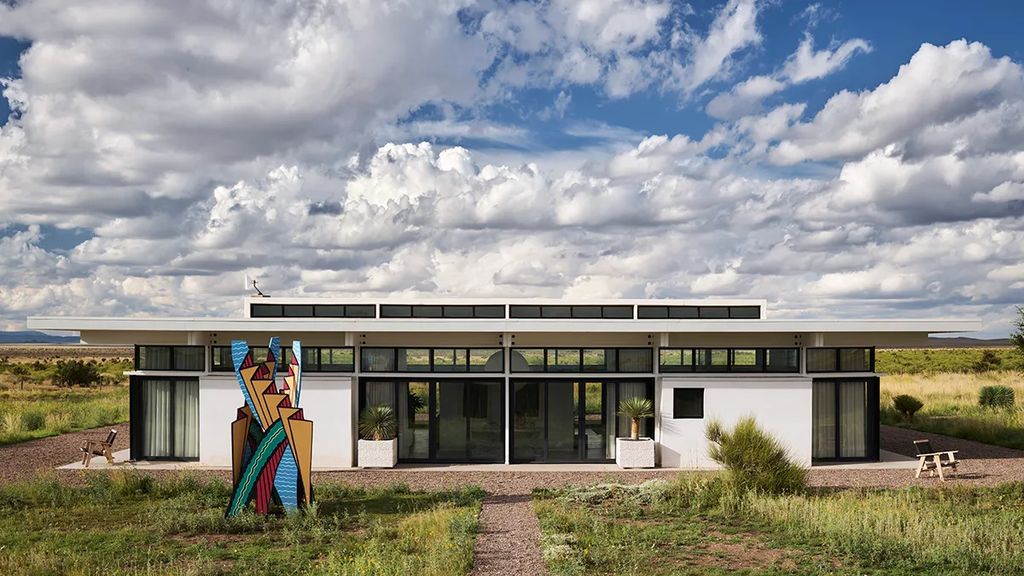
In a previous interview, he described the pilgrimage required to reach the home—a pair of flights, followed by a three-hour drive—ending at “a dirt road with no visible neighbors and endless views.” That sense of solitude and artistic purity is embedded in every inch of the estate.
A Contemporary Desert Home Rooted in Light and Landscape
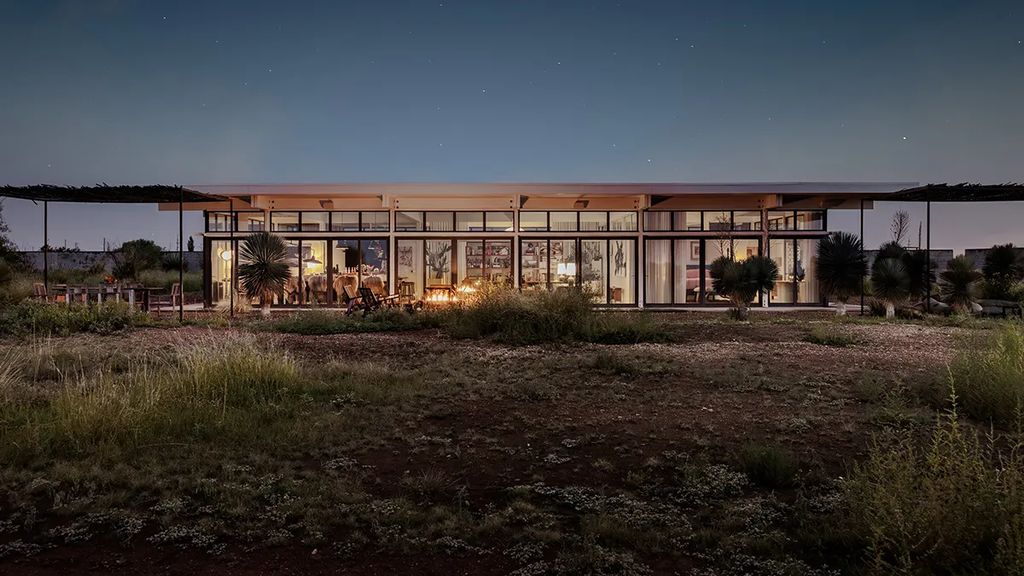
Set against uninterrupted views of Haystack Mountain and the Davis Mountains, the home spans 2,304 square feet of meticulously composed interiors. Timber, steel, and glass combine to form a structure that is both minimal and warm, with two-foot clerestory windows giving the illusion that the roof floats above the desert floor.
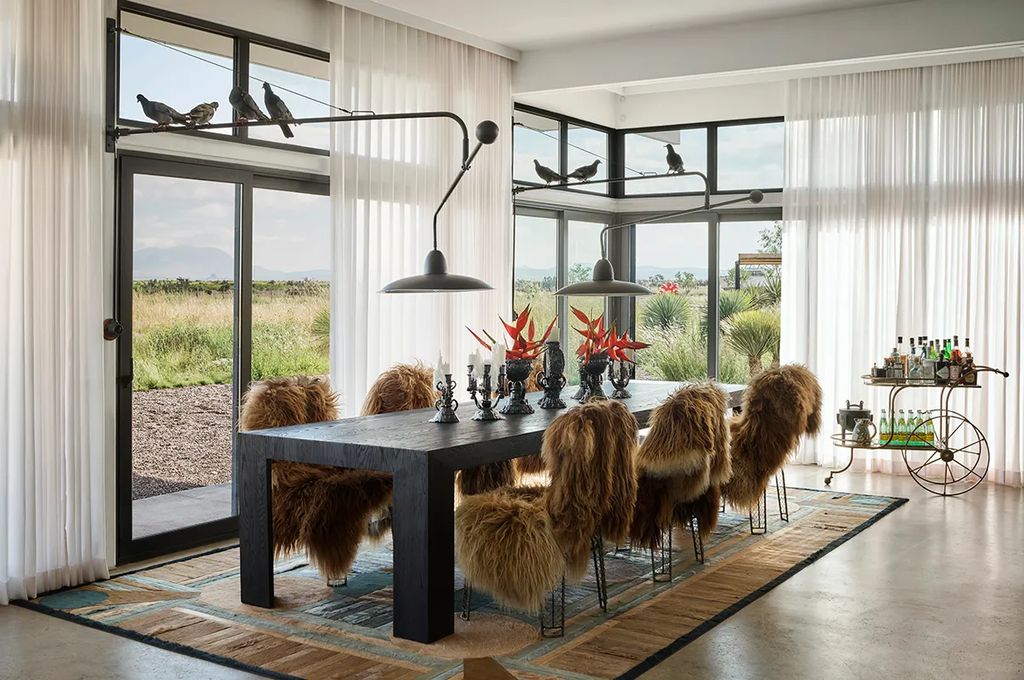
Panoramic glazing invites sunlight to sweep across the polished concrete floors, shifting the character of each room throughout the day. The layout includes three bedrooms and two bathrooms, each space styled with Friedman’s signature pairing of rustic textures and modern refinement.
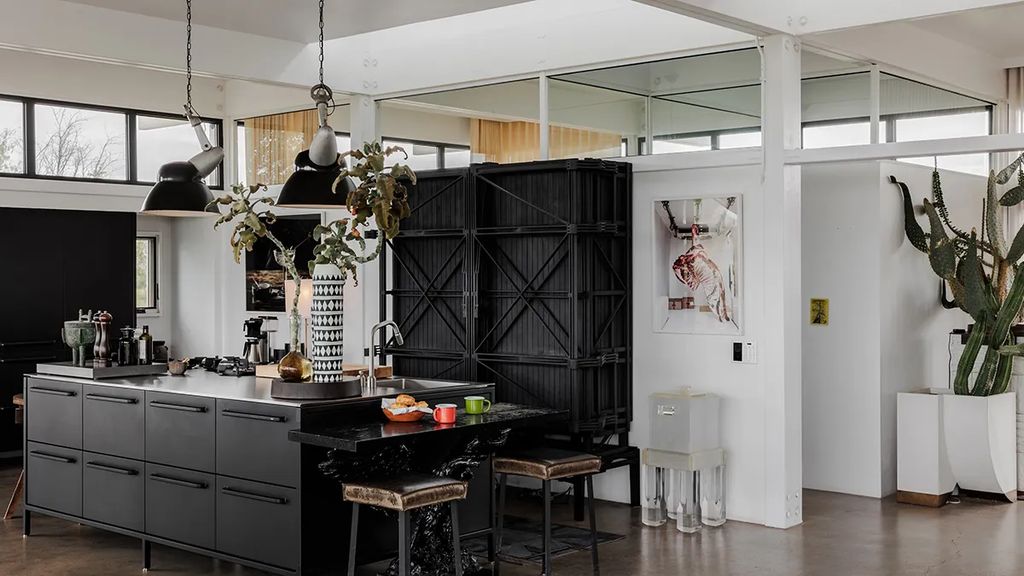
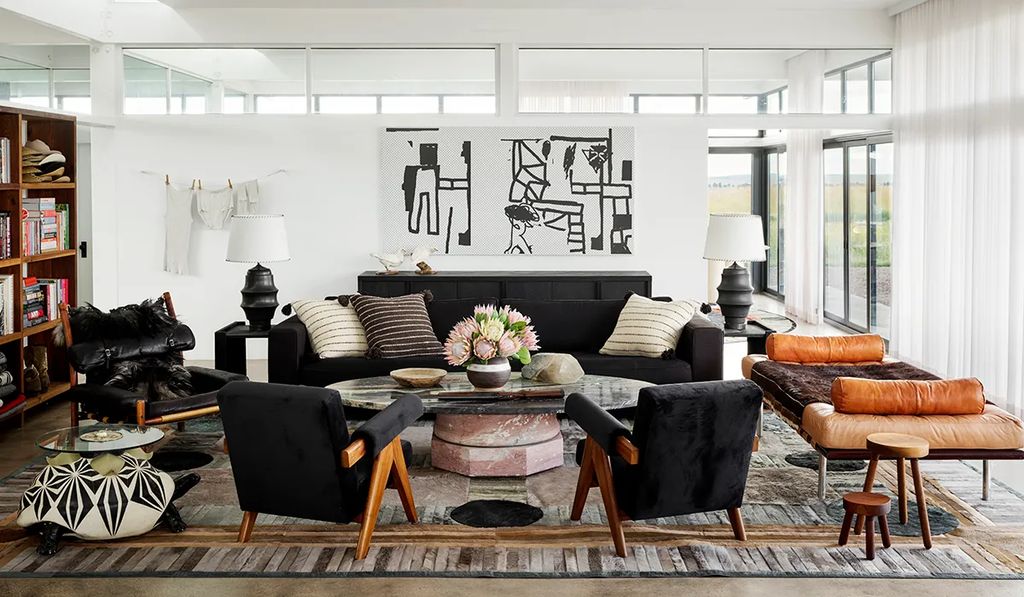
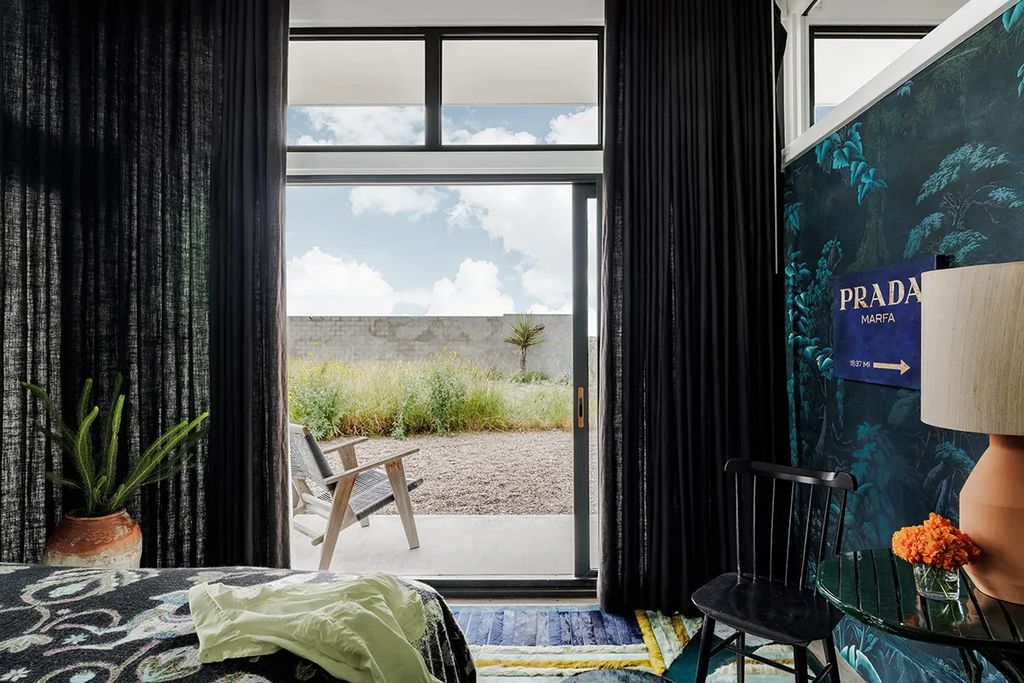
At the heart of the home, a cozy living room features black hide Pierre Jeanneret armchairs, brown leather accents, and a sculptural wooden bookshelf anchoring the space. The kitchen—outfitted with a steel system by Danish brand Vipp, Gaggenau appliances, and a Liebherr refrigerator—opens to a dining area that welcomes six or more guests. Sliding glass doors lead to a wraparound patio that frames the desert horizon like a living mural.
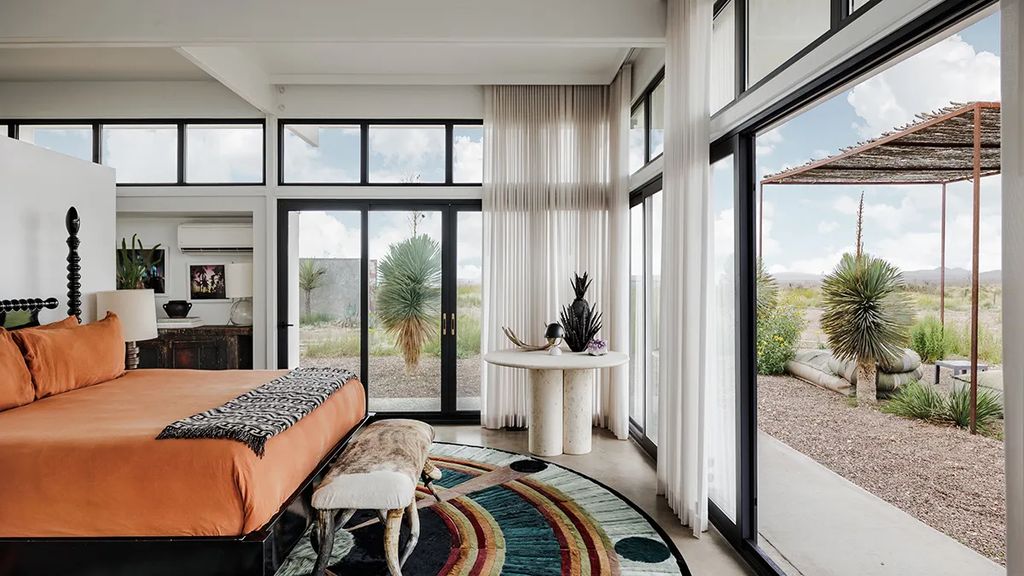
A Primary Suite Designed for Solitude and Style
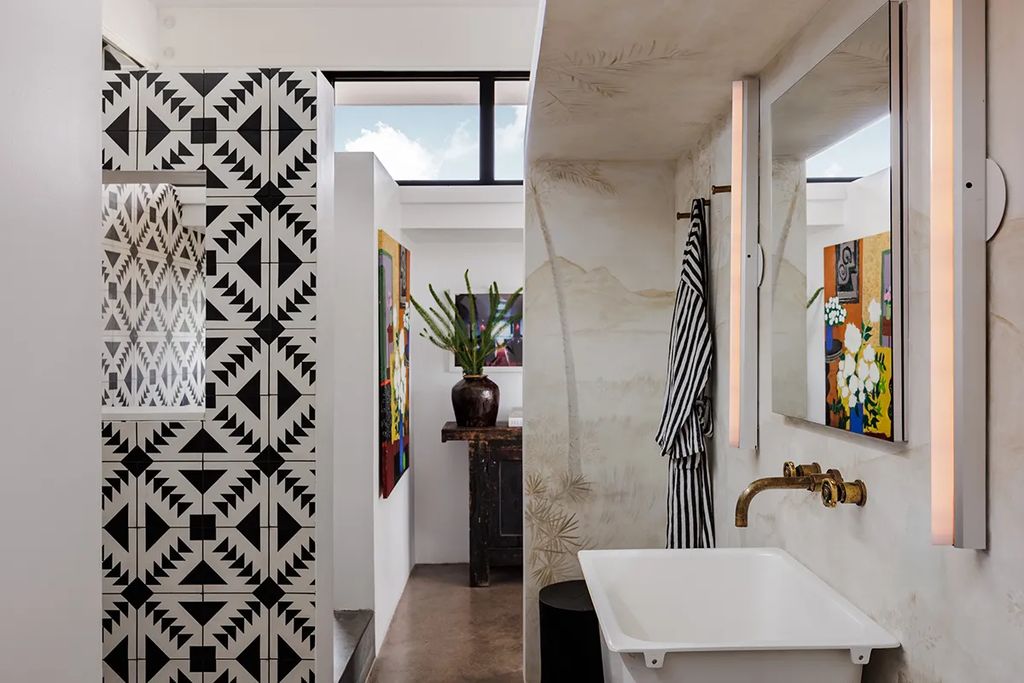
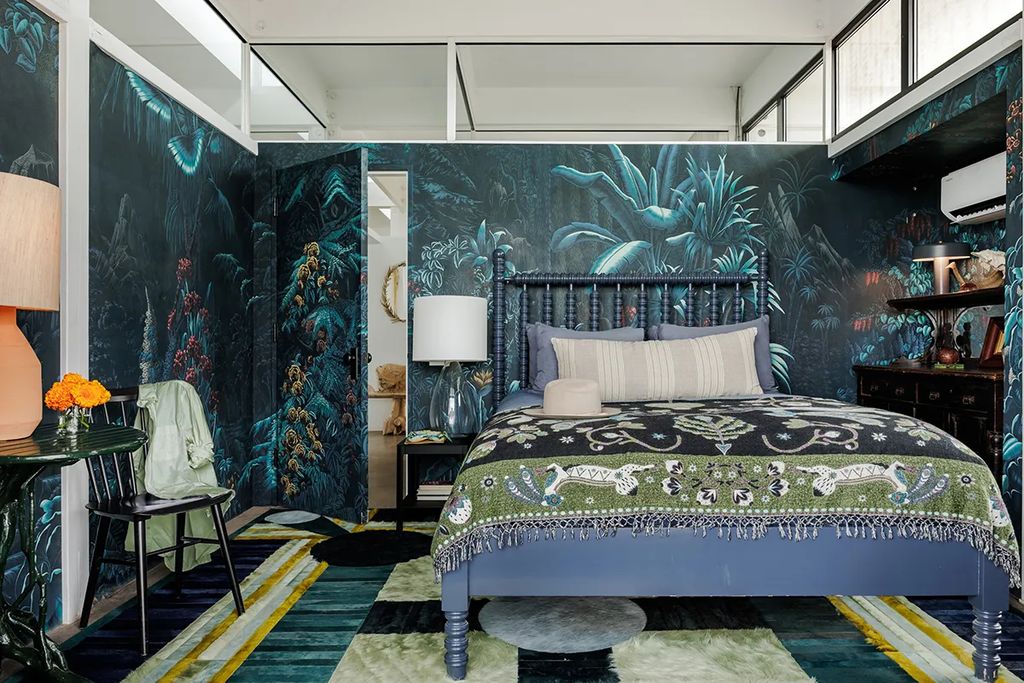
Further inside, the primary bedroom offers a sense of quiet luxury, complete with an en suite bathroom showcasing brass fixtures and bold geometric tiles. The two additional bedrooms feature expressive floral wallpapers and direct access to the patio, allowing every guest a private connection to the landscape.
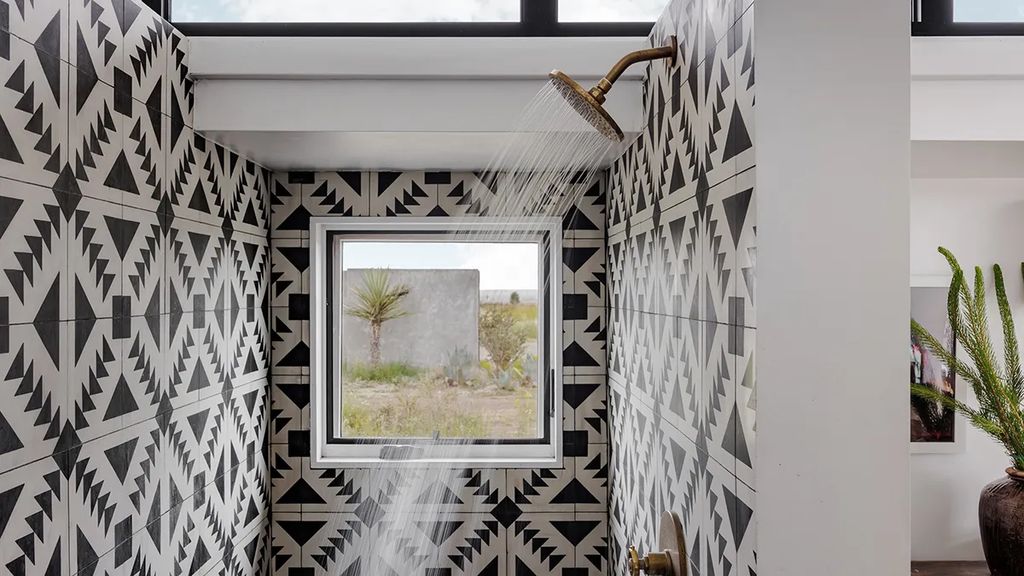
Throughout the home, Friedman’s mastery of visual storytelling is unmistakable—each corner arranged with intention, each material chosen for its dialogue with the desert.
An Outdoor Experience Inspired by Marfa’s Iconic Art History
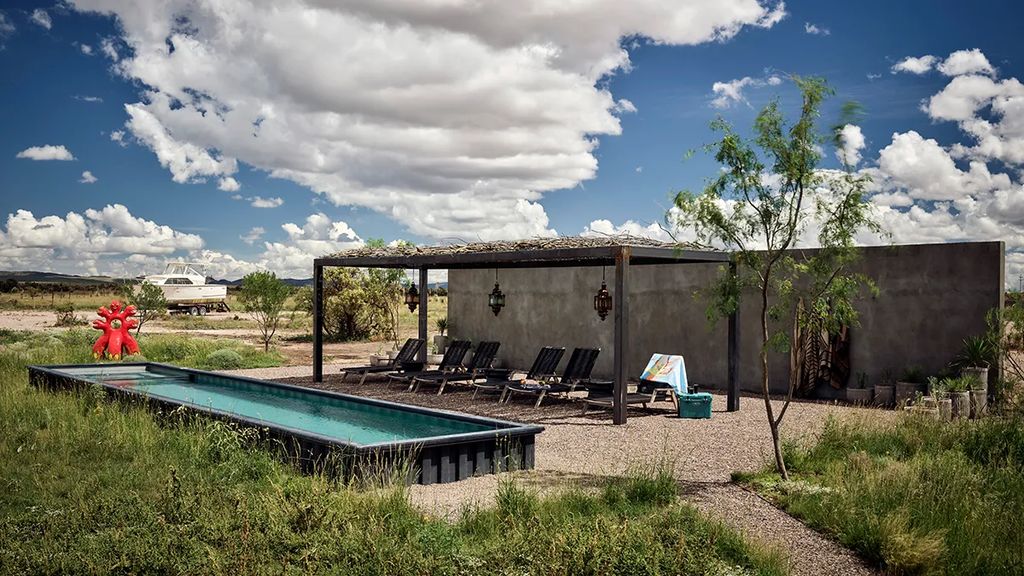
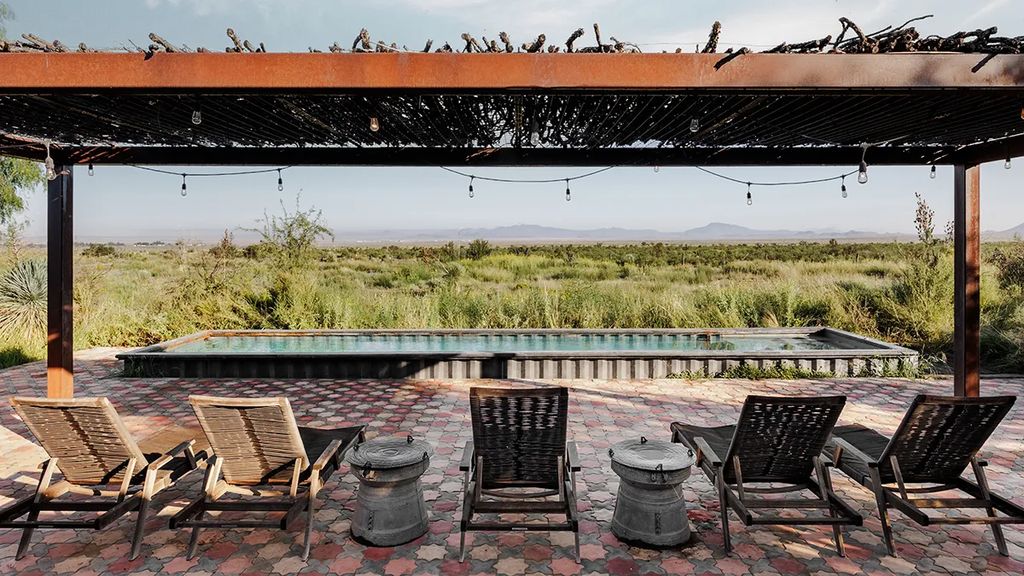
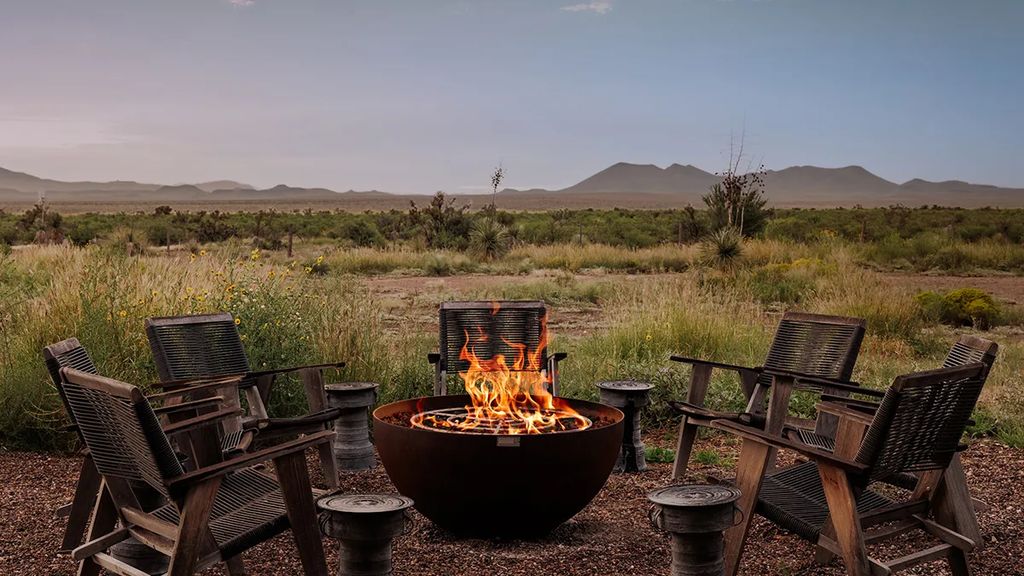
Beyond the interiors lies a landscape designed not merely for recreation, but for contemplation. A shipping-container lap pool serves as the estate’s sculptural centerpiece, offering uninterrupted mountain vistas as you swim. Nearby, a spa, fire pit, and screened palapa create anchor points for long evenings under the desert sky.
A Donald Judd-inspired pavilion pays homage to one of Marfa’s most influential figures. Judd’s arrival in the 1970s transformed the town into a global hub for minimalism, and Friedman’s pavilion echoes that legacy—clean lines, honest materials, and an intentional relationship with the land.
Native grasses, sculptural cacti, and clusters of desert plants surround the structures, blending the estate into its rugged environment. Kohler solar panels and a deep private well support off-grid living—an essential element of Friedman’s original creative vision.
A Rare Opportunity to Own an Artistic Desert Retreat
Originally listed at $3.7 million earlier this year, the property has returned to the market at a significantly reduced price of $2.99 million. Jeff Burke of Douglas Elliman represents the listing.
Homes in Marfa rarely appear with this level of architectural integrity and cultural resonance. As an internationally recognized creative, Friedman infused the estate with the same refinement that has made his photography a staple in publications like Architectural Digest.