

The legendary Hollywood Hills compound once owned by visionary filmmaker David Lynch has officially changed hands for $13 million, closing a remarkable chapter in the architectural and cultural history of Hollywood Hills.
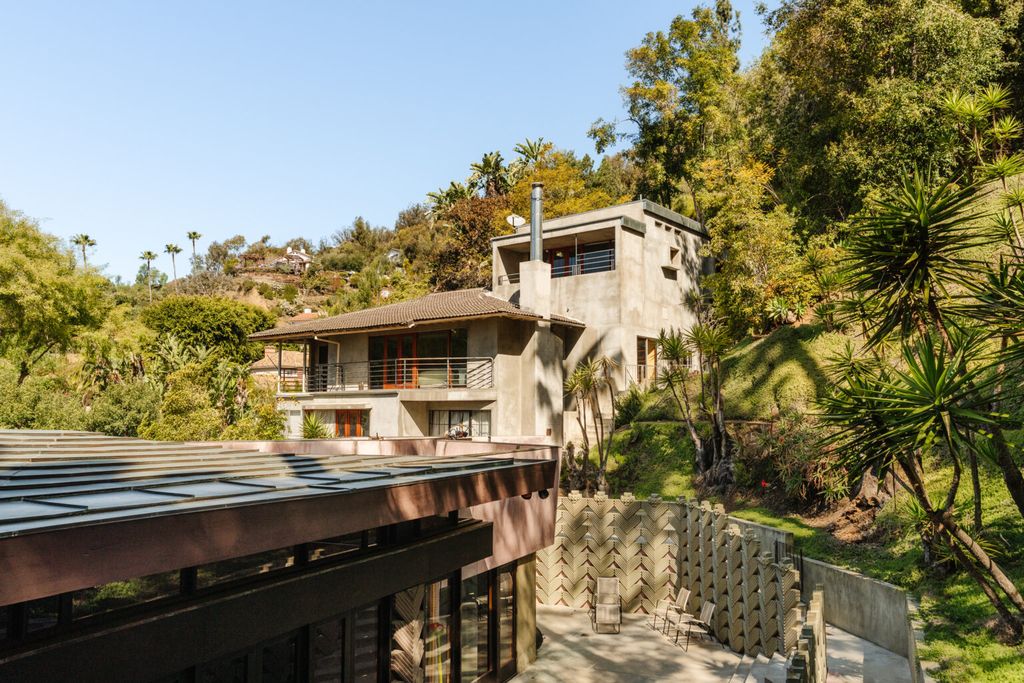
Set across 2.3 acres of terraced hillside land, the estate blends mid-century architecture with the singular artistic identity of one of Hollywood’s most distinctive directors. Known for groundbreaking works such as Eraserhead, Blue Velvet, and the cult television phenomenon Twin Peaks, Lynch spent more than three decades shaping the property into both a private sanctuary and a creative studio complex.
According to information shared with californialuxuryhouses, the estate sold quietly after attracting significant attention from buyers interested in architecturally significant homes in Los Angeles.
“The property represents a rare intersection of architecture and artistic legacy,” the listing agent said in comments to californialuxuryhouses. “Homes with this kind of cultural history rarely come to market in the Hollywood Hills.”
A Mid-Century Architectural Landmark by Lloyd Wright
At the center of the estate stands the celebrated Beverly Johnson House, designed in 1963 by architect Lloyd Wright, the son of legendary architect Frank Lloyd Wright.
Characterized by bold geometric forms, expansive glass walls, and seamless indoor-outdoor transitions, the house embodies the experimental spirit that defined Southern California modernism during the mid-20th century.
Lynch purchased the core residence in 1987 for approximately $560,000, long before the surrounding compound took shape. Over time, the filmmaker expanded the estate across several adjoining parcels, transforming the original home into a multi-building retreat spread across five hillside lots.
The listing agent declined to disclose the identity of the buyer when speaking with californialuxuryhouses but noted that the new owner was drawn to both the architectural pedigree and the property’s creative history.
Inside the Beverly Johnson House
Inside the main residence, the architecture immediately reflects the expressive design language of Lloyd Wright.
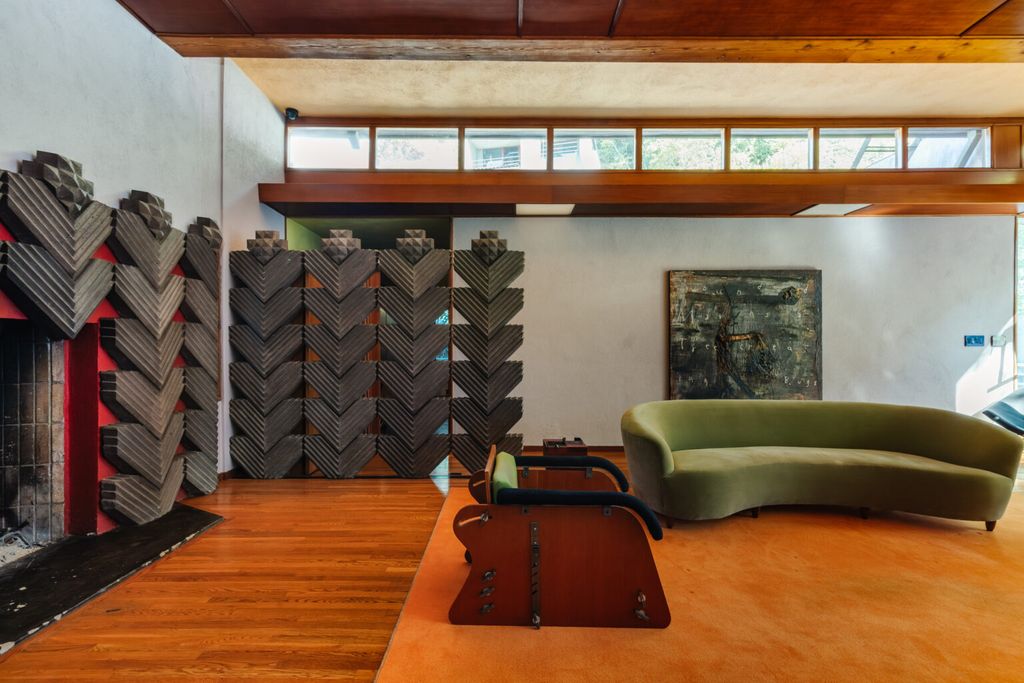
The living room serves as the home’s central gathering space, defined by a soaring vaulted ceiling supported by exposed wood beams. Clerestory windows and a wall of sliding glass doors allow natural light to pour into the room while framing views of the surrounding hillside landscape.
A sculptural seating arrangement rests on a vibrant orange rug, anchored by a curved green sofa and a pair of wood-framed lounge chairs. At one end of the room, a geometric tile fireplace becomes the focal point of the space, its layered chevron patterns echoing design motifs seen throughout the property.
“These interiors still feel incredibly modern today,” the agent told californialuxuryhouses. “The geometry, the light, the connection to nature—those elements are timeless.”
A Colorful Kitchen With Distinct Character
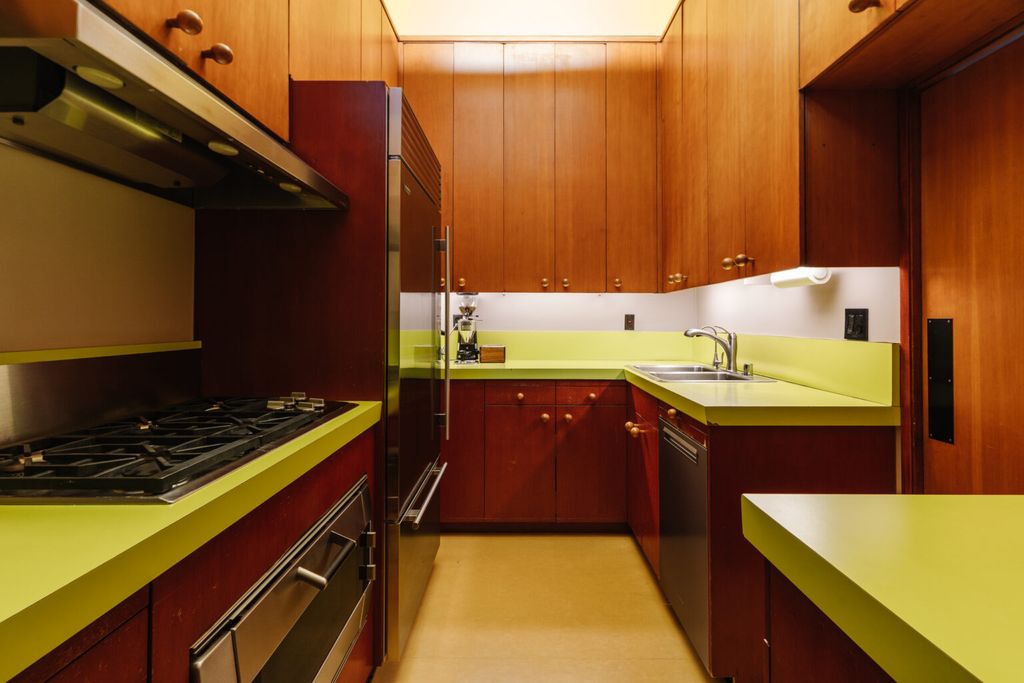
Just beyond the living room lies a kitchen that reflects the home’s playful design palette.
Lime-green countertops contrast dramatically with the warm tones of oak cabinetry lining the walls. The color combination may appear unconventional, yet it perfectly complements the artistic personality of the house.
Large windows overlook the surrounding gardens, while the compact layout keeps the space intimate and functional. Much like the rest of the property, the kitchen balances simplicity with bold visual character.
The Pool and Pool House Expansion
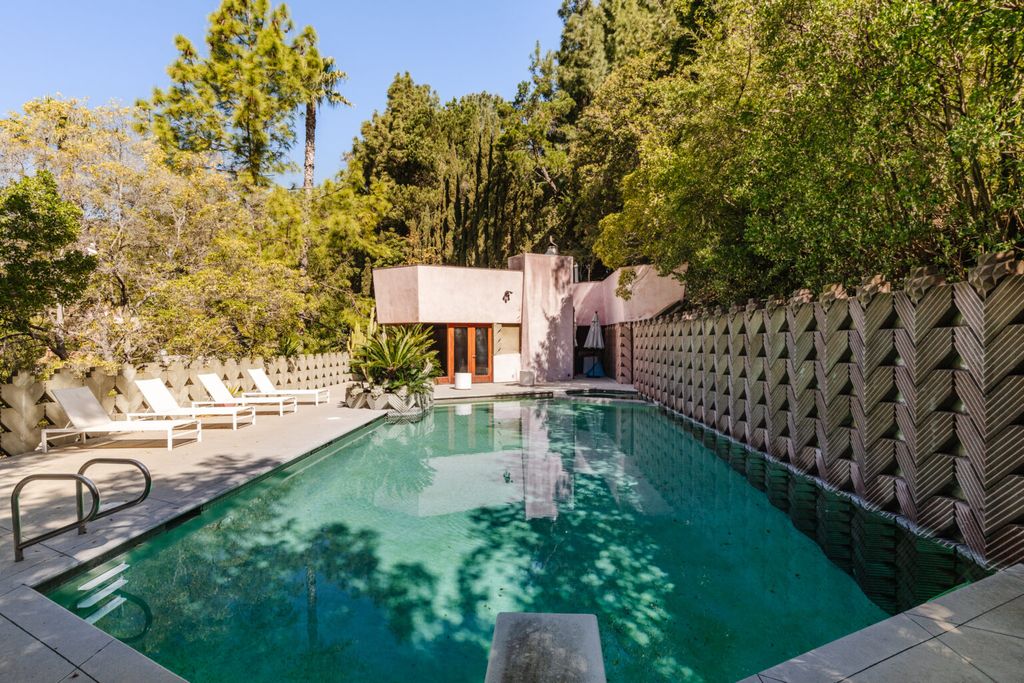
In 1991, Lynch commissioned architect Eric Lloyd Wright—grandson of Frank Lloyd Wright and son of Lloyd Wright—to design a pool and pool house high on the hillside.
The addition extended the compound’s footprint while reinforcing its architectural lineage.
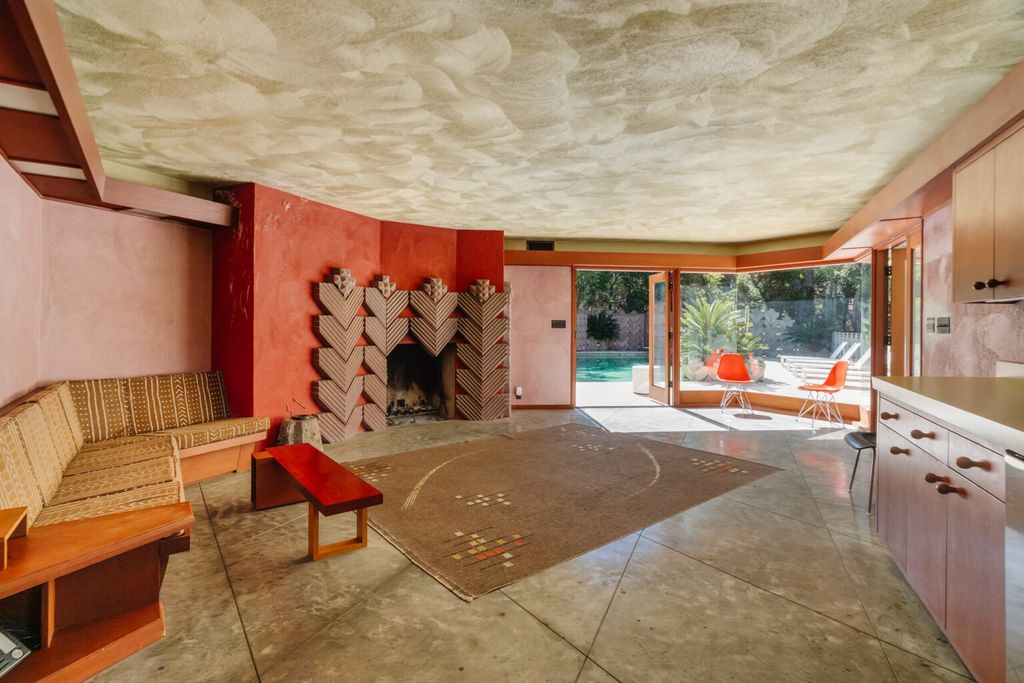
Inside the pool house, red plaster walls and textured ceilings create a warm and sculptural interior atmosphere. A second geometric fireplace mirrors the tile patterns seen in the main house, while built-in seating and a compact kitchenette allow the space to function as an entertaining pavilion.
Large glass doors open directly to the patio, where the rectangular swimming pool stretches across a quiet courtyard framed by mature trees and hillside landscaping.
“The outdoor areas feel incredibly private,” the listing agent explained to californialuxuryhouses. “Even though you’re in the heart of Los Angeles, the property feels like a secluded creative retreat.”
Additional Structures Across the Compound
Over time, the estate evolved into a full creative campus.
Adjacent to the pink-toned Beverly Johnson House sits the headquarters of Lynch’s production company, Asymmetrical Productions. The compound also includes several additional structures built or adapted for creative work and guest accommodations.
These include a personal art studio used by Lynch during his later years, a two-story guesthouse for visitors and collaborators, and a minimalist one-bedroom dwelling clad in smooth grey plaster.
Together, the seven structures total approximately 11,000 square feet of interior space.
According to information obtained by californialuxuryhouses, the estate also housed editing facilities and a screening room where Lynch reviewed footage and developed ideas for future projects.
A Signature Architectural Detail
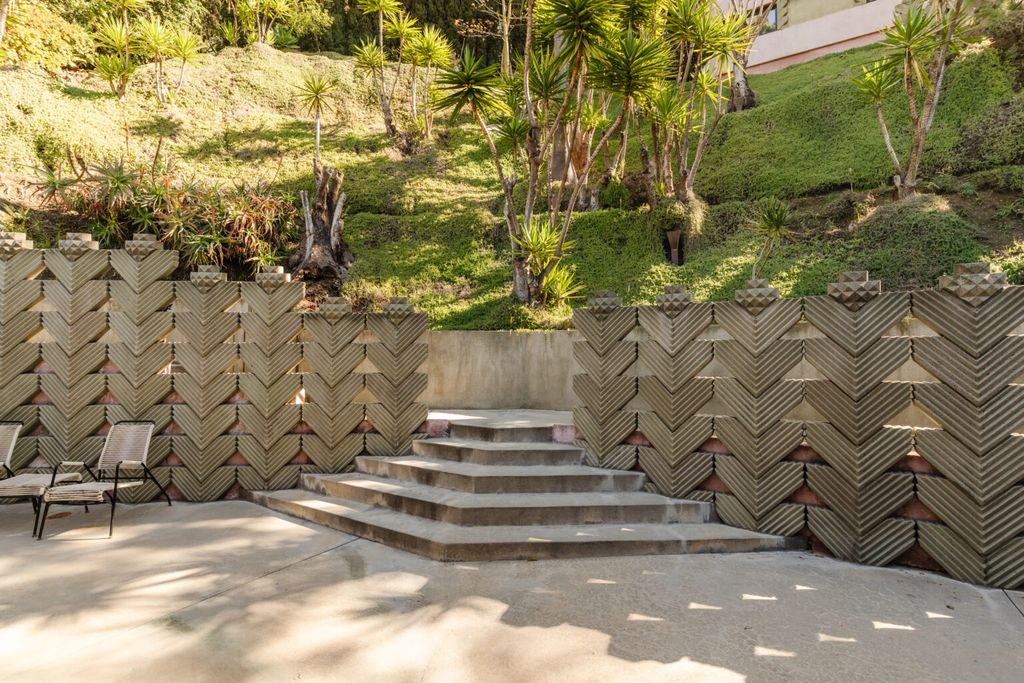
One of the most distinctive visual features across the property is the use of patterned concrete blocks.
These repeating chevron forms—one of Lloyd Wright’s signature design motifs—appear in fireplaces, poolside walls, and structural elements throughout the compound.
The blocks create a dynamic architectural rhythm while allowing sunlight to interact with the surfaces throughout the day, casting shifting shadows that transform the appearance of the spaces.
For architecture enthusiasts, the property represents an exceptional example of Southern California’s experimental mid-century residential design.
Life in Hollywood Hills
Located in the prestigious Hollywood Hills area of Los Angeles, the estate sits within one of Southern California’s most desirable residential enclaves.
The neighborhood is known for its dramatic hillside homes, sweeping city views, and close proximity to major cultural and entertainment destinations.
Residents enjoy convenient access to world-class dining in nearby neighborhoods such as West Hollywood and Beverly Hills, while outdoor enthusiasts can explore hiking trails in the nearby Runyon Canyon Park.
Despite its central location, many homes in Hollywood Hills—including Lynch’s former estate—offer remarkable privacy thanks to steep terrain and mature landscaping.
A Creative Legacy Preserved
Although the property has now passed to a new owner, the estate remains deeply tied to the creative life of David Lynch.
For decades, the compound served not only as a residence but also as a place where Lynch developed ideas, painted, composed music, and refined his uniquely surreal cinematic style.
californialuxuryhouses attempted to contact representatives for Lynch’s estate for additional comment but did not receive a response before publication.
What remains certain, however, is that the property stands as a rare fusion of architecture, art, and Hollywood history—an estate shaped over decades by one of cinema’s most imaginative minds.
With its $13 million sale now finalized, the Hollywood Hills compound begins a new chapter while preserving a distinctive piece of Los Angeles’ architectural and cultural landscape.