

A nearly 300-year-old Colonial estate in the heart of Sandwich Village has returned to the market, offering something increasingly difficult to find on Cape Cod: substantial land, remarkable historic character and a home that was actually designed to be lived in.
Known as Uplands, the property at 111 Main Street, Sandwich, Massachusetts, is listed for $2.95 million. The circa-1740 residence spans approximately 4,245 square feet across five bedrooms and 6.5 bathrooms, with the house and its surrounding grounds occupying about 3.76 acres. The property remains actively listed as of September 2026.
That combination makes this Sandwich home for sale an unusual offering in a community where historic houses tend to sit on considerably smaller parcels. More than four decades after Paul and Diane Madden acquired the estate, Uplands is once again being presented to the market, this time as a rare opportunity to own a piece of Colonial Cape Cod.
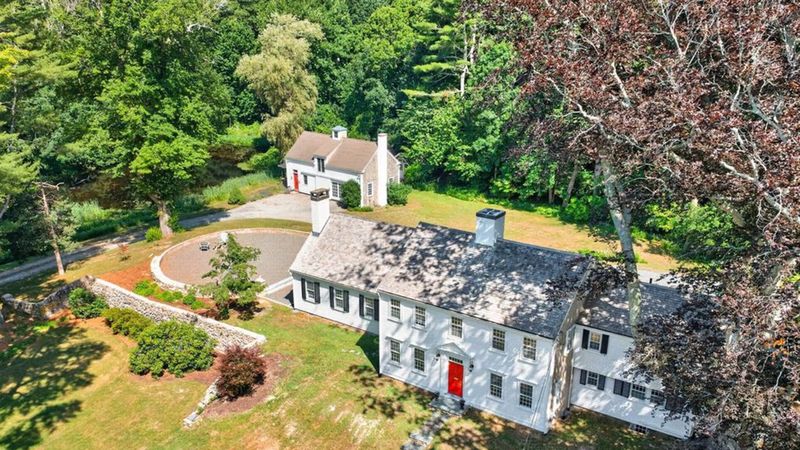
A 1740 Home With Nearly Three Centuries of History
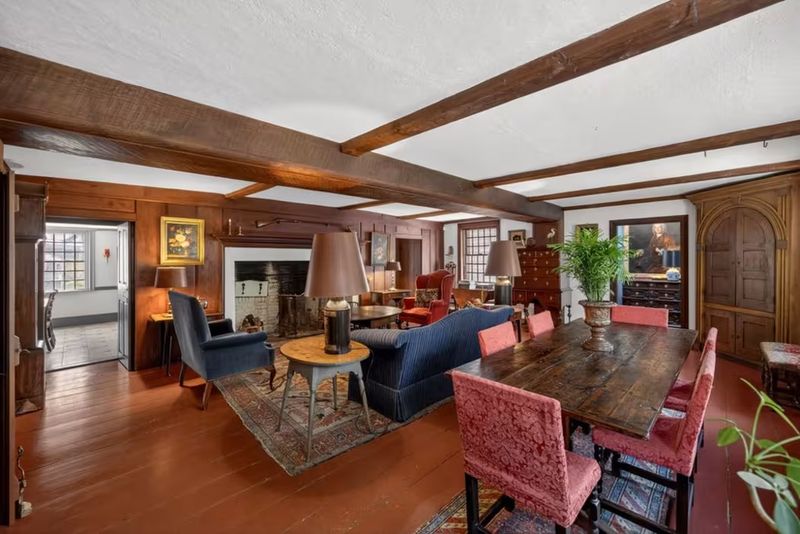
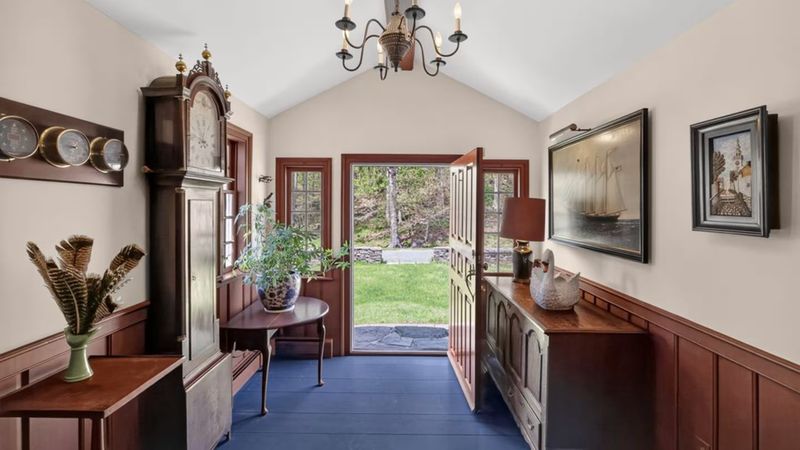
Uplands dates to 1740, placing its origins in the earliest chapters of Sandwich’s built history. The house retains a collection of period features that could easily have been lost through successive renovations, including wide wood floors, exposed beams, custom millwork, built-in cabinetry and five fireplaces.
The current listing describes the property as an antique Colonial estate, while public listing records identify the residence as a single-family property with approximately 3.76 acres of land. The estate also includes a separate carriage house, pond, rolling lawns and mature specimen trees.
Listing agent Jack Cotton of Sotheby’s International Realty has emphasized that the house’s appeal is not simply visual.
“You don’t really see the house, you feel the house,” Cotton told Mansion Global, pointing to its centuries-old woodwork, floors and beams.
That distinction is important. Unlike a newly constructed luxury property designed to reproduce an antique aesthetic, Uplands possesses the irregularities and material character of an actual 18th-century house while having been adapted for contemporary living.
The Maddens Spent Four Decades Preserving Uplands
The property’s most recent chapter is closely connected to Paul and Diane Madden, a couple whose professional lives were deeply intertwined with antiques, art and New England history.
The Maddens acquired the estate in 1984, according to Realtor.com and reporting surrounding the listing, after moving from Nantucket. They subsequently spent roughly four decades maintaining and expanding the property while preserving its historic character.
Paul Madden was a well-known Cape Cod antiques dealer, while Diane was an author and culinary expert. Their family business, Paul Madden Antiques, continues to document and sell pieces associated with the couple’s collections and estate. The firm’s current website describes Paul and Diane as highly regarded antiques dealers whose collections were influenced by New England maritime history, Americana and folk art.
Their son, Parke Madden, has also worked in real estate and grew up around historic properties and antiques. His professional biography notes that his family has owned and restored historic properties on Nantucket and Cape Cod.
For the Maddens, Uplands was more than an old house.
“My parents were very good at walking the walk, living the lifestyle—and they were proud of it,” Parke Madden said of the way his parents used the property for entertaining.
The couple reportedly hosted gatherings of as many as 100 people at the estate, turning its large rooms and expansive grounds into an important part of their social life.
Paul Madden died in 2008, while Diane died in 2022. An obituary for Paul recalled the historic homes he and Diane restored and shared with guests on Nantucket and in Sandwich.
A Historic Interior Adapted for Modern Living
For all of its age, Uplands is not presented as a museum piece.
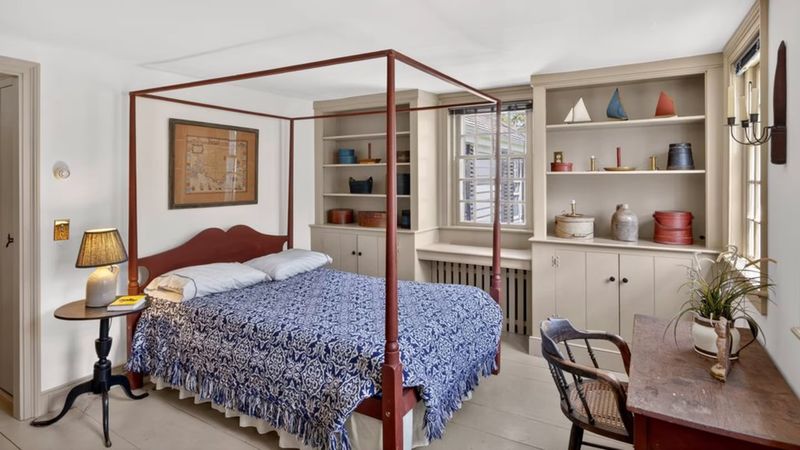
The Maddens expanded the kitchen and added a first-floor primary suite with its own private wing. They also incorporated antiques and decorative elements from their business into the house, creating interiors that reinforce the property’s historic identity rather than competing with it.
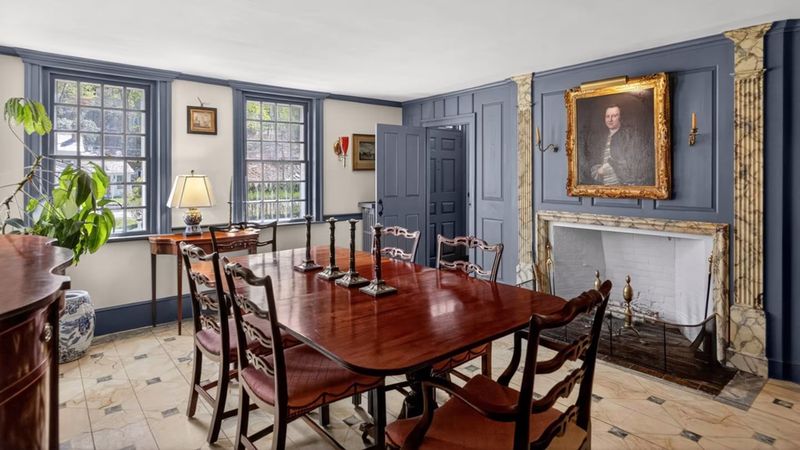
The current configuration includes five en-suite bedrooms, with one located in the first-floor primary wing and four upstairs. There are multiple dining and entertaining spaces, a game room and five brick fireplaces.
One of the most memorable rooms is the great room, where a large brick fireplace incorporates a beehive oven. The feature provides the possibility of traditional hearth cooking, an increasingly unusual amenity in a contemporary luxury property.
The interiors are finished with blue accents, built-in bookcases, custom cabinetry and millwork, creating a visual balance between the home’s Colonial bones and the more relaxed atmosphere expected of a modern Cape Cod retreat.
That balance is part of what distinguishes Uplands from many historic properties. The house has been updated, but the updates appear to have been undertaken with the building’s original character in mind.
Nearly Four Acres in the Heart of Sandwich Village
The land may ultimately prove to be just as important as the house.
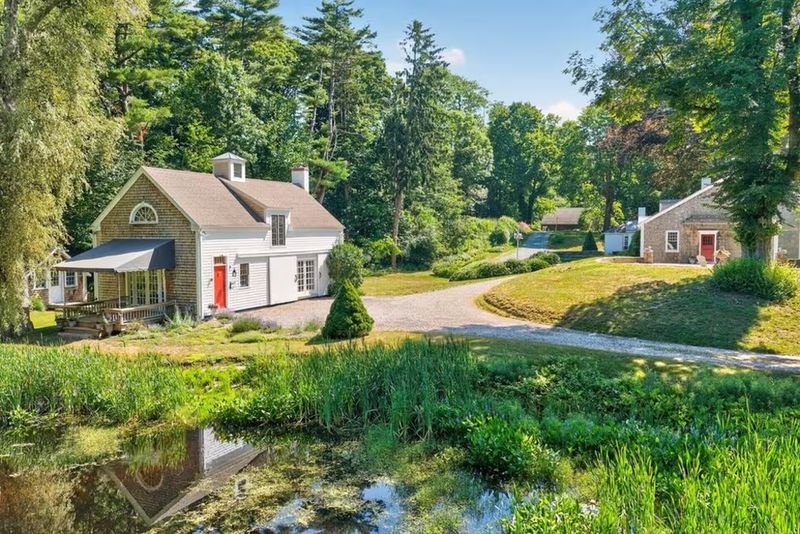
Uplands encompasses approximately 3.76 acres, according to current MLS information, with lawns, mature trees, a pond, garden areas and a carriage house.
For a property located within Sandwich Village, that amount of land is unusual. Reporting around the listing has noted that many properties in the historic village occupy parcels closer to a fraction of an acre.
“To find that much land in the center of Sandwich is remarkable,” Cotton said, also highlighting the condition of a house that dates to 1740.
A stone wall frames portions of the property, while gravel paths connect the main residence with the carriage house. The separate structure includes a porch, living room and upstairs loft and, according to the listing agent, could potentially be adapted for guest accommodations, subject to applicable approvals.
The grounds also include a private pond that attracts birds, dragonflies and other wildlife. A mature copper beech near the entrance is believed by Cotton to potentially predate the house itself, adding another layer to the property’s unusually deep history.
For buyers accustomed to contemporary Sandwich Real Estate, the sense of space may be one of Uplands’ most compelling attributes.
A Walkable Cape Cod Lifestyle
Despite its expansive acreage, Uplands is not isolated.
The property sits within walking distance of downtown Sandwich Village, allowing residents to reach local shops, restaurants, galleries and historic attractions without treating the automobile as the center of everyday life.
Sandwich itself was settled in 1637 and incorporated in 1639, making it the oldest town on Cape Cod. Its historic center remains known for Colonial-era architecture, antique stores, galleries and cultural institutions.
Among the area’s signature attractions is the Sandwich Glass Museum on Main Street, which explores the town’s historic glassmaking industry and offers live glassblowing demonstrations.
Heritage Museums & Gardens provides another major cultural amenity. The institution occupies 100 acres of gardens and trails in historic Sandwich, with collections spanning horticulture, automobiles, art and regional history. For 2026, the museum is scheduled to remain open daily through October 18.
Dining and everyday conveniences are also concentrated around the village. The Dan’l Webster Inn & Spa, located on Main Street, offers dining and hospitality in the historic center, while smaller cafés and locally owned businesses contribute to the walkable character of the neighborhood.
For buyers considering a Home in Sandwich for sale, the appeal therefore extends beyond the boundaries of the property. The location combines the atmosphere of a historic Cape Cod village with access to beaches, museums, restaurants, shopping and outdoor recreation.
Connected to Boston, Providence and the Rest of Cape Cod
Sandwich also benefits from its position at the Upper Cape’s gateway.
U.S. Route 6 provides the principal highway connection toward the Sagamore Bridge and the broader Cape Cod road network, while Route 6A provides a more traditional scenic route through the northern portion of town. Route 130 connects Sandwich Village with Route 6 and communities farther south.
The Sagamore Bridge remains particularly important for residents traveling between Sandwich and mainland Massachusetts. The regional transportation system is also undergoing major planning and infrastructure work involving the Bourne and Sagamore bridges, making transportation an important consideration for anyone evaluating long-term access to the Upper Cape.
For leisure travel, Cape Cod’s beaches and waterfront destinations are within reach, while Boston and Providence are both accessible by road. That combination helps explain why Sandwich can function as either a primary residence or a second-home destination.
Where Sandwich Real Estate Meets Cape Cod History
The current asking price of $2.95 million places Uplands toward the upper end of the local market, although the property is difficult to compare directly with conventional homes because of its age, acreage and historic provenance.
Current listing data puts the residence at roughly $695 per square foot, with annual 2026 property taxes listed at approximately $20,093. The property has been on the market since July 15, 2026, with Jack Cotton of Sotheby’s International Realty representing the listing.
For context, current Sandwich listings include other historic and luxury properties at substantially different price points, illustrating how strongly acreage, architectural significance and location can influence the local market.
The property’s own history also sets it apart. After remaining with the Madden family for more than 40 years, Uplands entered the market in 2026 for the first time in decades. That makes the transaction less about simply selling a Sandwich home for sale and more about transferring stewardship of a historic Cape Cod property to its next owner.
For californialuxuryhouses, that may be the most interesting aspect of Uplands. Its luxury is not defined by the newest finishes or the largest square footage. Instead, it comes from rarity: an authentic 1740 residence, nearly four acres in the middle of a historic village, a preserved architectural vocabulary, a private pond and a family history deeply connected to New England antiques and craftsmanship.
Almost three centuries after the first timbers were raised, Uplands is once again waiting for someone to write the next chapter.